

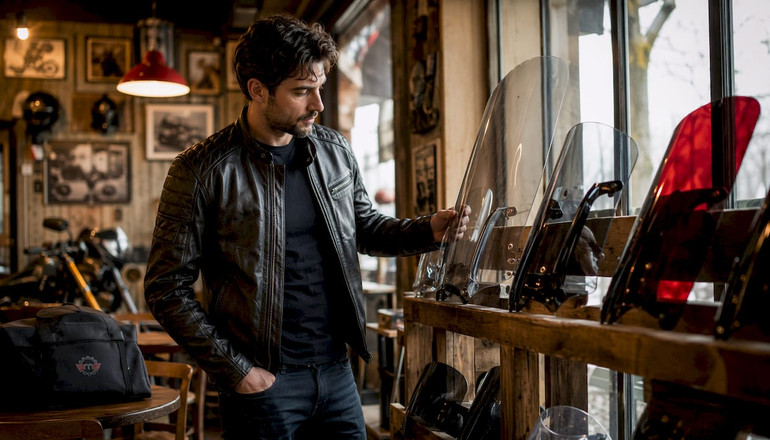
Types of Motorcycle Windshields: Your Full Rider’s Guide
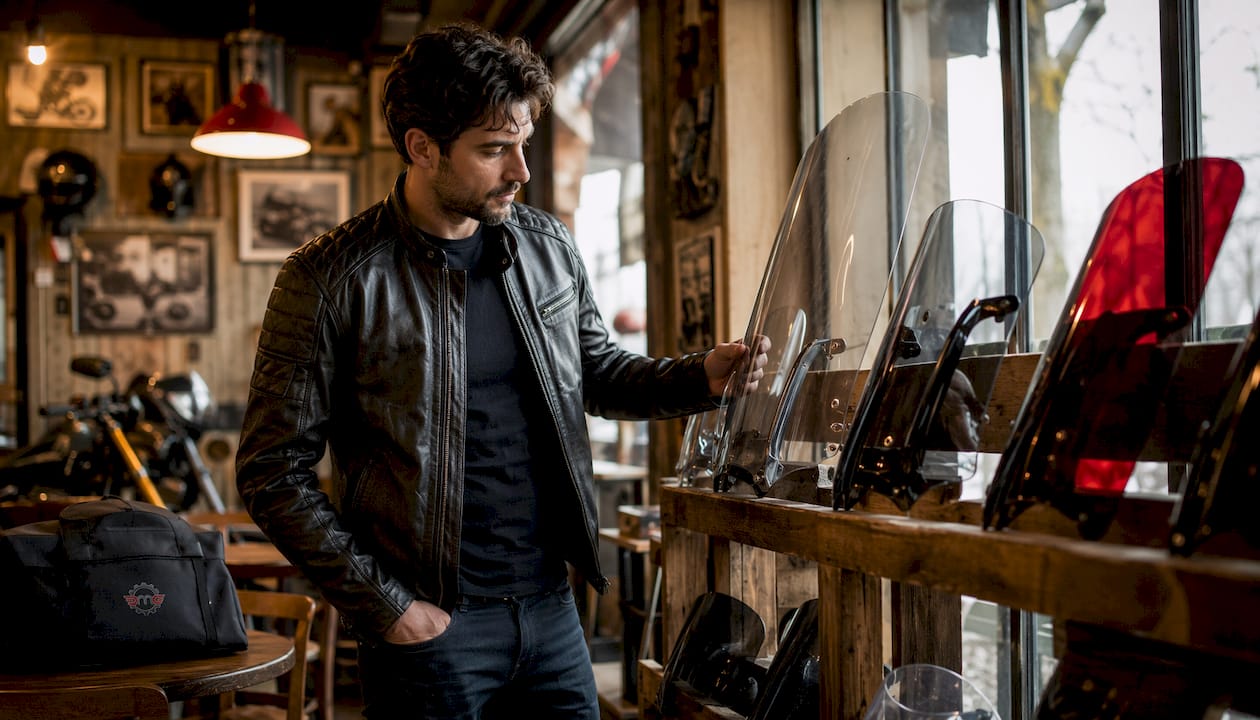
What are the main types of motorcycle windshields?
Not all windshields are created equal, and picking the wrong one is basically signing up for a neck massage you never wanted. Here is a quick breakdown of the main categories so you can figure out which one belongs on your ride:
- Touring/full windshields: Tall, wide, and built for the long haul. These cover your chest and redirect wind well above your helmet, making them the go-to for highway cruisers and long-distance riders.
- Sport windshields: Short and aerodynamic, designed to complement the aggressive, forward-leaning posture of sport bikes. They cut drag without pretending to block much wind.
- Adventure/dual-sport windshields: Medium height with a wider stance, built to handle both pavement and dirt. Riders in this category often prefer a look-over position since mud and grime can quickly obscure the screen.
- Café racer/bobber deflectors: Tiny, retro-styled shields that are more about attitude than airflow. They offer minimal wind protection but nail the aesthetic of classic builds.
- Deflector shields: Compact add-ons that redirect wind away from your hands and lower body. Common on cruisers and naked bikes where a full screen would look out of place.
Each type addresses a different riding style, so the “best” one is really just the one that matches how and where you ride.
Why your windshield is doing more work than you think
The primary function of a motorcycle windshield is to decrease riding fatigue by mitigating wind blast and the physical strain it puts on your neck, shoulders, and arms. That might sound like a small deal until you are three hours into a highway run and your traps feel like concrete. Wind resistance at speed is relentless, and without a shield, your body absorbs every bit of it.
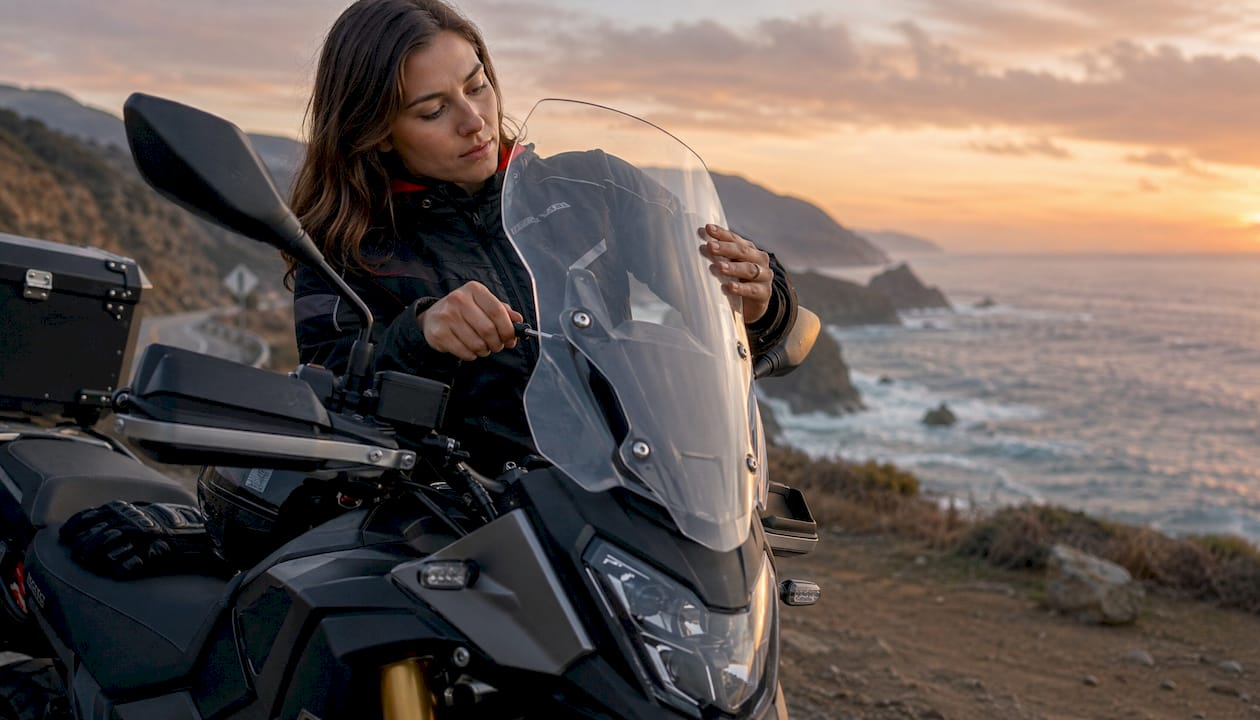
Beyond fatigue, windshields protect you from debris, insects, rain, and cold air, all of which add up fast on longer rides. Riding in cold wind without protection accelerates body temperature loss, which affects concentration and reaction time. A good windshield handles that quietly in the background.
Here is what a properly fitted windshield actually does for you:
- Reduces neck, shoulder, and arm strain on extended rides
- Deflects road debris, bugs, and rain away from your body and visor
- Lowers wind noise inside your helmet, which cuts mental fatigue
- Keeps you warmer in cold weather, extending your comfortable riding season
- Improves fuel efficiency slightly by reducing the aerodynamic drag your body creates
For riders who want to go deeper on staying comfortable across different weather conditions, the seasonal riding tips at Dmgmotorsports cover how windshields fit into a broader comfort strategy.
Acrylic vs. polycarbonate: what your windshield is actually made of
Material choice is where a lot of riders get surprised, usually after their first scratch or crack. The two dominant materials in motorcycle windshields are acrylic (also called PMMA or Plexiglas) and polycarbonate (PC), and they behave very differently under real-world conditions.
Acrylic windshields are more affordable and naturally resist yellowing from UV exposure, but they scratch more easily and are more prone to shattering on impact. They are a solid budget option for casual riders, but they demand careful maintenance to stay clear. Polycarbonate is the tougher material. It is highly shatter-resistant and used in most high-end windshields, but without a protective coating, it can discolor over time from UV exposure.
Here is how the two stack up:
- Acrylic: Lower cost, good UV resistance, clearer out of the box, but scratches easily and can crack on hard impact
- Polycarbonate: Shatter-resistant, used in premium builds, but needs a hard coating to stay clear long-term
That hard coating piece is where National Cycle’s Quantum hardcoating technology comes in. Their process increases scratch resistance on polycarbonate windshields by up to 10 times compared to uncoated polycarbonate, which is a meaningful jump for anyone riding on debris-heavy roads. The coating preserves optical clarity and extends the windshield’s useful life considerably.
How to choose the right windshield height and fit
Sizing a windshield is not guesswork. There is actual technique involved, and getting it wrong means buffeting, noise, and fatigue that no amount of neck stretching will fix.
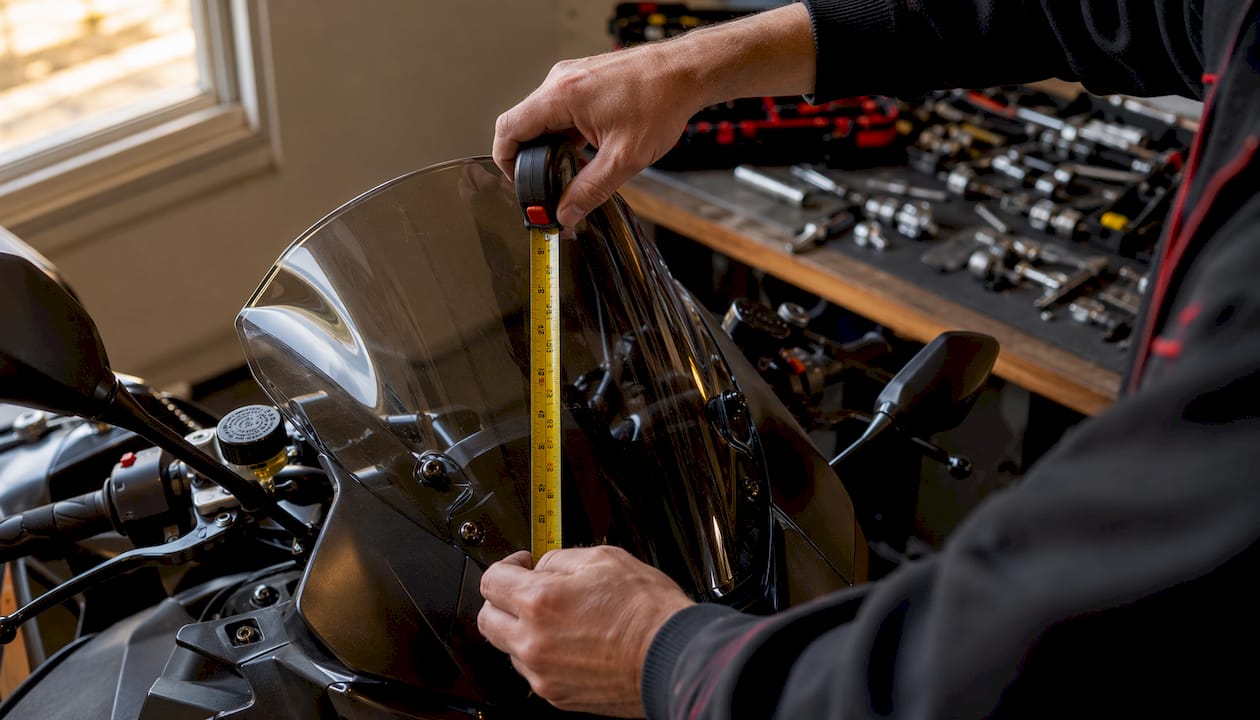
Windshield height is measured from the center of the bottom edge upward. The goal is to create an air pocket that directs wind over your helmet rather than straight into your face or chest. Too short and the wind hits you directly. Too tall and it pushes turbulent air right into your helmet.
Pro Tip: Riders seeking maximum protection should aim for a windshield height that ends just above the top of their helmet. This “look-through” position reduces helmet buffeting and dramatically improves long-distance comfort.
The other key decision is look-over versus look-through. Adventure riders often prefer a look-over setup because mud and dirt can obscure a screen fast on the trail. Look-through setups offer better wind protection but require a perfectly clean, scratch-free shield at all times. Any distortion at speed is a safety issue, not just an annoyance.
Use these checkpoints when sizing up your options:
- Measure your seated riding height from the ground to your eyes
- Match windshield width to at least your shoulder width for effective side coverage
- Consider your typical riding conditions: highway, city, off-road, or mixed
- Factor in your helmet type, since taller helmets shift the ideal windshield height
- Test fit when possible, or check manufacturer sizing charts against your bike’s specific geometry
Riders new to windshield selection will find the beginner accessories guide at Dmgmotorsports useful for putting windshields in context with other comfort upgrades.
Installation, trimming, and keeping your windshield in great shape
Getting a windshield mounted correctly is half the battle. The other half is keeping it clear enough to actually see through.
Installation and trimming:
- Check compatibility with your bike’s mounting points before purchasing. Many windshields use universal brackets, but some models from Yamaha, Kawasaki, and other manufacturers have proprietary mounting systems that require model-specific hardware.
- Use the manufacturer’s template when trimming a universal-fit windshield to size. Mark your cut line with a grease pencil, not a permanent marker, since permanent ink can bleed into the material.
- Cut acrylic with a fine-tooth saw blade and polycarbonate with a jigsaw set to a slow speed. Rushing the cut creates micro-cracks along the edge that spread over time.
- Sand all cut edges with progressively finer grits, finishing at 400-grit or higher, to remove stress points that could lead to cracking.
- Torque mounting hardware to spec. Over-tightening cracks the mounting holes; under-tightening lets the shield vibrate and fatigue the material.
Cleaning and maintenance:
- Use only mild soap and water or a cleaner specifically rated for plastic windshields. Ammonia-based products (most glass cleaners) cloud both acrylic and polycarbonate permanently.
- Always use a soft microfiber cloth. Paper towels feel harmless but leave fine scratches that accumulate into haze over time.
- Apply a plastic polish like Novus Plastic Polish or a similar product every few months to fill in minor surface scratches and restore clarity.
- Inspect mounting hardware at every oil change interval. Vibration loosens fasteners gradually, and a loose windshield creates buffeting that mimics a sizing problem.
- Store your bike covered or in a garage when possible. Prolonged UV exposure degrades both materials, even UV-resistant acrylic, faster than road use alone.
For a broader look at how windshield maintenance fits into overall bike upkeep, the motorcycle service guide at Dmgmotorsports breaks down what to check and when.
Vented and tinted windshields: style meets function
Vented and tinted windshields are not just cosmetic upgrades. They solve specific problems, and knowing which problem you actually have helps you pick the right one.
Vented windshields work by allowing a controlled amount of air to pass through the screen rather than forcing all of it up and over. Vented designs improve airflow to reduce buffeting without sacrificing overall wind protection. Riders who experience turbulent air hitting the back of their helmet at highway speeds often find that a vented shield fixes the problem where a taller solid shield made it worse.
Tinted windshields cut glare and give your bike a sharper look, but they come with a real trade-off. Tinted screens are recommended only for riders who do not look through the windshield, since reduced light transmission at dusk or in low-visibility conditions can compromise your sight line. If your riding position puts your eyes at or below the top of the screen, stick with clear.
Quick comparison:
- Vented: Reduces buffeting, improves airflow balance, great for hot-weather riding and highway use
- Vented trade-off: Less total wind blockage than a solid screen of the same size
- Tinted: Reduces glare, looks sharp, adds a custom feel
- Tinted trade-off: Reduces visibility in low light; unsafe if your line of sight goes through the screen
Memphis Shades and Slip Streamer both offer vented and tinted options across a range of styles, so you can usually find a version that fits your bike’s profile without custom fabrication. Rifle Fairings leans toward full-coverage touring designs that often include tinted variants for long-haul riders who want glare reduction on sunny interstate runs.
How windshield size and shape change your ride
Shape and size are not just about looks. They directly affect how air moves around you, and small differences in geometry produce very different results at speed.
Taller windshields create a larger air pocket in front of the rider, which is great for fatigue reduction on long highway stretches and a perfect candidate for those seeking Motorcycle Dyno Tuning in Utica, NY to enhance riding comfort and performance. The trade-off is increased wind load on the mounting hardware and a slight reduction in handling feel at high speeds, since the larger surface area catches more crosswind. Shorter windshields let more air through, which some riders prefer for the feedback and cooling effect, but they offer less protection against fatigue on extended rides.
Width matters just as much as height. A narrow windshield that does not reach your shoulders leaves your arms and hands exposed to full wind blast, which defeats a big part of the purpose. Wider shields wrap the airflow around your body more completely, reducing the turbulence that hits your sides and arms.
Shape plays a role too. Flat windshields are simpler to manufacture and easier to trim, but they tend to create more turbulence at the top edge. Curved or contoured designs direct air more smoothly over and around the rider, which is why most touring-grade windshields from brands like National Cycle use a compound curve rather than a flat panel. Adjustable windshields, which let you change the angle or height while riding, give you the ability to dial in airflow for different conditions without swapping hardware. They are particularly popular on adventure bikes and touring setups where conditions change throughout a single day’s ride.
For riders thinking about how windshield geometry connects to overall rider posture and ergonomics, the relationship is tighter than most people expect. A windshield that redirects air incorrectly for your riding position forces compensating posture adjustments that add up to real fatigue over miles.
Key Takeaways
Choosing the right motorcycle windshield comes down to matching height, width, material, and shape to your riding style, because no single design works equally well for every rider or every road.
| Point | Details |
|---|---|
| Height determines comfort | Aim for a windshield that ends just above your helmet to reduce buffeting and fatigue. |
| Material affects durability | Polycarbonate with Quantum hardcoating resists scratches significantly better than uncoated polycarbonate. |
| Width must match your shoulders | A windshield narrower than your shoulder width leaves your arms exposed and reduces fatigue protection. |
| Tinted shields require a look-over position | Clear windshields are the safe choice if your line of sight passes through the screen. |
| Maintenance preserves clarity | Use plastic-rated cleaners and microfiber cloths; ammonia-based glass cleaners permanently cloud both acrylic and polycarbonate. |
Find your next windshield at Dmgmotorsports
You have done the research. Now it is time to gear up like the road warrior you are. Dmgmotorsports carries a full range of motorcycle windshields and accessories from top brands, with expert support to help you match the right screen to your bike and riding style. Whether you are chasing highway miles on a touring rig or carving corners on a sport bike, shop Dmgmotorsports and find the windshield that makes every ride easier on your body and better on your eyes.