

How to Choose Motorcycle Jacket Material for Riders
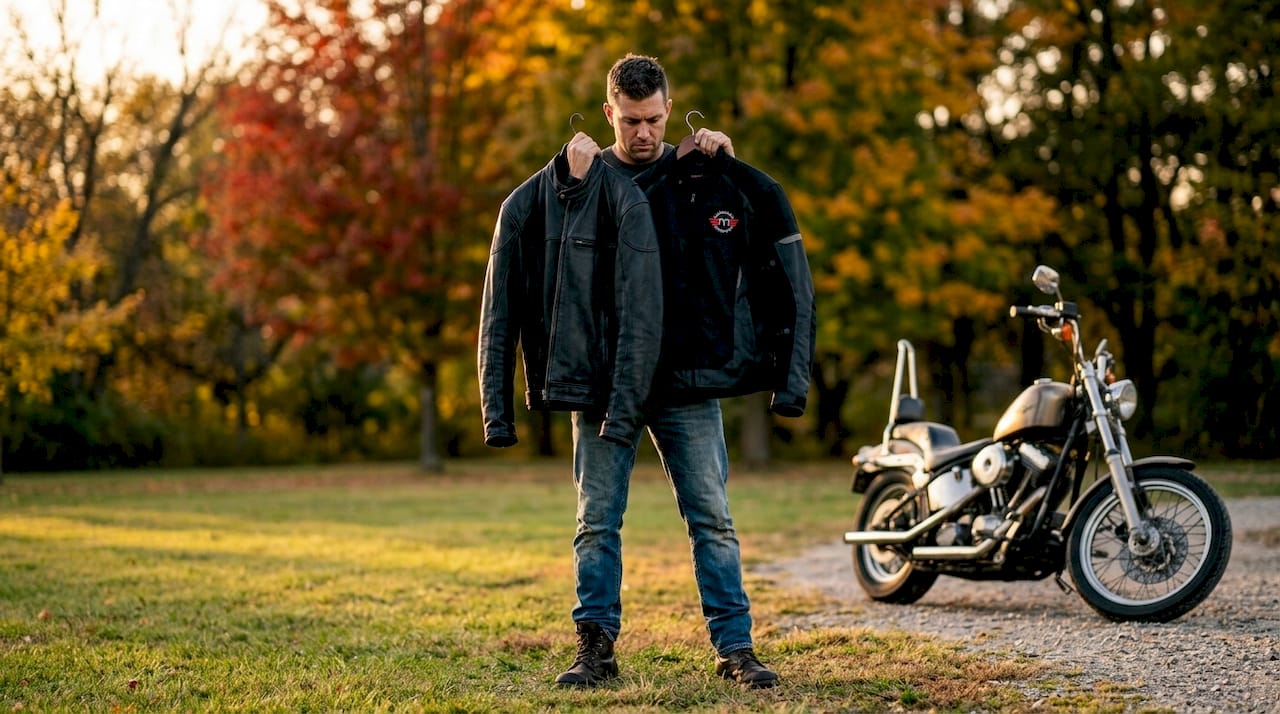
Choosing motorcycle jacket material is the single most important gear decision you will make as a rider. The outer shell of your jacket determines how well you survive a slide, how comfortable you stay on a four-hour tour, and whether you are sweating through a July commute or shivering in an October drizzle. The industry organizes jacket materials into four main categories: leather, textile, mesh, and hybrid. Every category has a distinct performance profile, and CE certification standards (Level 1 and Level 2 armor ratings) apply across all of them. Fit and construction matter just as much as the fabric itself. Get those three things right, and you are a genuine road superhero.
How to choose motorcycle jacket material: the core framework
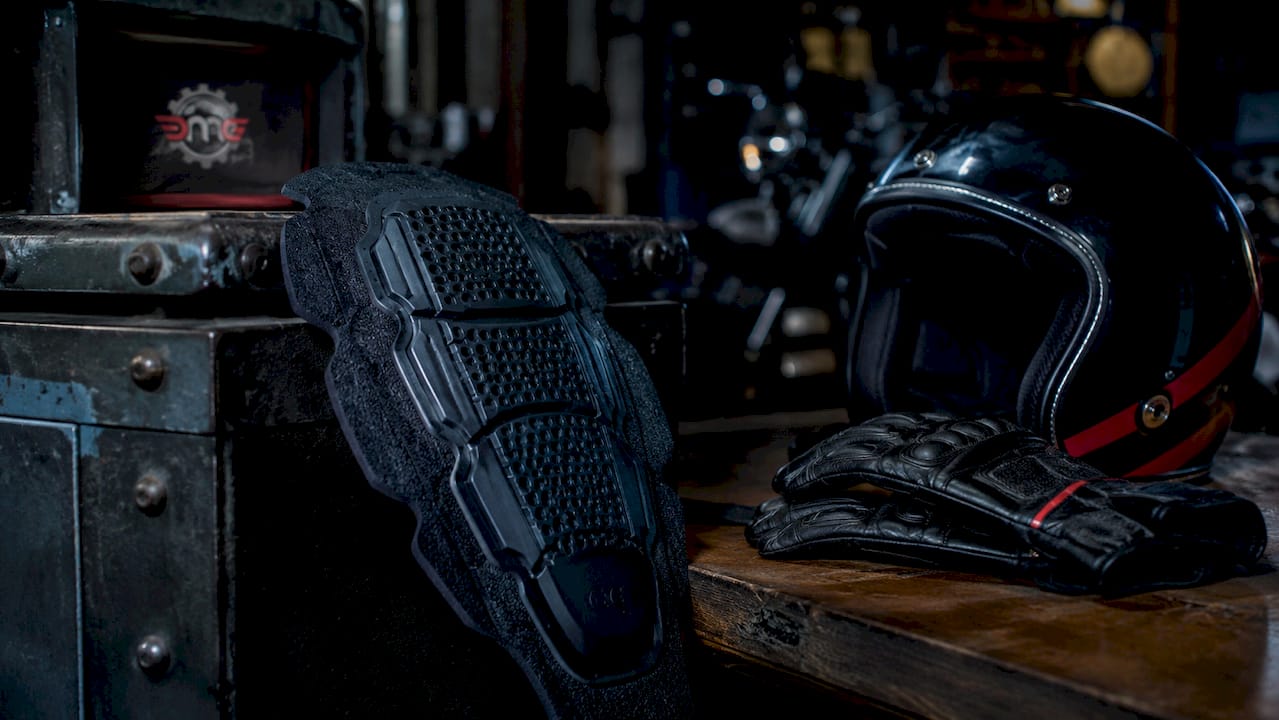
The right jacket material is defined by where you ride, how often you ride, and what weather you ride through. Before you fall in love with a jacket’s looks, check two things: the CE certification rating and the armor placement. CE-rated armor placement and quality are the most critical safety factors in any jacket, regardless of material. A poorly fitted leather jacket is less protective than a properly fitted textile jacket with Level 2 armor. That is not an opinion. That is physics.
CE Level 2 armor reduces force transmitted to your body by half compared to Level 1. That gap matters enormously in a crash. Once you confirm the armor rating, then you can start comparing leather versus Cordura versus mesh. Style comes last, not first.
What makes leather motorcycle jackets so protective?
Leather is the gold standard for abrasion resistance, and it has earned that reputation honestly. Full-grain cowhide at 1.2–1.5mm thickness with quality saddle stitching delivers outstanding slide protection. Horsehide pushes that protection even further, though it requires a longer break-in period before it feels comfortable. Cowhide breaks in faster and remains the most popular choice for everyday riders.
The break-in process is real and worth planning for. Leather molds to your body over weeks or months, which eventually produces a custom-feeling fit. That process requires patience and proper conditioning. Riders who skip the break-in phase often end up with a stiff jacket that restricts movement at exactly the wrong moment.
Construction quality separates a protective leather jacket from a stylish one. Double stitching with heavy thread and saddle stitching at seams prevents panel separation during a slide. Seams are structural weak points. A jacket that looks great but uses single-stitch construction will fail when you need it most.
Here is where leather falls short:
- Wet weather: Leather absorbs water, gets heavy, and turns cold fast. A rainy commute in a leather jacket is a miserable experience.
- Heat: Leather traps body heat with minimal ventilation, making summer riding uncomfortable.
- Weight: Full leather jackets are heavier than textile options, which adds fatigue on long rides.
- Maintenance: Leather requires regular conditioning to prevent cracking and stiffness.
Pro Tip: If you ride primarily in cooler, dry climates or on a sport bike where abrasion resistance is your top priority, a full-grain cowhide jacket with CE Level 2 armor at the shoulders, elbows, and back is your best investment.
How do textile jackets compare for protection and versatility?
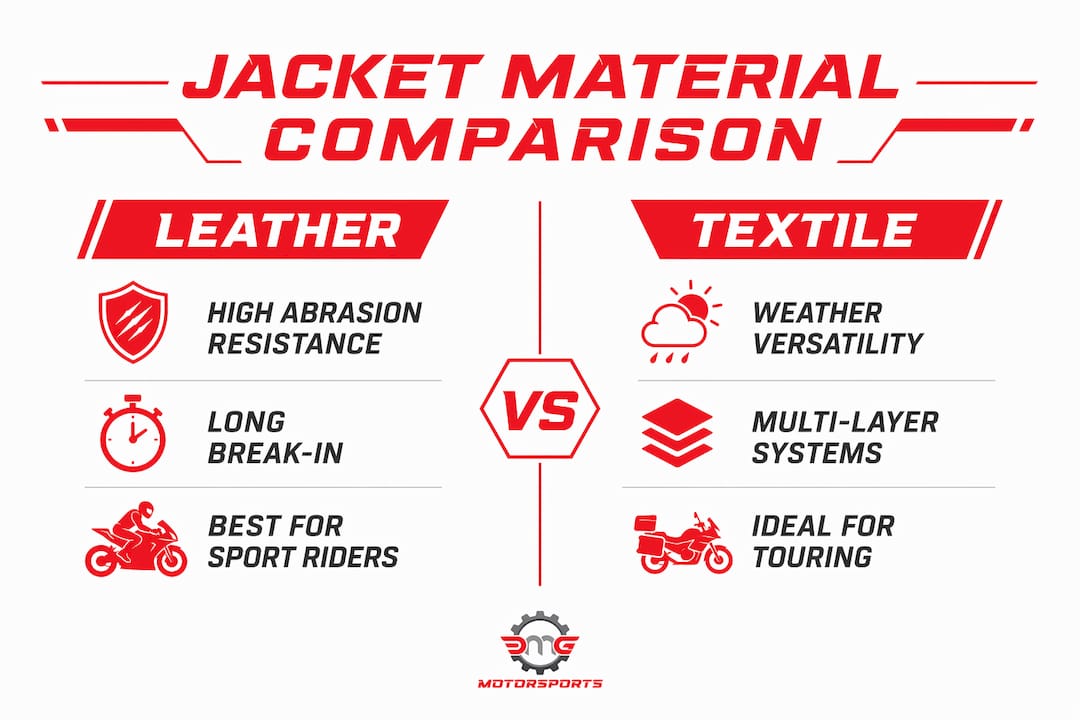
Textile jackets are the workhorses of the motorcycle gear world. High-denier textile fabrics like Cordura and ballistic nylon can approach leather in abrasion protection while delivering better weather versatility and lighter weight. Add a Gore-Tex membrane and you get a jacket that handles rain, wind, and cold without turning into a soggy mess.
The real advantage of textile is its multi-layer system. A quality textile jacket combines a waterproof outer shell, a removable thermal liner, and ventilation panels. That combination gives you year-round adaptability that leather simply cannot match. You can strip the liner for a warm spring ride and zip it back in for a cold morning commute. Check out the Dmgmotorsports guide on gear breathability for a deeper look at how ventilation panels work across different riding conditions.
Textile jackets also provide comfort right out of the box. There is no break-in period. You buy it, you wear it, and it works. For commuters, touring riders, and anyone who rides in unpredictable weather, textile is often the smarter choice.
Key advantages of textile jackets at a glance:
- Cordura and ballistic nylon deliver strong abrasion resistance at a lighter weight than leather.
- Gore-Tex membranes keep rain out without sacrificing breathability.
- Removable liners let you adapt to seasonal temperature changes.
- Immediate comfort with no break-in period required.
- CE armor pockets are standard in quality textile jackets, so Level 2 upgrades are straightforward.
The trade-off is that textile does not match the raw abrasion resistance of thick full-grain leather in a high-speed crash. For sport riders pushing hard on track days, leather still wins that specific comparison.
When should riders consider mesh and hybrid jackets?
Mesh jackets exist for one reason: airflow. If you ride in Texas in august or commute through city traffic in 95-degree heat, a mesh jacket keeps you from cooking alive. Modern reinforced mesh jackets with CE-rated armor are safe for urban and hot-weather riding, though they offer less protection than full leather or heavy textile in a high-speed crash.
Hybrid jackets are the smarter evolution of the mesh concept. They combine mesh panels for airflow with leather or textile reinforcement at the shoulders, elbows, and chest. You get meaningful ventilation without giving up all your crash protection. Here is how to think about the mesh and hybrid decision:
- Assess your climate. If summer temperatures regularly exceed 90°F in your area, mesh or hybrid is a legitimate safety choice because heat exhaustion is a real riding hazard.
- Check the reinforcement zones. A hybrid jacket must have solid material at impact points. Mesh-only shoulders are a red flag.
- Verify CE armor. The lighter the outer material, the more critical the armor becomes. Never buy a mesh or hybrid jacket without CE Level 1 or Level 2 armor at shoulders, elbows, and back.
- Match to your speed. Mesh is well-suited for urban speeds. At highway speeds, the protection gap between mesh and leather becomes more significant.
Pro Tip: Look for hybrid jackets with leather or 600-denier textile panels at the shoulders and elbows. Those are the first contact points in most crashes, and reinforcement there makes a measurable difference.
How do you match jacket material to your riding style and climate?
A jacket’s overall safety depends on fit, armor placement, and construction more than the outer material alone. That insight should anchor every buying decision you make. Use this framework to match your priorities to the right material.
Sport and track riders need maximum abrasion resistance. Full-grain cowhide or horsehide leather with CE Level 2 armor at all impact zones is the correct answer. Fit should be snug and aerodynamic, with pre-curved sleeves for a riding position.
Touring riders need versatility above all else. A high-denier textile jacket with a Gore-Tex membrane, removable thermal liner, and ventilation panels handles everything from a cold morning start to an afternoon heat wave. Proper jacket fit and sizing matters enormously here because touring jackets need to accommodate layers underneath without restricting movement.
Commuters benefit from textile or hybrid jackets that balance protection with daily wearability. Lighter weight, easy on-and-off, and weather resistance are the priorities.
Hot-weather and urban riders can choose reinforced mesh or hybrid jackets, provided CE armor is in place at all impact zones.
Here is a direct material comparison to help you decide:
| Material | Abrasion resistance | Weather versatility | Comfort | Best use case |
|---|---|---|---|---|
| Full-grain leather | Excellent | Low (poor in rain/heat) | Improves with break-in | Sport, track, cool climates |
| Textile (Cordura/Gore-Tex) | Very good | Excellent | Immediate | Touring, commuting, wet climates |
| Mesh | Limited | Poor in cold/rain | Excellent in heat | Urban, summer riding |
| Hybrid | Good | Moderate | Very good | Hot climates, mixed urban/highway |
One mistake riders make repeatedly: they buy a jacket rated Class AA or AAA for abrasion resistance but skip the back protector upgrade. The jacket shell protects your skin. The armor protects your bones and organs. Both matter. Always check the CE certification details before you buy, not after.
Key Takeaways
The right motorcycle jacket material balances abrasion resistance, CE-certified armor, proper fit, and climate suitability. No single material wins every category.
| Point | Details |
|---|---|
| CE armor rating comes first | Always verify Level 1 or Level 2 armor at shoulders, elbows, and back before evaluating material. |
| Leather leads in abrasion resistance | Full-grain cowhide at 1.2–1.5mm with saddle stitching offers the best slide protection available. |
| Textile wins for versatility | Cordura and Gore-Tex jackets handle rain, cold, and heat better than leather across all seasons. |
| Mesh and hybrid suit hot climates | Reinforced mesh and hybrid jackets are safe for urban and summer riding when CE armor is present. |
| Fit determines real-world protection | A well-fitted textile jacket with Level 2 armor outperforms a poorly fitted leather jacket every time. |
Bryan’s take: what years on the road actually taught me
Here is the uncomfortable truth about jacket shopping: most riders, myself included, bought their first jacket based on how it looked in the mirror. That is a completely understandable mistake. It is also a potentially painful one.
My first leather jacket was a gorgeous piece of full-grain cowhide. It also had Level 1 armor that shifted around every time I moved, and the back protector pocket was sized for something about half the thickness of an actual CE-rated insert. Looked incredible. Would have done a mediocre job protecting me in a real crash.
What I learned over time is that the material conversation is secondary to the armor and fit conversation. A textile jacket with properly seated Level 2 armor at the shoulders, elbows, and spine is genuinely safer than a premium leather jacket with undersized, poorly positioned armor. That realization changed how I shop entirely.
I also learned to stop treating leather and textile as competitors. I own both now, and I choose between them based on the ride. Cold, dry weekend canyon run? Leather, every time. Wet Tuesday commute or a multi-day tour with unpredictable weather? Textile with a Gore-Tex membrane wins without debate. Hybrid jackets have impressed me more recently than I expected. The reinforced panel designs have improved significantly, and for summer riding they hit a genuinely useful balance between airflow and protection.
The one thing I will never compromise on again: CE Level 2 armor at every impact zone, regardless of what the outer shell is made of.
— Bryan
Gear up with Dmgmotorsports
Dmgmotorsports carries certified leather, textile, mesh, and hybrid jackets from trusted brands, with CE-rated armor options across every riding style and budget.
Whether you are a weekend sport rider who wants full-grain leather with Level 2 armor or a daily commuter looking for a Gore-Tex textile jacket that handles whatever the weather throws at you, the Dmgmotorsports team can point you to the right fit. Every jacket in the catalog is selected with protection ratings and real riding conditions in mind. Browse the full motorcycle jacket selection and find the material that matches your ride, your climate, and your safety standards. Expert support is available if you have questions about armor upgrades or sizing.
FAQ
What is the most protective motorcycle jacket material?
Full-grain cowhide leather at 1.2–1.5mm thickness offers the highest abrasion resistance of any jacket material. Horsehide provides even greater protection but requires a longer break-in period.
Do textile jackets offer real crash protection?
Yes. High-denier fabrics like Cordura and ballistic nylon approach leather in abrasion resistance, especially when paired with CE Level 2 armor at the shoulders, elbows, and back.
Are mesh jackets safe for highway riding?
Mesh jackets are best suited for urban speeds and hot weather. At highway speeds, the abrasion protection gap between mesh and leather or heavy textile becomes significant, so reinforced hybrid designs are a safer choice for mixed riding.
What does CE Level 2 armor actually do?
CE Level 2 armor reduces force transmitted to your body by half compared to Level 1. Proper placement at shoulders, elbows, and the spine is just as critical as the rating itself.
How do I know if a jacket fits correctly for safety?
A properly fitted jacket keeps armor centered over impact zones when you are in your riding position. If the shoulder armor slides toward your neck or the elbow armor drops below the joint, the jacket does not fit correctly regardless of material.
Recommended
- Motorcycle Jacket Fit Sizing Explained for Riders - DMG Motorsports
- Motorcycle Cover Selection Guide: Choose Right Every Time - DMG Motorsports
- Motorcycle Gear Breathability: What Every Rider Must Know - DMG Motorsports
- Staying Safe and Stylish on the Track: The Importance of Proper Motorcycle Gear - DMG Motorsports