

Motorcycle Weather Riding Tips for Every Season
Motorcycle weather riding tips are the strategies riders use to stay safe, comfortable, and in control when the sky stops cooperating. Rain turns roads into slip-and-slides, cold stiffens your hands before your brain notices, and summer heat turns a fun ride into a survival test. The good news? Every weather condition has a playbook. Master it, and you go from white-knuckling through a drizzle to confidently owning the road year-round. Here are the tips that actually work, organized by condition so you can grab exactly what you need before you twist that throttle.
1. Motorcycle weather riding tips for rain: stay smooth, stay upright
Rain riding is a full system, not just a speed reduction. Every input must be progressive: brake gradually, roll the throttle on gently, and steer with patience. Abrupt inputs on wet pavement are the fastest way to introduce yourself to the asphalt.
Here is the most underrated rain fact most riders never hear: the first 15–20 minutes of rain produce the slickest road surface of the entire storm. Oil, dust, and grime float to the top before the rain washes them away. That window is when you need to ride like you are carrying a tray of full coffee cups.
Your lane position matters more in the wet than in any other condition. The middle third of your lane keeps you away from painted lines, metal drain covers, tar snakes, and road-edge debris. Think of it as your personal dry island in a sea of hazards.
- Extend your following distance to 3–5 seconds behind the vehicle ahead. In heavy rain, push that to the full five.
- Brake with a “lemon squeeze” technique: apply pressure as if you are squeezing juice slowly, not grabbing a fistful of brake.
- Keep your gaze up and scan far ahead. Tunnel vision on wet surfaces is a panic response that narrows your reaction window.
- Gear must seal at the cuffs, collar, and boot tops. A waterproof jacket that lets water pour up your sleeve is a very expensive sponge.
Pro Tip: Pair your rain gear with a pinlock or anti-fog visor insert before you ride. A fogged visor in the rain is not just annoying. It is genuinely dangerous.
2. Safe motorcycle riding in cold: layer up and time it right
Cold weather riding is less about toughness and more about systems. The layering system that works best uses three layers: a moisture-wicking base layer against your skin, an insulating mid-layer to trap warmth, and a windproof outer shell to block the chill. Each layer has a job. Skip one and the whole system fails.
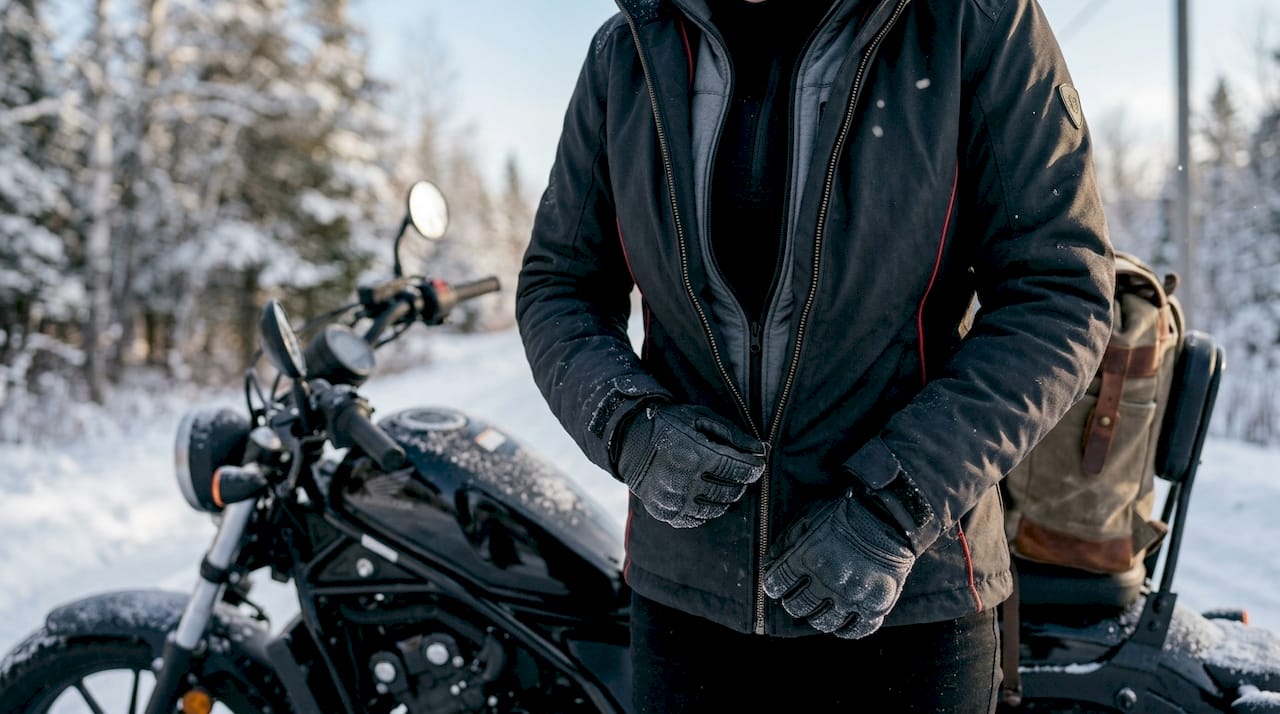
Avoid riding at dawn and dusk during cold months to cut your black ice exposure. Temperatures drop fastest at those times, and ice forms on bridges and shaded patches before you can see it. Shifting your ride to mid-morning, when the sun has had time to warm the pavement, is one of the simplest safety upgrades you can make.
Cold gear worth having:
- Heated gloves or grip warmers. Cold hands lose fine motor control faster than you think, and fine motor control is what keeps you from grabbing the brake too hard.
- A neck gaiter or balaclava. Wind chill at 60 mph in 40°F air feels like standing in a freezer with a fan pointed at your face.
- Windproof riding pants with thermal lining. Your legs are exposed to the full blast of moving air and get cold faster than your torso.
- Tire pressure check before every cold ride. Tire pressure drops roughly one PSI for every 10°F drop in temperature, which affects grip and handling.
Cold also affects your motorcycle’s performance. Oil thickens in low temperatures, so give your engine a proper warm-up before you ride hard. Check your motorcycle’s service schedule more frequently in winter months to catch issues before they strand you on a cold road.
3. Tips for hot weather riding: beat the heat before it beats you
Heat is the sneakiest weather hazard because it works slowly. You feel fine, then suddenly you feel terrible, and by then your reaction time is already compromised. The fix is timing and hydration, and both need to start before you throw a leg over the bike.
At 95°F and above, carry 2–3 liters of fluids and drink 500–700 ml before you even start the engine. That pre-ride hydration is your buffer against the heat you are about to ride into. Sipping every 15–20 minutes during the ride keeps your concentration sharp and your body functional.
Avoid peak heat hours between 1 PM and 5 PM during summer. Start your ride before 11 AM or wait until after 6 PM. The temperature difference between 10 AM and 2 PM can be 15°F or more, and that gap is the difference between an enjoyable ride and a miserable one.
- Wear light-colored, mesh gear. Dark colors absorb heat, and solid textile jackets trap it. Mesh gear enables airflow that keeps your core temperature manageable.
- Use a cooling neck wrap soaked in water. Evaporative cooling on your neck drops your perceived temperature noticeably.
- Apply SPF 50 sunscreen to any exposed skin. Wrists and the back of your neck are the most commonly burned spots on riders.
- Skip the extra coffee before a hot ride. Caffeine is a diuretic and speeds up dehydration exactly when you need to stay hydrated.
Pro Tip: Watch for heat exhaustion warning signs: heavy sweating, dizziness, nausea, and muscle cramps. If any of those show up, pull over immediately, get into shade, and drink fluids. Riding through heat exhaustion is not toughness. It is a crash waiting to happen.
Heat also affects your bike. Tire pressure and oil temperature rise significantly in extreme heat, so check both before and after long summer rides.
4. Dressing for motorcycle weather: the right gear for every condition
Gear is not just armor. It is your climate control system, and choosing the wrong setup for the weather is like wearing a parka to the beach or a tank top to a snowstorm. The right gear keeps you focused on riding instead of fighting discomfort.
Here is how gear stacks up across the three main weather conditions:
| Weather | Key gear features | What to avoid |
|---|---|---|
| Rain | Waterproof jacket and pants, sealed cuffs, waterproof gloves, anti-fog visor | Cotton layers that absorb water and stay wet |
| Cold | Thermal base layer, insulated mid-layer, windproof shell, heated gloves | Bulky gear that restricts movement and control |
| Hot | Mesh jacket, ventilated helmet, light colors, moisture-wicking base layer | Full leather with no ventilation in direct sun |
Helmet visor choice changes everything in rain and cold. A standard clear visor fogs instantly in cold, wet air. A pinlock insert or a double-lens visor solves that problem by eliminating the temperature difference between the inside and outside of the lens. Read up on helmet visor options before your next season change.
Gloves and boots are the most overlooked pieces of weather gear. Your hands and feet are the first body parts to lose sensation in cold and the first to get soaked in rain. Waterproof, insulated gloves and boots are not optional accessories. They are the difference between a controlled ride and a dangerous one. For a deeper look at how gear breathability affects comfort and safety, the details matter more than most riders realize.
5. How to ride a motorcycle in wind: the invisible hazard
Wind does not get the same respect as rain or cold, but a strong crosswind at highway speed is one of the most disorienting forces a rider faces. The key is to stop fighting it and start working with it.
Lean slightly into a steady crosswind to counteract the push. Your bike wants to drift; a small lean correction keeps you tracking straight without overcorrecting. The mistake most riders make is tensing up and gripping the bars too tight, which actually makes the bike harder to control.
Gusts are the real danger because they are unpredictable. Slow down in gusty conditions, increase your following distance, and avoid riding next to large trucks or through open gaps between buildings where wind channels and accelerates. Staying in the middle of your lane gives you the most room to absorb a sudden push in either direction.
6. Seasonal motorcycle riding advice: plan your year like a pro
The best seasonal motorcycle riding advice is simple: ride with the conditions, not against them. Riders who adjust their schedule, gear, and technique to match the season stay safer and have more fun than those who treat every ride like a summer cruise regardless of what the thermometer says.
Spring brings wet roads and cold mornings even when the afternoon looks beautiful. Fall delivers the same trap in reverse: warm afternoons that turn cold fast as the sun drops. Both seasons reward riders who check the full-day forecast, not just the current temperature.
Winter riding, where legal and practical, requires the most preparation. Beyond layering, it means checking road conditions for salt, sand, and ice patches, and knowing when to simply not ride. No destination is worth a black ice encounter at 50 mph.
Key takeaways
Adapting your gear, ride timing, and control inputs to match the specific weather condition is the single most effective way to stay safe and enjoy riding year-round.
| Point | Details |
|---|---|
| Rain demands smoothness | Progressive braking, throttle, and steering inputs prevent loss of traction on wet roads. |
| Cold requires layering and timing | A three-layer system and avoiding dawn or dusk rides cut cold-weather risk significantly. |
| Heat is managed before you ride | Pre-hydrating with 500–700 ml of fluid and avoiding peak afternoon hours protects focus and safety. |
| Gear must match the condition | Waterproof sealing for rain, thermal insulation for cold, and mesh ventilation for heat are non-negotiable. |
| Wind rewards relaxed control | Leaning into steady crosswinds and loosening your grip keeps the bike tracking straight. |
Bryan’s take: ride the conditions, not your ego
Here is the honest truth I have learned from years of riding in weather that most people would call unreasonable. The riders who struggle most in bad weather are not the ones with the least skill. They are the ones who refuse to adjust their expectations.
I have ridden in rain, cold, and heat that I had no business being out in, and the rides that went badly were almost always the ones where I was trying to ride like it was a perfect 72°F day. The moment I started treating each weather condition as its own riding environment with its own rules, everything changed. Rain became manageable. Cold became a puzzle to solve with the right layers. Heat became a scheduling problem with a hydration solution.
The gear investment is real, and I will not pretend otherwise. A quality waterproof jacket, heated gloves, and a proper mesh setup for summer are not cheap. But the alternative is riding uncomfortable, distracted, and unsafe. Discomfort kills focus, and lost focus is how accidents happen. Invest in the gear once and it pays you back on every single ride.
The one thing I see overlooked most often is hydration in heat. Riders will spend $500 on a jacket and then show up to a summer ride with a single water bottle. Drink before you feel thirsty. By the time thirst hits, you are already behind.
— Bryan
Gear up for every ride with Dmgmotorsports
Weather does not wait for you to be ready. Dmgmotorsports carries the gear that makes every condition rideable, from waterproof rain suits and heated gloves to mesh jackets and ventilated helmets built for summer heat.

Whether you are gearing up for your first cold-weather ride or upgrading your rain setup before the season changes, Dmgmotorsports has the products and expert guidance to get you equipped fast. Browse the full range of weather-ready riding gear and find exactly what your next ride demands. Proper gear is not a luxury. It is what keeps you on the road and out of trouble, season after season.
FAQ
What is the best weather for motorcycle riding?
Clear, dry conditions between 60°F and 80°F with light winds are the safest and most comfortable for most riders. Avoid riding in the first 15–20 minutes of rain, during peak heat between 1 PM and 5 PM, and at dawn or dusk in cold months when black ice risk is highest.
How do you ride a motorcycle safely in the rain?
Use smooth, progressive inputs on the brake, throttle, and steering, and extend your following distance to 3–5 seconds. Stay in the middle third of your lane to avoid painted lines, metal plates, and road-edge debris.
What should I wear for cold weather motorcycle riding?
Layer a moisture-wicking base, an insulating mid-layer, and a windproof outer shell. Add heated gloves or grip warmers to maintain hand control, since cold hands lose fine motor function faster than most riders expect.
How do I stay safe riding a motorcycle in hot weather?
Pre-hydrate with 500–700 ml of fluid before riding and carry 2–3 liters on the bike. Shift your ride to before 11 AM or after 6 PM to avoid peak heat hours, and wear light-colored mesh gear to maximize airflow.
How do you handle wind on a motorcycle?
Lean slightly into a steady crosswind to counteract the push and relax your grip on the bars. Slow down in gusty conditions and avoid riding alongside large trucks or through open gaps where wind channels and accelerates unpredictably.
Recommended
- Motorcycle Cover Selection Guide: Choose Right Every Time - DMG Motorsports
- Staying Safe and Stylish on the Track: The Importance of Proper Motorcycle Gear - DMG Motorsports
- 6 Top Beginner Motorcycle Accessories for New Riders - DMG Motorsports
- Motorcycle Jacket Fit Sizing Explained for Riders - DMG Motorsports