

Motorcycle Helmet Visor Types Explained for 2026
A motorcycle helmet visor is the transparent shield that stands between your eyes and everything the road throws at you, from gravel chips to blinding afternoon sun. Getting motorcycle helmet visor types explained properly matters more than most riders realize. The wrong visor choice doesn’t just make you squint. It can genuinely compromise your safety. Whether you’re commuting through city traffic or carving mountain roads, your visor type determines how well you see and how well you’re protected. Standards like DOT, ECE 22.06, and Snell all factor into the equation, and so does the technology built into the lens itself.
What are the main types of motorcycle helmet visors?
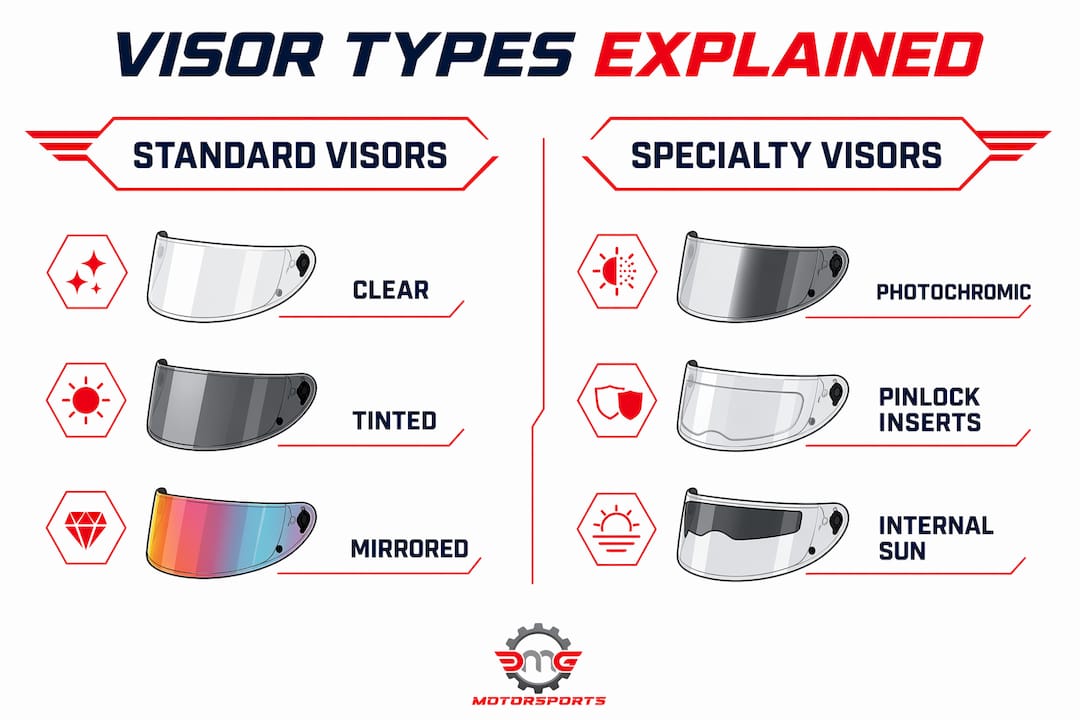
The visor market breaks down into five core categories, and each one solves a different problem. Knowing which one fits your riding life is the whole game.
Clear visors
Clear visors provide 100% light transmission and are the only universally legal and safe option for night riding or heavy rain. That makes them the industry default. Every rider should own at least one. They work in every condition, they meet all major safety standards, and they never leave you guessing when the sun drops below the horizon.
Tinted and mirrored visors
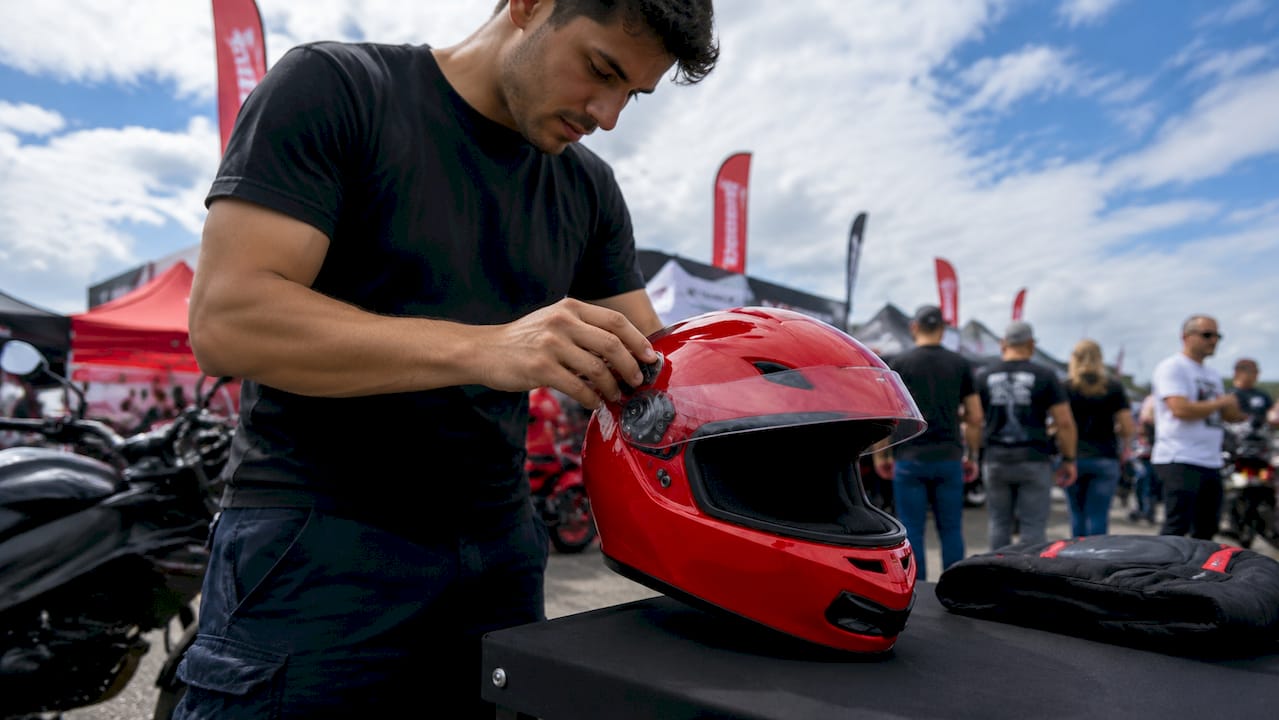
Tinted visors come in light smoke and dark smoke grades, and mirrored (sometimes called iridium) visors add a reflective coating on top. They look undeniably cool, like you’re the lead character in a road movie. The catch is real: tinted or mirror-coated visors are for daytime and fair-weather use only, and using them in low-light conditions is a significant safety hazard. Riding into a tunnel or getting caught after sunset with a dark visor means you’re flying blind. Don’t do it.
Photochromic visors
Photochromic visors, also called transition visors, automatically darken in bright UV light and clear up in low light. Think of them as prescription transition lenses for your helmet. Photochromic visors adjust tint based on UV intensity but experience a slight delay when moving from bright to dark environments, like entering a tunnel at speed. That delay is the one real trade-off. For most every day riding, though, they remove the need to carry a spare visor.
Pinlock anti-fog inserts
Pinlock is not a visor type itself. It’s a separate lens insert that clips onto pins inside a Pinlock-ready visor, creating a double-glazing effect via a silicone seal that eliminates fogging. Pinlock grades run from entry-level Pinlock 30, to everyday Pinlock 70, up to premium Pinlock 120 and 200 for racing conditions. Cold mornings and wet climates make a Pinlock insert feel like a superpower.
Pro Tip: Pair a clear visor with a Pinlock 70 insert for your everyday helmet. It covers fog, rain, and night riding without any compromises.
Internal sun visors (dual visor system)
Some helmets include a retractable tinted visor built inside the shell, operated by a lever or slider. You flip it down in bright sun and retract it at night. Convenient? Absolutely. But internal sun visors sit within the EPS liner, which means helmets with this feature cannot meet Snell certification standards. That’s a real trade-off for riders who prioritize the highest safety ratings.
How do you choose the right visor for your riding conditions?
Matching your visor to your riding environment is the most practical decision you’ll make in your helmet setup. Here’s how to think through it.
- Night riding and rain. Clear visor, full stop. No other option is safe or legal in most U.S. states after dark.
- Bright sunny days on open roads. A tinted or mirrored visor works well here. Just make sure you swap it out before the light changes.
- Variable conditions and commuting. A photochromic visor handles most transitions automatically. Accept the slight tunnel delay as the cost of convenience.
- Cold mornings and humid climates. A Pinlock-ready visor with an insert is non-negotiable. Fogging at highway speed is genuinely dangerous.
- Track days and performance riding. A single clear visor with a Pinlock insert keeps weight down and keeps your helmet Snell-eligible.
Regional laws also matter. Several U.S. states restrict the use of tinted visors at night, and some limit visible light transmission minimums. Check your state’s motorcycle equipment laws before committing to a dark visor as your daily driver.
Pro Tip: Carry a spare clear visor in your bag or luggage on any ride longer than two hours. Weather changes fast, and swapping a visor takes 30 seconds with a quick-release system.
A clear visor with a Pinlock insert plus a separate tinted visor provides the best all-condition versatility without compromises. That two-visor setup covers every scenario without the weight or certification penalties of a dual visor helmet.
Single visor vs. dual visor helmets: which one wins?
This is the debate that splits commuters and track riders right down the middle. Both systems have genuine merit, and the right answer depends entirely on how you ride.
Single visor helmets
Single visors weigh less and have fewer moving parts than dual visor systems, making them the preferred choice for track and performance-focused riders. They keep the helmet design clean, maximize safety certification eligibility (including Snell), and work perfectly with Pinlock inserts. The trade-off is that you need to physically swap visors when light conditions change.
Dual visor helmets
Dual visor helmets include a clear outer shield plus a retractable tinted inner visor. For urban commuters who ride through changing light conditions multiple times a day, that drop-down sun visor is genuinely useful. The downsides are real, though.
- Dual visor helmets add 100–200 grams more weight than single visor helmets, which adds up on long rides as neck fatigue.
- Internal sun visors cannot accommodate Pinlock inserts due to space limitations inside the shell.
- Helmets with internal sun visors cannot achieve Snell certification.
| Feature | Single visor helmet | Dual visor helmet |
|---|---|---|
| Weight | Lighter | 100–200g heavier |
| Snell certification | Eligible | Not eligible |
| Pinlock compatibility | Yes | Outer visor only |
| Light adaptation | Manual swap | Instant drop-down |
| Best for | Track, performance | Commuting, touring |
Choosing between the two comes down to your riding pattern. Commuters gain immediate light adaptation convenience from internal sun visors, while performance riders prioritize lighter weight and higher certification. Neither is wrong. They’re just built for different riders.
How do you maintain and upgrade your helmet visor?
A scratched visor is not just annoying. It scatters light, creates glare, and reduces your ability to judge distance accurately. Visor maintenance is a safety practice, not a cosmetic one.
- Clean gently. Use a damp microfiber cloth and a visor-safe cleaner. Never wipe a dry visor. Dry wiping drags grit across the surface and creates micro-scratches.
- Check for damage regularly. A visor with deep scratches, cracks, or chips needs replacing. There’s no patch for compromised optics.
- Use quick-release systems. Most modern helmets feature tool-free visor release mechanisms. Learn how yours works so you can swap visors in under a minute roadside.
- Store visors properly. Keep spare visors in a soft pouch or the original packaging. Tossing them loose in a bag guarantees scratches.
- Consider rain-repellent films. Products like anti-rain coatings applied to the outer visor surface help water bead off at speed, improving wet-weather visibility without replacing the visor.
Most premium helmets come Pinlock-ready and may include an insert in the box, but not all Pinlock-ready helmets include the insert automatically. Always check what’s included before you assume your fog problem is already solved.
Pro Tip: When shopping for a replacement visor, confirm it carries an anti-scratch coating. Budget visors often skip this, and you’ll notice the difference within a season.
For riders building out their full gear setup, beginner motorcycle accessories often include visor care kits and quick-release tools worth having from day one.
Key Takeaways
The best visor setup matches your specific riding conditions, not the coolest-looking option on the shelf.
| Point | Details |
|---|---|
| Clear visors are the baseline | They are the only universally safe and legal option for night riding and rain. |
| Tinted and mirrored visors are daytime only | Using them in low light significantly increases the risk of missing obstacles. |
| Photochromic visors offer convenience with a trade-off | They adapt automatically but have a slight delay entering dark environments like tunnels. |
| Pinlock inserts prevent fogging | Grades 30, 70, 120, and 200 cover everything from casual commuting to racing conditions. |
| Dual visor helmets sacrifice certification and weight | Internal sun visors add 100–200g and prevent Snell certification eligibility. |
Bryan’s take on visors: what actually matters on the road
Here’s the honest truth most visor articles skip: the “best” visor is the one you actually use correctly. I’ve seen riders invest in photochromic visors and then complain that they got caught dark inside a tunnel. That’s not the visor failing. That’s a rider who didn’t understand the product before buying it.
My personal setup for most riding is a clear visor with a Pinlock 70 insert as the daily workhorse, and a tinted visor in my bag for long sunny stretches. It sounds like extra effort, but swapping a visor with a quick-release system takes less time than filling up your tank. The two-visor approach gives you zero compromises on safety certification, zero fogging, and full visibility in every condition.
Dual visor helmets are genuinely great for city commuters. I get the appeal. You’re stopping at lights, going through parking structures, and the light changes constantly. That drop-down sun visor earns its keep in that environment. But if you’re doing any track riding or you care deeply about Snell certification, the weight penalty and the certification gap are real costs worth thinking through. Check the safety rating breakdown for DOT, ECE, and Snell before you commit to a helmet with an internal sun visor.
The one thing I’d push back on hardest: never ride at night with a tinted visor because you think it’ll be fine. It won’t. The road is full of unlit obstacles, and your eyes need every photon they can get after dark. Prioritize safety over style every single time. The road will still look cool through a clear visor.
— Bryan
Gear up with the right visor at Dmgmotorsports
Ready to put this knowledge to work? Dmgmotorsports carries a full range of motorcycle helmets and visors suited for every riding style, from clear Pinlock-ready visors for all-weather commuters to photochromic options for riders who want hands-free light adaptation.
Whether you’re building your first helmet setup or upgrading an existing one, the Dmgmotorsports catalog covers DOT, ECE 22.06, and Snell-certified helmets alongside visor accessories that actually make a difference on the road. The team at Dmgmotorsports also has expert support ready if you need help matching a visor type to your specific riding conditions. Good gear isn’t just about looking the part. It’s about getting home safely every time you ride. Check out the best helmets of 2025 to find a starting point that fits your budget and riding style.
FAQ
What is the safest visor type for night riding?
A clear visor is the only safe and universally legal option for night riding. Clear visors provide 100% light transmission, which is critical for spotting unlit obstacles after dark.
Can I use a tinted visor in the rain?
Tinted visors reduce light transmission and should not be used in low-light or heavy rain conditions. A clear visor with a Pinlock anti-fog insert is the correct setup for wet weather.
What is a Pinlock insert and do I need one?
A Pinlock insert is a secondary lens that clips inside a compatible visor and creates an airtight seal to prevent fogging. Riders in cold or humid climates need one. Most premium helmets come Pinlock-ready, but the insert is not always included in the box.
Do dual visor helmets meet Snell certification?
No. Internal sun visors sit within the EPS liner, which prevents dual visor helmets from meeting Snell certification standards. Riders who require Snell certification should choose a single visor helmet.
How often should I replace my helmet visor?
Replace your visor any time it develops deep scratches, cracks, or chips that affect your vision. Damaged optics scatter light and create glare, which reduces your ability to judge distance accurately at speed.
Recommended
- Best Motorcycle Helmets of 2025 (Beginner to Pro Riders) - DMG Motorsports
- Motorcycle Helmet Safety Ratings Explained — DOT vs ECE vs Snell vs FIM (2026 Guide) - DMG Motorsports
- The Types of Motorcycle Helmets for Different Riding Styles - DMG Motorsports
- How to Fit a Motorcycle Helmet for Performance and Comfort - DMG Motorsports