

Year-Round Riding Apparel Examples for U.S. Riders
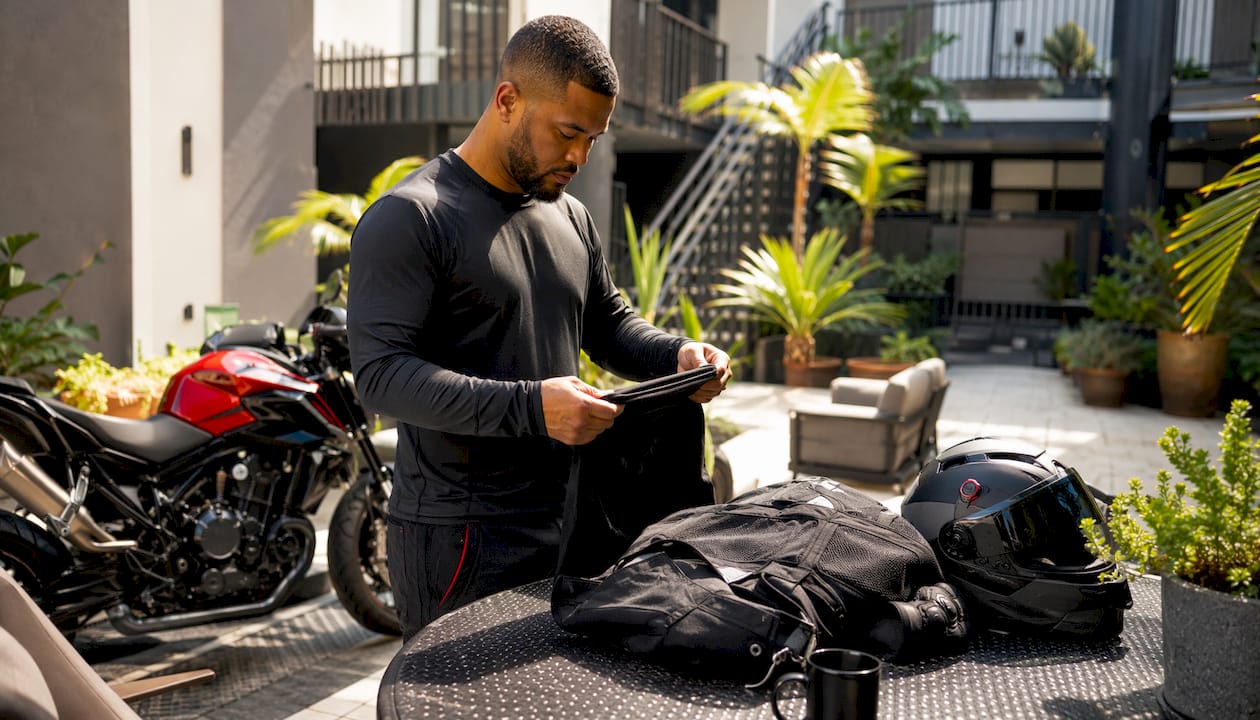
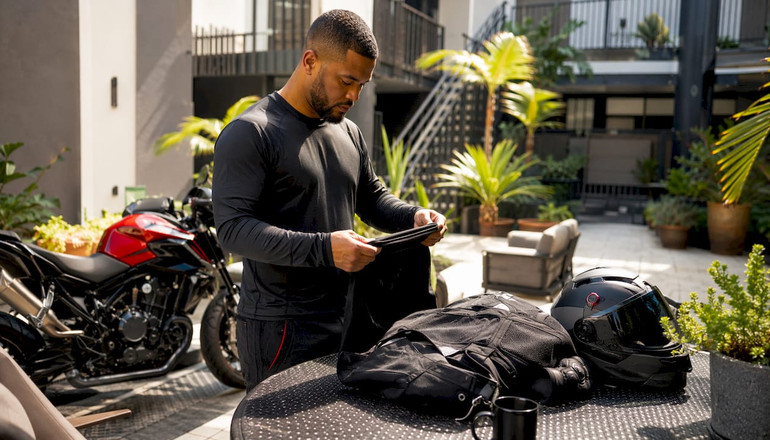
Year-round riding apparel is protective, breathable, and modular gear you can layer for any U.S. season without swapping your entire wardrobe every three months. Think of it as your personal superhero costume, one that adapts to Phoenix summers and Minnesota winters without making you look like the Michelin Man. Here are five quick outfit examples to get you started:
- Hot (>80°F): Mesh jacket with CE armor + vented full-face helmet + short motorcycle gloves + textile pants + ankle boots
- Mild (60–80°F): Textile jacket (vents open) + mid-weight gloves + riding jeans with knee armor + full-face helmet
- Cool (40–60°F): Textile jacket (vents closed) + merino base layer + insulated gloves + armored pants + waterproof boots
- Cold (<40°F): Insulated outer shell + heated liner + balaclava + winter gauntlet gloves + waterproof armored pants + tall boots
- Transition commuter: Packable rain suit over textile jacket + neck gaiter + waterproof gloves + modular helmet
Every outfit you build needs three non-negotiables: helmet and eye protection, protective layers with certified armor, and a weather-appropriate outer layer.
Table of Contents
- How does the three-layer system work for year-round riders?
- What should you actually wear at each temperature band?
- Which materials actually perform across all four seasons?
- How do you balance CE protection, fit, and mobility?
- When should you prioritize ventilation vs. waterproofing?
- How do you keep multi-season gear performing over time?
- Where should you spend your gear budget?
- What’s your pre-ride gear checklist?
- How do weather-specific accessories make your system smarter?
- What helmet and glove choices work best year-round?
- Key Takeaways
- The gear tradeoff nobody talks about enough
- Dmgmotorsports has your year-round kit covered
- Useful sources
How does the three-layer system work for year-round riders?
The three-layer strategy is the backbone of all-season riding gear: a moisture-wicking base, an insulating mid-layer, and a weather-blocking outer shell. Get this right and you can ride comfortably from 20°F to 95°F without buying six different jackets.
Each layer has a specific job. The base pulls sweat away from your skin so you stay dry and avoid that clammy, cold-wet feeling at a stoplight. The mid-layer traps warm air close to your body. The outer shell blocks wind, rain, and road debris while keeping the whole system together.
Fit and mobility matter as much as warmth. When you’re in a riding position, your arms reach forward and your back stretches. A jacket that fits standing up can pull at the shoulders and expose your wrists when you grab the bars. Always check sleeve length seated on the bike, not standing in a store.
Pro Tip: Size your base and mid-layers snug, not tight. Loose fabric bunches under armor and shifts it out of position, which defeats the whole point of wearing it.
- Base layer: moisture-wicking synthetic or merino wool, fitted
- Mid-layer: fleece or insulated vest, slim enough to fit under your jacket’s armor pockets
- Outer shell: abrasion-resistant textile or leather with CE-rated armor at shoulders, elbows, and back
Some thermal riding garments are tested effective down to 23°F (-5°C) while still preserving the close-contact sensitivity you need for precise throttle and brake control. That’s the benchmark to look for on cold-weather gear labels.
What should you actually wear at each temperature band?
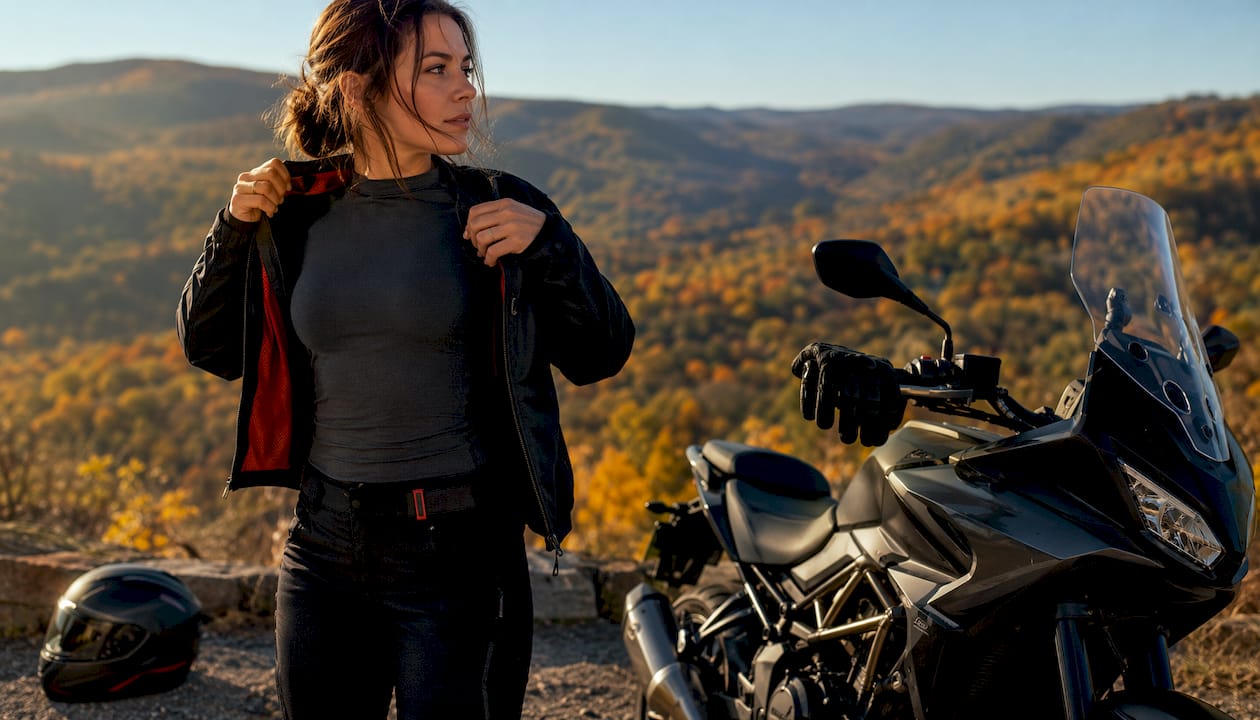
Four outfit bands cover the vast majority of U.S. riding conditions, from a July commute in Dallas to a November canyon run in Colorado.
| Temp Band | Helmet | Jacket | Gloves | Pants | Boots | Accessories |
|---|---|---|---|---|---|---|
| Hot >80°F | Vented full-face | Mesh with CE armor | Short summer gloves | Mesh or vented textile | Ankle motorcycle boots | Cooling neck gaiter, hydration pack |
| Mild 60–80°F | Full-face (vents open) | Textile, vents open | Mid-weight textile gloves | Riding jeans + knee armor | Mid-height boots | None required |
| Cool 40–60°F | Full-face (vents closed) | Textile + thermal liner | Insulated gloves | Armored textile pants | Waterproof mid-height boots | Merino neck gaiter |
| Cold <40°F | Full-face + balaclava | Insulated shell + heated liner | Winter gauntlet gloves | Waterproof armored pants | Tall waterproof boots | Heated grips, hand guards |
Activity changes the equation too. Sport riders lean forward aggressively, so jacket back length and sleeve articulation matter more. Tourers sit upright for hours, making lumbar support and wind protection the priority. Commuters need fast vent adjustments and packable rain gear they can stow in a bag.
- Sport riding: prioritize articulated sleeves and snug fit to prevent jacket riding up at speed
- Touring: prioritize lumbar armor, longer jacket hem, and waterproofing
- Short trail or adventure: prioritize mobility and ventilation over pure wind protection
Gear tested to 23°F (-5°C) with a 320 GSM fleece interior gives you a verified cold-weather floor, so you know exactly when you need to add a heated liner on top.
Which materials actually perform across all four seasons?
Prefer high warmth-to-weight, breathable technical fabrics. Merino wool and Nuyarn merino blends for base and mid-layers, waterproof-breathable membranes for outer shells, and stretch textiles for abrasion resistance without bulk.
Nuyarn Merino delivers more thermal retention and significantly more elasticity than conventional merino. That elasticity is what keeps a base layer from restricting your reach to the handlebars after three hours on the road.
- Merino/Nuyarn: natural odor resistance, temperature regulation, comfortable next to skin; slower to dry than synthetics
- Synthetic moisture-wicking (polyester, nylon): dries faster, cheaper, less comfortable in extreme heat
- Laminated waterproof-breathable membranes: best wind and rain protection, slightly heavier and less packable
- Mesh panels: maximum airflow for hot riding, zero wind protection; pair with a packable shell for versatility
- Lightweight bonded fleece (e.g., 320 GSM constructions): warmth without excessive bulk, ideal for mid-layers
How do you balance CE protection, fit, and mobility?
Correct fit with certified protection is the single most important priority, full stop. Armor that sits two inches off your elbow because the jacket is too big does nothing in a crash. CE Level 1 is the minimum; CE Level 2 is worth the upgrade at shoulders and elbows for anything faster than city streets.
Run through this checklist before you buy:
- Sleeve length reaches your wrist when arms are extended forward (riding position, not standing)
- Shoulder armor sits centered on the joint, not sliding toward the neck
- Back protector covers the full spine from lower back to shoulder blades
- Collar sits flush with your helmet’s chin bar without gaps
- Pant rise stays at your waist when seated; no gap between jacket hem and pant waist
- Armor pockets are secure and don’t shift when you twist or lean
Removable liners and insertable armor let you adapt protection seasonally without downgrading safety. A textile jacket with a zip-out thermal liner gives you the same CE-rated shell in July and January.
Pro Tip: When sizing for layering, go one size up in your outer shell only. Keep base and mid-layers true to size. This keeps armor in the correct position regardless of how many layers are underneath.
When should you prioritize ventilation vs. waterproofing?
Prioritize ventilation for sustained riding above 75°F. Prioritize waterproofing for cold, wet conditions. Use modular outer shells so you can switch fast without stopping for 20 minutes on the side of the road.
The seasonal riding tips from Dmgmotorsports cover exactly this tradeoff: venting strategy, hydration, and adapting layers to riding posture for U.S. conditions.
Features worth having in a modular system:
- Two-way front zippers (open from bottom for seated airflow)
- Pit zips or chest vents for rapid heat dumping
- Removable thermal liner (zip-out, not just a snap-in)
- Taped or welded seams on the outer shell for genuine waterproofing
- Packable rain suit that stuffs into its own pocket
A jacket with a high water column rating and good breathability hits the sweet spot for three-season use. Below that and you’re getting wet on a hard rain; above it and you’re usually paying for bulk you don’t need.
How do you keep multi-season gear performing over time?
A short maintenance schedule keeps your gear functional and safe. Neglect the waterproofing on your outer shell and you’ll feel it on the first wet November commute.
- After every wet ride: hang gear to dry fully before storing; never stuff a damp jacket in a bag
- Monthly: inspect armor for cracks or deformation; replace any piece that shows impact damage
- Every 3 months: wash technical textile jackets per label instructions (usually gentle cycle, no fabric softener); reproof outer shells with a DWR spray or heat-activated wash-in treatment
- Seasonally: condition leather jackets with a dedicated leather conditioner; check all zippers for corrosion and lubricate with a dry wax
- Annually: pull all armor inserts and check CE markings; most manufacturers recommend replacing armor every 3–5 years regardless of visible damage
Storage tips:
- Store gear away from direct sunlight to prevent UV degradation of textiles and leather
- Keep armor inserts inside jackets so they don’t warp out of shape in a bin
- Use breathable garment bags, not plastic, to prevent moisture buildup
Where should you spend your gear budget?
Invest most in your helmet, jacket (outer shell plus armor), and boots. Mid-tier spending on gloves and pants. Save on base layers, where performance merino from mid-range brands matches premium options.
| Gear Item | Typical U.S. Price Range | Priority |
|---|---|---|
| Full-face helmet | — | Highest |
| Textile/leather jacket with armor | — | Highest |
| Motorcycle boots | — | High |
| Armored pants | — | High |
| Gloves (per pair) | — | Medium |
| Heated liner | — | Medium (cold climate) |
| Base layers | — | Lower |
Popular seasonal gear sells out fast. If you’re eyeing a specific heated liner or insulated jacket for winter, buy it in September, not November. Lead times stretch during peak production windows and you don’t want to be caught in a cold snap with a “ships in 6 weeks” message.
Check alternative retailers when a specific item is out of stock at your usual source.
What’s your pre-ride gear checklist?
A quick six-point check before every ride keeps you comfortable and protected regardless of what the weather does mid-route.
- Layers: are you wearing the right number for current temp, accounting for wind chill at speed?
- Vents: open for heat, closed for cold; check pit zips and chest vents are fully secured or fully open as needed.
- Armor: give each insert a quick press to confirm it’s seated in its pocket
- Closures: all zippers, snaps, and velcro tabs fastened; no loose fabric near controls
- Visibility: hi-viz vest or reflective strips on if riding at dawn, dusk, or in rain
- Weather check: surface temp plus wind chill at your cruising speed (every 10 mph of wind drops perceived temp by roughly 10°F)
- Hydration and phone: water bottle stowed, phone charged, keys in a secure pocket
How do weather-specific accessories make your system smarter?
Accessories are the multipliers that turn a good three-layer system into a genuinely all-season kit. A heated liner, for example, extends your cold-weather range without adding bulk to your outer shell. A cooling neck gaiter does the opposite in summer, dropping perceived temperature by wicking sweat and allowing airflow at the collar.
- Heated liners: plug into your bike’s 12V outlet or a battery pack; best for sustained cold riding below 40°F
- Packable rain suits: two-piece suits that stuff into a jacket pocket; add them over your textile jacket in minutes when a storm rolls in
- Cooling neck gaiters: moisture-wicking or evaporative fabric worn at the collar; effective for hot commutes and summer touring
- Balaclava: thin merino or synthetic hood worn under your helmet; eliminates the cold-air gap at the neck without adding helmet pressure
- Hand guards: bolt-on windshields for your levers that cut wind chill on the hands by a significant margin in cold conditions
The key is integration. Each accessory should work with your existing layers, not fight them. A heated liner that’s too thick prevents your outer shell from closing properly. A rain suit that’s too baggy catches wind and creates drag. Buy accessories that are designed to layer, not just pile on.
What helmet and glove choices work best year-round?
A full-face helmet is the year-round workhorse. It protects in every condition, and modern full-face designs let you tune airflow through helmet ventilation systems that open and close without tools. Head heat affects perceived comfort more than torso layers alone, so getting ventilation right is not optional.
For year-round use, look for:
- Full-face helmet with adjustable vents: open in summer, close in winter; add a breath guard for cold-weather fogging
- Modular/flip-up helmet: useful for commuters who need to talk at stops without removing the helmet
- Pinlock-ready visor: prevents fogging in cold and wet conditions; worth having even if you don’t ride in rain often
Gloves are where riders most often underinvest. A single pair of mid-weight textile gloves works for mild conditions, but you genuinely need two pairs for year-round riding: a short summer glove with knuckle armor and a winter gauntlet that seals at the wrist.
- Summer gloves: short cuff, perforated leather or mesh back, CE-rated knuckle protection
- Winter gauntlets: long cuff that overlaps your jacket sleeve, waterproof membrane, insulated liner, palm slider
- Mid-season gloves: the 55°F–65°F sweet spot; textile with a light liner and touchscreen-compatible fingertips
Key Takeaways
A three-layer system (base, mid, outer shell) with CE-certified armor is the most effective framework for building year-round motorcycle riding outfits that stay protective and comfortable across all U.S. temperature bands.
| Point | Details |
|---|---|
| Layer system is non-negotiable | Base wicks, mid insulates, outer shell blocks weather; skip one and the system fails. |
| CE armor placement beats bulk | Correct fit with Level 1 or Level 2 armor at shoulders, elbows, and back protects better than a thick jacket with no certification. |
| Nuyarn merino outperforms | Nuyarn base layers offer ~35% more thermal retention and ~85% more elasticity than conventional merino. |
| Two glove pairs for all seasons | A summer short glove and a winter gauntlet cover the full U.S. temperature range; one pair does not. |
| Dmgmotorsports for expert sourcing | Browse helmets, modular shells, heated liners, and CE armor at Dmgmotorsports for year-round kit help. |
The gear tradeoff nobody talks about enough
Most riders obsess over jacket specs and ignore the single decision that actually determines whether they ride comfortably all year: how they size their outer shell relative to their layers. A jacket bought to fit over a hoodie will gap at the wrists and collar when you’re just wearing a base layer in July. A jacket bought for summer will strangle you the moment you add a heated liner in December.
The fix is simple but counterintuitive. Buy your outer shell one size larger than your measured size, then use the fit adjustment straps (every quality jacket has them) to take in the excess when you’re riding light. This keeps armor positioned correctly across all layering combinations without buying two jackets.
The other underrated move: invest in a modular helmet before a modular jacket. Ventilation affects perceived temperature more than most riders expect, and a helmet you can vent precisely gives you more comfort range than swapping between a summer and winter jacket. Pair that with proper helmet ventilation knowledge and you’ve solved 60% of year-round comfort without spending a dollar on new gear.
Dmgmotorsports has your year-round kit covered
Riders who want expert help sourcing a complete all-season setup without the guesswork will find exactly what they need at Dmgmotorsports. The catalog covers every layer of a year-round system, from CE-certified helmets and modular textile jackets to heated liners, waterproof gauntlet gloves, and armored pants built for U.S. riding conditions.
Browse by category to build your kit piece by piece, or reach out to the Dmgmotorsports support team for personalized gear recommendations based on your climate, riding style, and budget. Key categories to start with:
- Helmets: full-face and modular options with adjustable ventilation
- Jackets and outer shells: textile and leather with removable liners and CE armor
- Heated liners: 12V and battery-powered options for cold-weather extension
- Gloves: summer, mid-season, and winter gauntlet pairs
- Armored pants and boots: waterproof options for cold and wet conditions
Head to dmgmotorsports.com and start building the kit that keeps you on the road every month of the year.
Useful sources
The technical claims and tested performance figures in this article draw from the following references:
- Three-layer riding strategy and rider-specific fit features — Kerrits Equestrian Apparel
- Thermal performance tested to 23°F (-5°C) with 320 GSM fleece construction — Bright Equestrian
- Nuyarn Merino: ~35% more thermal retention, ~85% more elasticity vs. conventional merino — Pinebury
- Seasonal venting, hydration, and posture-fit guidance for U.S. riders — Dmgmotorsports
- Helmet ventilation and thermal comfort interaction — Dmgmotorsports
Recommended
- Motorcycle Weather Riding Tips for Every Season - DMG Motorsports
- Staying Safe and Stylish on the Track: The Importance of Proper Motorcycle Gear - DMG Motorsports
- Motorcycle Heated Gear Selection: Your 2026 Riding Guide - DMG Motorsports
- Motorcycle Apparel Brand Certifications Explained for Riders - DMG Motorsports