

Motorcycle Helmet Fit Guide: Size Right, Ride Safe
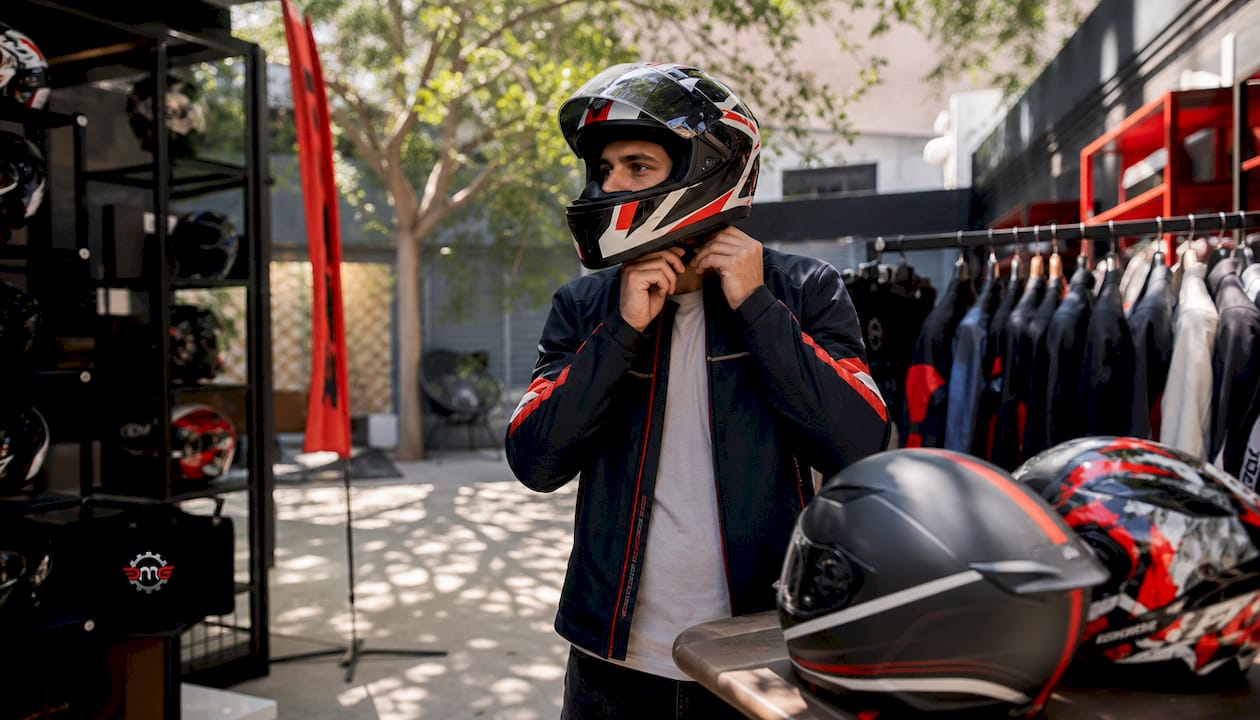
A properly fitted motorcycle helmet is defined as one that sits snugly against your head with even pressure all the way around, gently compresses your cheeks, and stays locked in place during impact. This is not just a comfort preference. A helmet that fits correctly is the difference between the gear doing its job and it flying off when you need it most. This motorcycle helmet fit guide covers how to measure your head, identify your head shape, run the critical fit tests, and fix the most common sizing problems. Think of it as your pre-ride safety checklist, but for your skull.
What does a motorcycle helmet fit guide actually cover?
Proper helmet fit, known in the industry as helmet retention and sizing, means the helmet moves with your head, not independently of it. Standards like ECE 22.06 and SNELL set specific retention criteria that certified helmets must meet. But even a SNELL-certified lid fails to protect you if it sits loose on your head like a mixing bowl. The helmet’s energy-absorbing EPS foam liner can only do its job when the shell is in full contact with your head during a crash. A poor fit bypasses all of that engineering in an instant.
The goal is snug, not suffocating. Your cheeks should compress slightly (think chipmunk, not vice grip), and you should feel even pressure around your entire head with no single painful hot spot. If you nail this, you are riding with real protection.
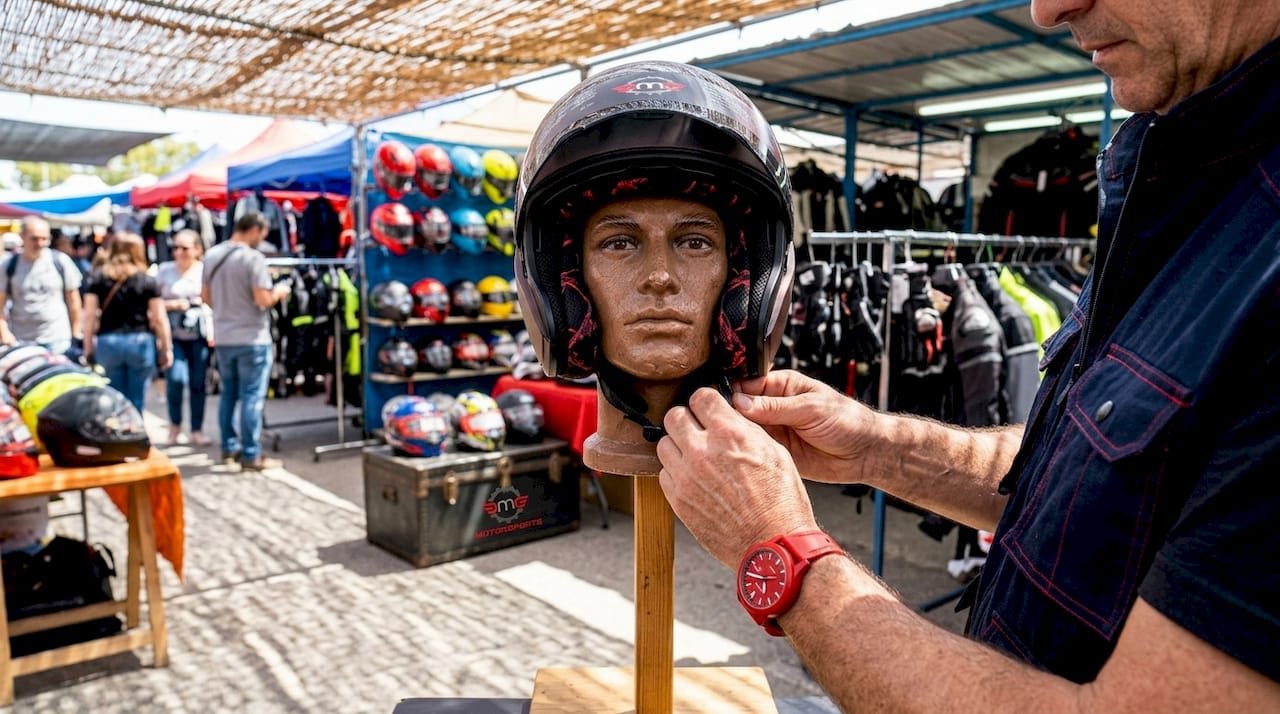
How do you measure your head for helmet sizing?
Getting your head circumference right is the foundation of the whole process. Grab a flexible fabric tape measure (the kind used for sewing, not a metal construction tape) and follow these steps:
- Stand in front of a mirror so you can see the tape placement clearly.
- Position the tape about 1 inch above your eyebrows, right at your hairline.
- Wrap it around the widest part of the back of your skull, keeping the tape level all the way around.
- Take two measurements and use the larger number. This prevents you from accidentally picking a size too small.
- Record the measurement in centimeters. Helmet sizing charts from manufacturers use centimeters, not inches.
Once you have your circumference, cross-reference it against the manufacturer’s motorcycle helmet sizing chart. A 57 cm head typically lands in a medium, but that varies by brand. Never assume your size transfers between brands.
Pro Tip: Measure your head at the end of the day. Your head can swell slightly from heat and activity, so an evening measurement gives you the most accurate fit baseline.
Here is a general sizing reference to get you oriented:
| Circumference (cm) | Typical Size |
|---|---|
| 53–54 | XS |
| 55–56 | S |
| 57–58 | M |
| 59–60 | L |
| 61–62 | XL |
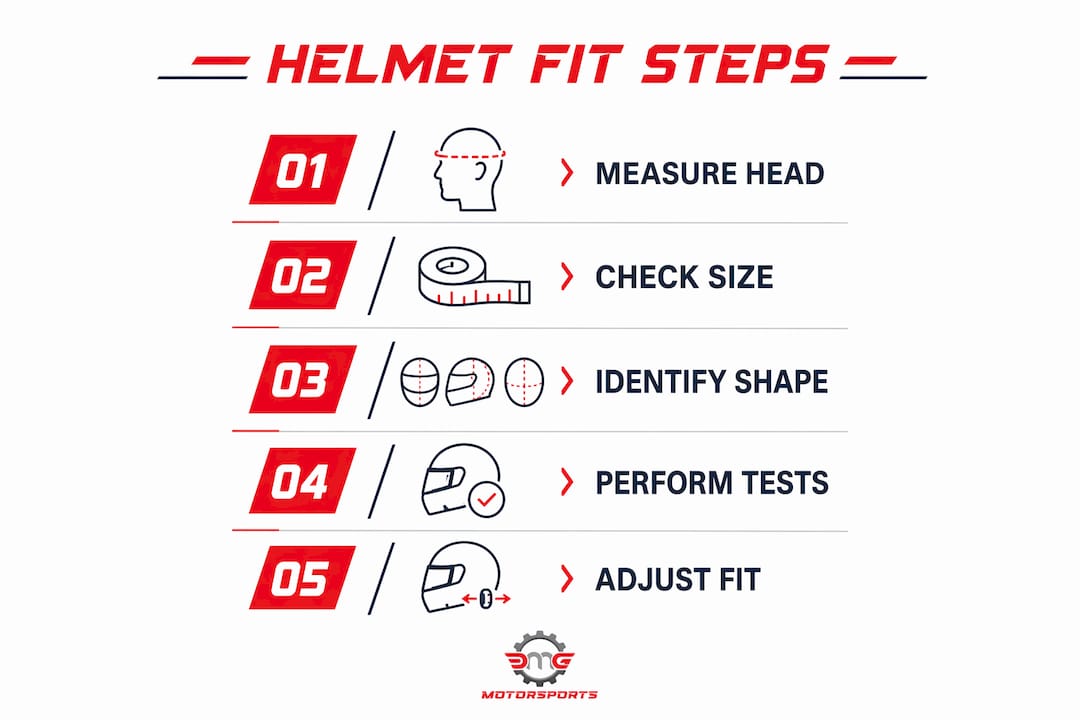
These are general ranges. Always verify against the specific brand’s chart before buying.
Why does head shape matter as much as head size?
Size gets you in the ballpark. Head shape gets you home safely. Helmet interiors are molded to one of three primary profiles: round oval, intermediate oval, and long oval. Matching your head shape to the helmet’s interior shape is what eliminates pressure points and gaps.
Here is how to identify your own shape. Measure your head from front to back (front-to-back dimension) and from side to side (lateral dimension). If both measurements are close to equal, you have a round oval head. If your head is noticeably longer front to back than it is wide, you have a long oval head. Most riders fall somewhere in the middle, which is the intermediate oval.
About 80% of North American riders have intermediate oval heads, which is why most helmets default to that interior shape. That is great news for most of you. But if you are in the round oval or long oval camp, you need to pay close attention to which brands cater to your shape.
Here is what to watch for when shape and helmet do not match:
- Pressure points on the forehead or temples often signal a long oval head in a round oval helmet.
- Gaps at the sides of the head with pressure front and back indicate a round oval head in a long oval helmet.
- Uneven cheek pad contact where one side presses harder than the other suggests the helmet interior does not match your head profile.
- Persistent pain after 20 minutes that does not ease up is a red flag. Intense localized pressure that persists after 20 minutes indicates a shape mismatch, not a sizing issue.
Pro Tip: Do the “hotspot test” by wearing the helmet for 20 minutes in the store before buying. Walk around, sit down, move your head. Any spot that starts burning or aching is telling you the shape is wrong.
How do you test if a helmet fits correctly?
You have your measurement, you know your head shape, and you have a helmet on your head. Now comes the part most riders skip. These three tests confirm whether the fit is actually safe.
The roll-off test
Fasten the chin strap snugly. Grab the back of the helmet and try to roll it forward off your head. A properly fitted helmet resists forward roll without shifting more than 1 inch. If it rolls forward easily or the back of the helmet lifts off your skull, the helmet is too large or the strap is too loose. This test simulates what happens in a real crash when your head hits the ground and the helmet tries to separate from you.
The shake test
With the chin strap fastened, shake your head firmly from side to side and up and down. The helmet should move with the skin of your forehead and cheeks, not slide separately. A helmet that shifts excessively during this test is too large and unsafe in a crash. Think of it this way: if you can feel the helmet moving independently of your head, it will absolutely move independently of your head at 60 mph.
The chin strap check
The chin strap is the unsung hero of helmet safety, and correct strap adjustment is one of the most overlooked steps in the whole process. Adjust the strap so you can fit about one finger’s width of space between the strap and your chin. You should be able to open your mouth comfortably, but the strap should not flop around. Proper strap tension prevents dangerous helmet lift at highway speeds. A loose strap turns a certified helmet into a decorative hat.
A helmet that passes the roll-off test and the shake test but has a loose chin strap still fails. The strap is what keeps the helmet on your head when physics tries to take it off. Adjust it every single time you ride.
Pro Tip: Wear the helmet for at least 20 minutes before committing to a purchase. Helmets break in by only 10–15%, so a helmet that feels genuinely painful at the store will not magically become comfortable after a few rides.
What are the most common helmet fit problems and how do you fix them?
Even riders who measure carefully run into fit issues. Here is how to recognize and address the most common ones.
The helmet is too big. Signs include the helmet rocking side to side, failing the shake test, or sitting low over your eyes. The fix is to go down a size, not to add padding. Aftermarket padding can help fine-tune a slightly large fit, but it cannot rescue a helmet that is fundamentally the wrong size.
The helmet is too small. Signs include a tight band of pressure around the forehead, difficulty getting the helmet on, or immediate pain. Do not assume it will break in enough to fix this. Helmet padding compresses by about 10–15% after 15–40 hours of wear. A helmet that feels loose when new will only get looser. A helmet that causes real pain when new will soften slightly but never enough to fix a genuine size mismatch.
Pressure points from wrong head shape. This is where many riders get stuck. They have the right circumference but the wrong interior shape. The solution is to try a different brand or model, not a different size. Some premium helmets include interchangeable cheek pads and liners in 5mm increments, which lets you dial in the fit without switching helmets entirely.
Cheek pads that are too loose or too tight. Cheek pads should compress your cheeks gently. If you can easily slide a finger between the pad and your cheek, the pads are too thin. If your cheeks are folding painfully inward, go up a size in cheek pads. Many helmet brands sell replacement cheek pads separately, which is a much cheaper fix than buying a new helmet.
When none of these solutions work, consult a professional fitter at a gear shop. Trying on helmets in person, with expert guidance, is always better than guessing online. You can also learn more about helmet retention systems to understand how the whole fit system works together.
Key Takeaways
A properly fitted motorcycle helmet passes the roll-off test, the shake test, and the chin strap check, with even pressure and no painful hot spots after 20 minutes of wear.
| Point | Details |
|---|---|
| Measure accurately | Use a fabric tape 1 inch above your eyebrows and take two readings, using the larger number. |
| Match your head shape | Round oval, intermediate oval, and long oval helmets fit differently; shape matters as much as size. |
| Run the fit tests | The roll-off test, shake test, and chin strap check confirm safety, not just comfort. |
| Break-in is limited | Padding compresses only 10–15%, so buy a helmet that fits snugly but without pain from day one. |
| Fix shape issues with pads | Interchangeable cheek pads and liners in 5mm increments let you fine-tune fit without buying a new helmet. |
Bryan’s take: the mistake I see riders make every single time
Here is the uncomfortable truth about helmet fitting: most riders pick a helmet based on how it looks, then convince themselves it fits well enough. I have watched this happen dozens of times. A rider puts on a helmet, wiggles it around for 10 seconds, says “yeah, feels good,” and walks out with a lid that is a full size too large.
The 20-minute rule is not optional. Pressure points do not show up in the first two minutes. Your head needs time to communicate with you, and most riders are not patient enough to listen. I have personally tried helmets that felt great at first and were genuinely painful after 15 minutes. That pain is your head telling you the shape is wrong, and no amount of wanting the helmet to work will change that.
The other thing I see constantly is riders ignoring the chin strap. They fasten it loosely because a tight strap feels weird at first. But a loose strap at highway speeds is genuinely dangerous. The strap is not a formality. It is the retention system. Understanding how retention systems work changed how I approach every helmet fitting, and it will change yours too.
My honest advice: try at least three helmets in your size before buying. Try different brands. Notice which one you stop thinking about after five minutes. That is the one that fits.
— Bryan
Gear up right with Dmgmotorsports
Finding the right helmet fit is a process, and having the right selection to work with makes all the difference. Dmgmotorsports carries a wide range of motorcycle helmets from top brands, covering every head shape, riding style, and safety certification you need.
Whether you ride a cruiser, a sport bike, or an adventure tourer, Dmgmotorsports has helmets built for your head and your ride. Browse the full helmet catalog at Dmgmotorsports and find the fit that keeps you protected every mile.
FAQ
How tight should a motorcycle helmet be?
A motorcycle helmet should feel snug with even pressure all the way around, gently compressing your cheeks without causing pain. It should not rock, shift, or slide when you shake your head.
What size motorcycle helmet do I need?
Measure your head circumference about 1 inch above your eyebrows using a fabric tape measure, then match that number in centimeters to the manufacturer’s sizing chart. Always use the larger of two measurements.
How do I know if my helmet is too big?
A helmet that rocks side to side, fails the roll-off test, or shifts independently during the shake test is too large. A too-big helmet will not protect you in a crash.
What are the three head shapes for motorcycle helmets?
The three head shapes are round oval, intermediate oval, and long oval. About 80% of North American riders have intermediate oval heads, but matching your specific shape to the helmet interior eliminates pressure points.
How often should I replace my motorcycle helmet?
Most manufacturers and safety organizations recommend replacing a helmet every five years, or immediately after any impact, even if the damage is not visible. The EPS foam liner degrades over time and loses its ability to absorb energy.
Recommended
- How to Fit a Motorcycle Helmet for Performance and Comfort - DMG Motorsports
- Motorcycle Jacket Fit Sizing Explained for Riders - DMG Motorsports
- Motorcycle Helmet Safety Ratings Explained for U.S. Riders - DMG Motorsports
- Motorcycle Helmet Safety Ratings Explained — DOT vs ECE vs Snell vs FIM (2026 Guide) - DMG Motorsports