


Motorcycle Helmet Retention System Explained for Riders

A motorcycle helmet retention system is the set of straps, buckles, and rear cradles that anchor your helmet to your head during a crash. Without it working correctly, even the most expensive lid on the market becomes little more than a very stylish bowl. The retention system is the unsung hero of motorcycle helmet safety features, and it must meet strict standards like DOT FMVSS 218 and ECE 22.06 to be street legal in the United States. Think of it as the seatbelt inside your seatbelt. Get it wrong, and the rest of your gear is just a costume.
What is a motorcycle helmet retention system?
The retention system is not just the chin strap. It is an integrated assembly that includes the chin strap, the buckle or fastening mechanism, the rear cradle or dial system, and the interior padding that holds the shell in contact with your skull. Every component works together to prevent the helmet from rotating, shifting, or flying off in a crash. The three primary retention types are the Double D-Ring, the Micrometric Ratchet, and the Quick-Release Buckle, and all three must pass roll-off resistance tests under DOT FMVSS 218 and ECE 22.06. That regulatory requirement is not a formality. It is the minimum proof that your helmet will stay on your head when the road comes up to meet you.
Retention should not rely solely on chin strap tightness. The helmet shell shape and rear cradle provide primary stability, while the chin strap locks that stability in place. A loose cradle with a tight strap is like bolting a door that has no frame. Both elements must work together.

What are the main types of helmet retention systems?
Each retention mechanism offers a different balance of security, convenience, and emergency usability. Here is how they stack up.
Double D-Ring
The Double D-Ring is the gold standard on racing helmets and the preferred choice of serious riders worldwide. You thread the strap through two metal rings and fold it back on itself, creating a friction lock that tightens under load. It is manual, slightly fiddly with gloves on, and absolutely reliable. Racing sanctioning bodies favor it because it does not fail under the violent forces of a high-speed crash. The trade-off is that it takes practice to fasten quickly, especially in cold weather.
Micrometric ratchet
The Micrometric system uses a notched strap and a lever mechanism to let you click the strap to the exact tension you want. Street riders love it because you can adjust on the fly without removing your gloves. It is the most common system on touring and adventure helmets. The slight downside is that the ratchet mechanism can wear out over time, and a worn notch can allow the strap to loosen without warning.
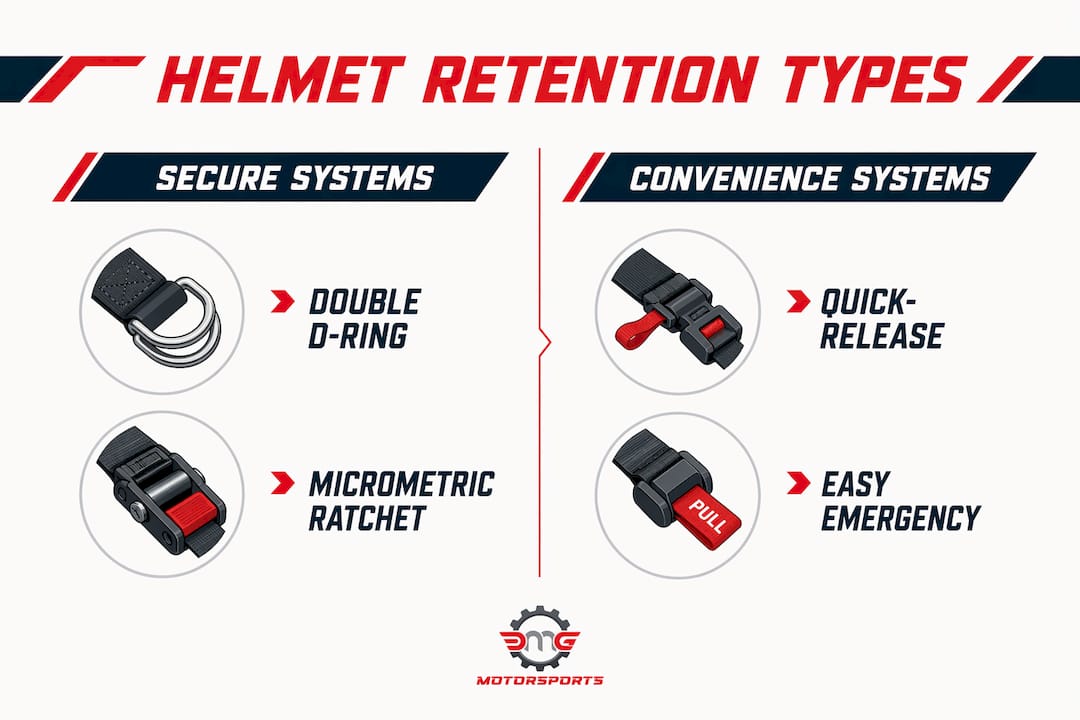
Quick-release buckle
The Quick-Release Buckle works like a seatbelt. Push a button and the strap releases instantly. Emergency responders favor helmets with this system because it speeds up post-crash helmet removal without moving the rider’s neck. For everyday commuters, it is the most convenient option. The trade-off is that a hard impact could theoretically trigger an accidental release, which is why it is less common on track-focused helmets.
Here is a quick comparison of how each system serves different riders:
| System | Best for | Key advantage | Key limitation |
|---|---|---|---|
| Double D-Ring | Track and racing riders | Maximum security under load | Harder to fasten with gloves |
| Micrometric Ratchet | Street and touring riders | Easy micro-adjustment | Mechanism wears over time |
| Quick-Release Buckle | Commuters and emergency use | Instant release for responders | Less common on performance helmets |
How do safety standards test retention system effectiveness?
Regulatory bodies do not take your word for it that your helmet stays on. They test it. DOT FMVSS 218 and ECE 22.06 both include specific retention system requirements that every certified helmet must pass before it reaches the shelf.
The most important test is the roll-off test. The roll-off test involves fastening the chin strap and attempting to roll the helmet off the head by tilting it forward. Movement of more than roughly one inch or rotation off the forehead indicates a retention failure. This test takes about 30 seconds and is used at points of sale to verify correct fit. That last detail matters. You can run this test yourself in a shop before you buy.
Here is what the roll-off test sequence looks like in practice:
- Put the helmet on and fasten the chin strap to your normal riding tension.
- Place both hands on the rear of the helmet.
- Push forward and down firmly, simulating the rotational force of a forward crash.
- Watch whether the front of the helmet lifts off your forehead.
- If it does, the helmet is either the wrong size or the retention system is not adjusted correctly.
A helmet can pass a simple strap shake test and still fail the roll-off test. Passing a shake test but failing roll-off indicates improper sizing or adjustment, not just a loose strap. That distinction is critical. Many riders assume a snug-feeling helmet is a safe helmet. The roll-off test proves whether that assumption is correct.
How to adjust your helmet retention system for safety and comfort
Correct adjustment is not complicated, but most riders get it slightly wrong every single time. The correct chin strap tension allows one to two fingers between the strap and your chin. Tight enough to prevent movement, loose enough that you can breathe and open your jaw without the helmet lifting. This check is a mandatory step before every ride, including short trips.
Follow these steps to dial in your fit before you throw a leg over the bike:
- Fasten the chin strap and check the one-to-two finger gap.
- Perform the roll-off test by pushing the rear of the helmet forward.
- Shake your head side to side. The helmet should move with your head, not independently.
- Check the rear cradle or dial system. It should contact the back of your skull evenly without creating a pressure point.
- If your helmet has a dial-fit system and the adjustment feels stuck or maxed out, look for a hidden reset button that restores the factory fit range. Most riders never know this exists.
Pro Tip: A helmet that fits snugly without pain will normally settle into a comfortable fit after several rides. A single pressure hot spot usually signals a shape incompatibility, not a size error. Try a different shell shape before sizing up.
One common mistake is over-tightening the chin strap to compensate for a helmet that is too large. A tight strap cannot fix a shell that sits too high on your head. The shell shape and rear cradle must provide primary stability first. The strap locks that stability in place, not the other way around.
What maintenance factors affect retention system performance over time?
Retention systems degrade. Padding compresses, buckles wear, and straps stretch. Riders who assume their fit stays constant over years of riding are setting themselves up for a dangerous surprise. Interior padding replacement every 12–18 months is the recommended interval to maintain stability and safety. Compressed padding changes the effective fit of the helmet, which directly affects how well the retention system holds the shell in place.
Watch for these signs that your retention system needs attention:
- The chin strap feels looser at the same adjustment setting as previous rides.
- The helmet rocks noticeably side to side during the roll-off test.
- The Micrometric ratchet clicks but does not hold tension.
- Interior padding has flattened visibly or feels slippery against your skin.
- The helmet has been in any crash, even a low-speed drop.
Pro Tip: Replace your helmet after any crash, even if it looks undamaged. The EPS liner inside compresses on impact and does not recover. A helmet that has taken a hit is no longer rated to protect you.
Aging also affects the shell and liner materials, not just the padding. Manufacturers and safety organizations recommend replacing helmets every five years regardless of visible condition. UV exposure, sweat, and temperature cycling all degrade the materials that make the retention system effective. A five-year-old helmet with perfect-looking straps may still fail a roll-off test because the shell no longer fits the way it did when new.
Key Takeaways
A properly adjusted retention system is the single most important factor in whether your helmet protects you in a crash.
| Point | Details |
|---|---|
| Retention system types | Double D-Ring, Micrometric Ratchet, and Quick-Release Buckle each suit different riding styles and needs. |
| Roll-off test is definitive | Passing a shake test but failing roll-off means the helmet is the wrong size or adjustment is off. |
| Chin strap tension | One to two fingers between strap and chin is the correct adjustment before every ride. |
| Padding replacement | Replace interior pads every 12–18 months to prevent fit degradation and retention failure. |
| Replace after any crash | EPS liners compress permanently on impact and cannot be visually inspected for damage. |
Bryan’s take: the part most riders skip entirely
Here is what I have noticed after years of watching riders gear up: almost nobody performs the roll-off test. They fasten the chin strap, give the helmet a quick side-to-side shake, and call it done. That shake test feels reassuring. It is also incomplete. A helmet can pass a shake test and still rotate off your forehead in a forward crash because the shell is sitting too high on your skull.
The other thing riders consistently miss is the evolution of retention beyond the buckle. Emergency Quick Release Systems now allow medical responders to extract cheek pads and remove a helmet safely after a crash without moving the rider’s neck. That feature is not just a convenience. It is a design shift that treats the retention system as part of a broader emergency response protocol. Most riders buying helmets have never heard of it.
My honest opinion is that the industry undersells retention system education. Brands spend marketing budgets on shell materials and ventilation, and the strap gets a paragraph in the manual. But the strap is what keeps a $600 helmet from becoming a $600 projectile. Check it every single ride. Replace your padding on schedule. And if your dial system feels stuck, find that reset button before you assume the helmet is worn out.
— Bryan
Gear up with Dmgmotorsports
Dmgmotorsports carries a full range of certified motorcycle helmets that meet DOT FMVSS 218 and ECE 22.06 standards, with options featuring Double D-Ring, Micrometric Ratchet, and Quick-Release Buckle systems across every riding style. Whether you are a daily commuter, a weekend canyon carver, or a track day regular, the right helmet with a properly spec’d retention system is the foundation of your safety kit.
Every helmet in the Dmgmotorsports catalog is selected with rider safety in mind, not just aesthetics. The team at Dmgmotorsports also publishes rider education content on proper motorcycle gear to help you make confident, informed choices before you buy. Browse the full helmet selection and find the fit that keeps you protected on every ride.
FAQ
What is a helmet retention system?
A helmet retention system is the combination of chin straps, buckles, and rear cradles that keep a motorcycle helmet securely anchored to your head during a crash. All certified helmets must pass roll-off resistance tests under DOT FMVSS 218 or ECE 22.06.
How do I know if my helmet retention is adjusted correctly?
The chin strap should allow one to two fingers between the strap and your chin. Perform the roll-off test by pushing the rear of the helmet forward. If the front lifts off your forehead, the fit or adjustment is wrong.
What is the best helmet retention system for motorcycle riders?
The Double D-Ring is the most secure system and the preferred choice for track and racing use. The Micrometric Ratchet suits street and touring riders who want easy on-the-fly adjustment. The Quick-Release Buckle is best for commuters and emergency accessibility.
How often should I replace helmet retention components?
Interior padding should be replaced every 12–18 months to prevent compression-related fit loss. The full helmet should be replaced every five years or immediately after any crash, even a minor one.
What is the roll-off test and why does it matter?
The roll-off test involves fastening the chin strap and pushing the rear of the helmet forward to see if it rotates off the forehead. It is the definitive method for verifying retention effectiveness and is more reliable than a simple side-to-side shake test.
Recommended
- How to Fit a Motorcycle Helmet for Performance and Comfort - DMG Motorsports
- Motorcycle Helmet Safety Ratings Explained — DOT vs ECE vs Snell vs FIM (2026 Guide) - DMG Motorsports
- Best Motorcycle Helmets of 2025 (Beginner to Pro Riders) - DMG Motorsports
- The Types of Motorcycle Helmets for Different Riding Styles - DMG Motorsports