


Motorcycle Glove Protection Levels Explained for Riders

Motorcycle glove protection levels are defined by the EN 13594:2015 certification standard, which splits gloves into two distinct categories: Level 1 for everyday urban riding and Level 2 for high-speed or high-risk applications. This isn’t just bureaucratic paperwork. Your hands hit the ground first in a crash, and the difference between Level 1 and Level 2 armor on your knuckles could mean the difference between road rash and a broken hand. Understanding glove protection ratings before you buy is the single smartest move you can make as a rider. Think of it as your hands’ personal bodyguard application process.
What distinguishes Level 1 and Level 2 motorcycle gloves in protection standards?
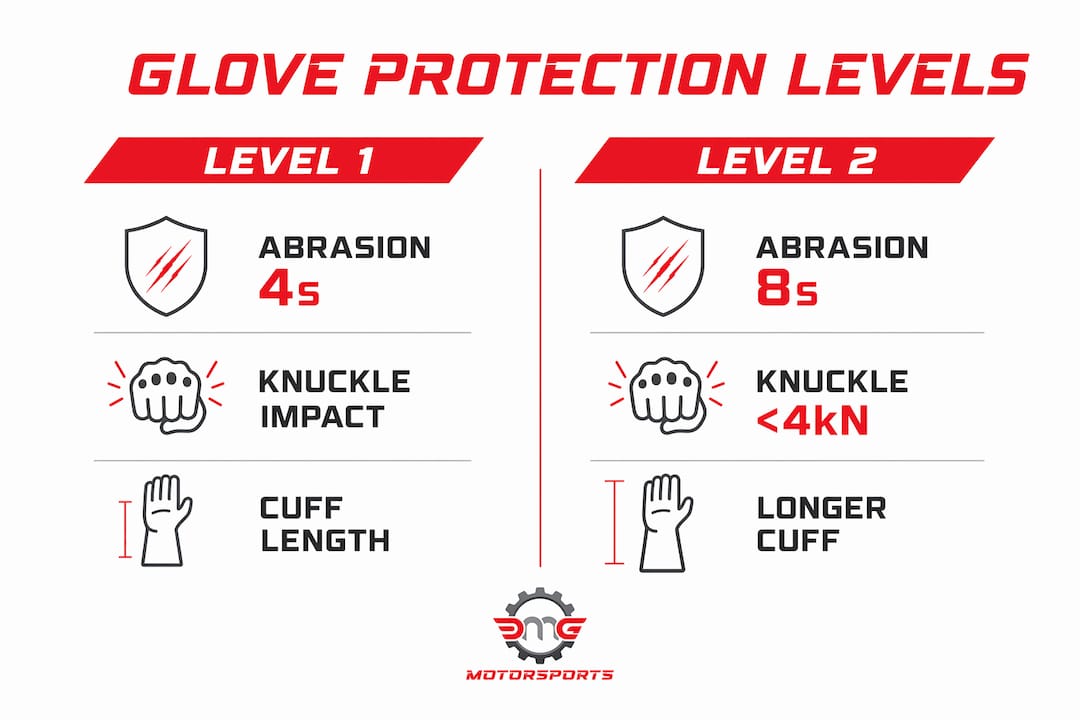
The EN 13594:2015 standard draws a clear line between the two levels using measurable, testable criteria. Level 1 gloves must survive 4 seconds of abrasion resistance and resist 25 N of palm force. Level 2 gloves must survive 8 seconds of abrasion and resist 35 N. That doubling of abrasion time is not a small upgrade. It represents a fundamentally different class of protection for riders who spend time at speed.
Knuckle protection is where the gap gets really interesting. Level 2 knuckle protectors must transmit less than 4 kN of force during impact testing, using a 2.5 kg striker. Level 1 gloves allow up to 9 kN. That is more than double the force reaching your knuckles in a Level 1 glove. Gloves that pass the knuckle test earn a “KP” marking on their label, and true Level 2-KP certified gloves are genuinely rare in the market.
Cuff length is another structural requirement most riders overlook. Level 2 gloves require a minimum cuff length of 50 mm to protect the wrist in a crash, while Level 1 gloves only need 5 mm. That 45 mm difference is not cosmetic. Longer cuffs keep the glove on your hand during a slide and protect the wrist joint from direct impact.
| Point | Level 1 | Level 2 |
|---|---|---|
| Abrasion resistance | 4 seconds | 8 seconds |
| Palm force resistance | 25 N | 35 N |
| Knuckle impact (max force) | 9 kN | 4 kN |
| Minimum cuff length | 5 mm | 50 mm |
| Best use case | Urban, daily commuting | Sport, touring, off-road |
How do glove materials and construction impact protection levels?
Materials are what make or break a glove’s ability to hit those certification numbers. Level 2 gloves use premium materials like full-grain leather, kangaroo leather, and aramid fabrics to double abrasion resistance compared to Level 1 construction. Kangaroo leather, in particular, delivers an exceptional strength-to-weight ratio. It is thinner than cowhide but tougher, which is why it shows up in serious riding gloves.
Stitching matters just as much as the outer shell. Level 2 gloves use reinforced, bonded thread that resists tearing under the friction of a slide. Standard thread snaps quickly on asphalt. Bonded thread holds the glove together long enough to actually protect your hand through the full duration of a crash.
Knuckle protectors tell the clearest story about construction quality. Level 2 gloves use dual-composite knuckle shells with a hard outer layer backed by energy-absorbing foam that stiffens on impact. Level 1 gloves typically use a single layer of hard plastic. The dual-composite system spreads impact energy across a wider area before it reaches your hand.
Here is what to look for when assessing glove construction quality:
- Outer shell material: Full-grain leather or kangaroo leather for Level 2; synthetic or split leather for most Level 1 options
- Knuckle protector type: Dual-composite with foam backing for Level 2; single hard plastic for Level 1
- Stitching: Bonded, reinforced thread throughout the palm and finger seams
- Palm reinforcement: Additional leather or aramid panels over the heel of the palm
- Wrist closure: Secure retention system that keeps the glove on during a slide
Pro Tip: Flex the knuckle protector before you buy. A Level 2 protector feels rigid but has a slight give from the foam layer underneath. A single-layer Level 1 protector flexes uniformly. That tactile difference tells you immediately which construction you are holding.
Level 2 gloves are heavier and less flexible than Level 1 options because of these material requirements. That is not a flaw. It is the physical cost of superior protection, and knowing that trade-off upfront helps you choose the right glove for your ride.
What are the practical trade-offs between Level 1 and Level 2 gloves?
No single glove works perfectly for every rider in every condition. Choosing gloves should be based on riding environment, hazard exposure, and required dexterity, not just the certification level printed on the label. A Level 2 glove on a slow city commute is overkill that will make you miserable. A Level 1 glove on a track day is a gamble you should not take.
Here is a practical breakdown of when each level makes sense:
- Level 1 for urban commuting: City riders who stop and start constantly need dexterity for controls, phone mounts, and navigation. Level 1 gloves deliver that flexibility without sacrificing basic protection.
- Level 2 for sport and track riding: Higher speeds mean higher impact forces in a crash. Level 2 gloves are built for exactly this scenario, with the knuckle and abrasion protection to match.
- Level 2 for long-distance touring: Highway speeds and fatigue increase crash risk on long rides. The added wrist protection from the 50 mm cuff requirement alone justifies the upgrade.
- Level 1 for warm-weather casual rides: Lighter gloves with better airflow make summer riding more comfortable. Pair them with a jacket that has proper motorcycle gear coverage to balance your overall protection.
- Level 2 for off-road and adventure riding: Unpredictable terrain and fall risk make the extra armor worth every gram of added weight.
Experts recommend owning two pairs: a lighter Level 1 glove for daily riding and a Level 2 glove for high-risk or long-distance rides. This is not a luxury approach. It is the practical reality that no single glove covers every scenario without compromise.
Pro Tip: If you ride year-round, look for Level 2 gloves with removable thermal liners. You get winter warmth without buying a separate cold-weather pair, and the liner adds a small but real layer of padding over the palm.
Heat retention is the most common complaint about Level 2 gloves in summer. Thicker leather and denser armor trap heat aggressively. Riders who live in hot climates often rotate to Level 1 gloves for summer months and return to Level 2 for fall and spring riding when temperatures drop.
How to verify motorcycle glove protection ratings and certification markings?
The EN 13594:2015 label is your best evidence of compliance. The legitimate certification label appears inside the glove and includes the standard number, the protection level (1 or 2), and the KP marking if knuckle protection was tested and passed. If you cannot find this label, the glove is not certified, regardless of what the packaging claims.
Here is how to read the markings correctly:
- EN 13594:2015 Level 1: Basic protection, suitable for urban use, minimum cuff and abrasion requirements met
- EN 13594:2015 Level 2: Enhanced protection, longer cuff, higher abrasion and impact thresholds met
- KP marking: Knuckle protection tested and passed at the relevant force threshold for the level
- “X” on a test result: Not a failure. An “X” in cut resistance testing means the material dulled the test blade, which actually indicates high-performance cut resistance. Supplementary ISO testing clarifies the real cut resistance score.
- No label at all: Walk away. No label means no verified protection, regardless of price.
Many premium gloves priced above $400 do not carry valid EN 13594:2015 certification. Price is not a proxy for protection. Brand reputation is not a proxy for certification. The label is the only reliable indicator. This is the most common and most dangerous misconception in the glove market, and it catches experienced riders as often as beginners.
True Level 2-KP certified gloves are rare. Most gloves marketed as “high protection” carry Level 1 certification or no certification at all. When you find a genuine Level 2-KP glove, the label will state it clearly. If a retailer cannot confirm the certification level, ask to see the label inside the glove before purchasing.
Key Takeaways
Motorcycle glove protection is defined by EN 13594:2015, which sets measurable abrasion, impact, and structural standards that separate Level 1 and Level 2 gloves into genuinely different protection categories.
| Point | Details |
|---|---|
| Two certified levels exist | EN 13594:2015 defines Level 1 for urban use and Level 2 for high-speed or high-risk riding. |
| Knuckle force limits differ sharply | Level 2 allows a maximum of 4 kN at the knuckle; Level 1 allows up to 9 kN. |
| Cuff length signals real protection | Level 2 requires a 50 mm minimum cuff; Level 1 requires only 5 mm. |
| Price does not equal certification | Many gloves over $400 lack valid EN 13594:2015 labels. Always check inside the glove. |
| Own two pairs for full coverage | A Level 1 glove for daily riding and a Level 2 glove for high-risk rides covers most scenarios. |
Bryan’s take on gloves: stop treating them like an afterthought
Riders spend hours agonizing over helmets and jackets, then grab the first pair of gloves that looks good and fits the budget. I have done it myself, and it is the wrong call every time. Your hands are the first thing that contacts the ground in a crash, and they are also the most complex tools you own as a rider. Protecting them deserves the same attention you give your lid.
The thing that surprised me most when I started paying attention to glove protection ratings was how little correlation there is between price and actual certification. I have held $350 gloves with no EN 13594:2015 label and $120 gloves with a legitimate Level 2-KP marking. The market is genuinely confusing, and manufacturers know that most riders never check the label inside.
The two-pair strategy is the most practical advice I can give. Use your Level 1 gloves for the commute and the coffee run. Pull out the Level 2 pair for the weekend canyon run or the long highway stretch. Your hands will feel the difference in comfort on the short rides, and your protection will be where it needs to be when the stakes are higher. Check out the palm padding guide if you want to go deeper on what the inside of a glove actually does for you.
The emerging trend worth watching is dual-compound armor that stays flexible until impact, then stiffens instantly. This technology is closing the comfort gap between Level 1 and Level 2 gloves faster than most riders realize. In a few years, the weight and flexibility trade-off that makes Level 2 gloves feel like oven mitts will be much less pronounced.
— Bryan
Gear up with certified gloves at Dmgmotorsports
Dmgmotorsports carries both Level 1 and Level 2 certified motorcycle gloves across a full range of riding styles, from urban commuters to track-day warriors. Every glove in the lineup is selected with EN 13594:2015 compliance in mind, so you are not guessing about what you are buying.
Before you add anything to your cart, think about where you ride most and how fast. A city rider and a sport tourer have genuinely different needs, and the right glove for each is not the same product. The team at Dmgmotorsports is ready to help you match your riding profile to the right protection level, whether you are building your first kit or upgrading your current gear. New to the gear game entirely? The beginner accessories guide is a solid place to start.
FAQ
What does EN 13594:2015 mean on motorcycle gloves?
EN 13594:2015 is the European CE certification standard for motorcycle gloves. It defines the testing criteria for abrasion resistance, impact protection, and structural requirements that gloves must meet to earn Level 1 or Level 2 certification.
Are Level 2 motorcycle gloves worth it for everyday riding?
Level 2 gloves offer superior protection but are heavier and less flexible than Level 1 options. For daily urban commuting, Level 1 gloves provide adequate protection with better comfort. Level 2 is the right call for highway speeds, sport riding, or off-road use.
What does the KP marking mean on a glove label?
KP means the glove’s knuckle protectors passed the EN 13594:2015 impact test. Level 2-KP gloves transmit less than 4 kN of force at the knuckle, compared to up to 9 kN allowed for Level 1-KP gloves.
Can I trust an expensive glove to be CE certified?
No. Many gloves priced above $400 do not carry valid EN 13594:2015 certification. Always check for the certification label inside the glove rather than relying on price or brand reputation as a guide to protection.
What does “X” mean on a glove’s test result label?
An “X” on a cut resistance test result means the glove material dulled the test blade, indicating high-performance cut resistance. It is not a failure. Supplementary ISO testing provides the actual cut resistance score in these cases.
Recommended
- Why Motorcycle Glove Palm Padding Matters for Riders - DMG Motorsports
- Motorcycle Helmet Safety Ratings Explained for U.S. Riders - DMG Motorsports
- Motorcycle Chest Protector Explained: Your Safety Guide - DMG Motorsports
- Motorcycle Apparel Brand Certifications Explained for Riders - DMG Motorsports