
Motorcycle Club Insurance Explained for U.S. Riders

What is motorcycle club insurance and why does your club need it?
Your personal motorcycle policy is built for you, not your brotherhood. Motorcycle club insurance is a specialized organizational policy that protects the club itself, its leadership, its assets, and every event it sponsors from liabilities that individual coverage simply won’t touch. Think of it as the legal armor your club wears when the road gets rough in a courtroom rather than on the asphalt.
Here’s the reality check: personal motorcycle insurance does not cover club-organized activities. The moment your club hosts a group ride, a rally, or even a parking lot meeting, you’re operating as an organization, and that organization needs its own protection.
What a solid club policy typically covers:
- General liability: Bodily injury and property damage arising from club activities, usually with limits starting at $1 million
- Management liability (Directors & Officers): Protects board members and officers from personal lawsuits, commonly with per claim limits commonly set at substantial amounts
- Property coverage: Club-owned trailers, equipment, banners, and merchandise
- Event coverage: Rallies, bike shows, charity rides, and other organized gatherings
- Legal Liability to Participants (LLP): Covers injuries during motorized events that standard liability excludes
- Umbrella liability: Extends your base limits when a serious claim blows past them
A single serious accident during a club ride can generate lawsuits exceeding $500,000 and legal defense costs over $50,000. Without a club policy, those numbers land on your officers personally.
Table of Contents
- The main coverage types every club should understand
- How clubs qualify for group insurance programs
- What actually drives your club’s premium costs
- Common myths about club insurance that cost clubs money
- How to manage your club’s insurance and reduce risk
- How state regulations shape your club’s coverage requirements
- What your club policy probably won’t cover
- How rides, rallies, and events change your coverage picture
- Key Takeaways
The main coverage types every club should understand
Not all club policies are built the same, and knowing what each layer does helps you avoid the gaps that bite clubs hardest.
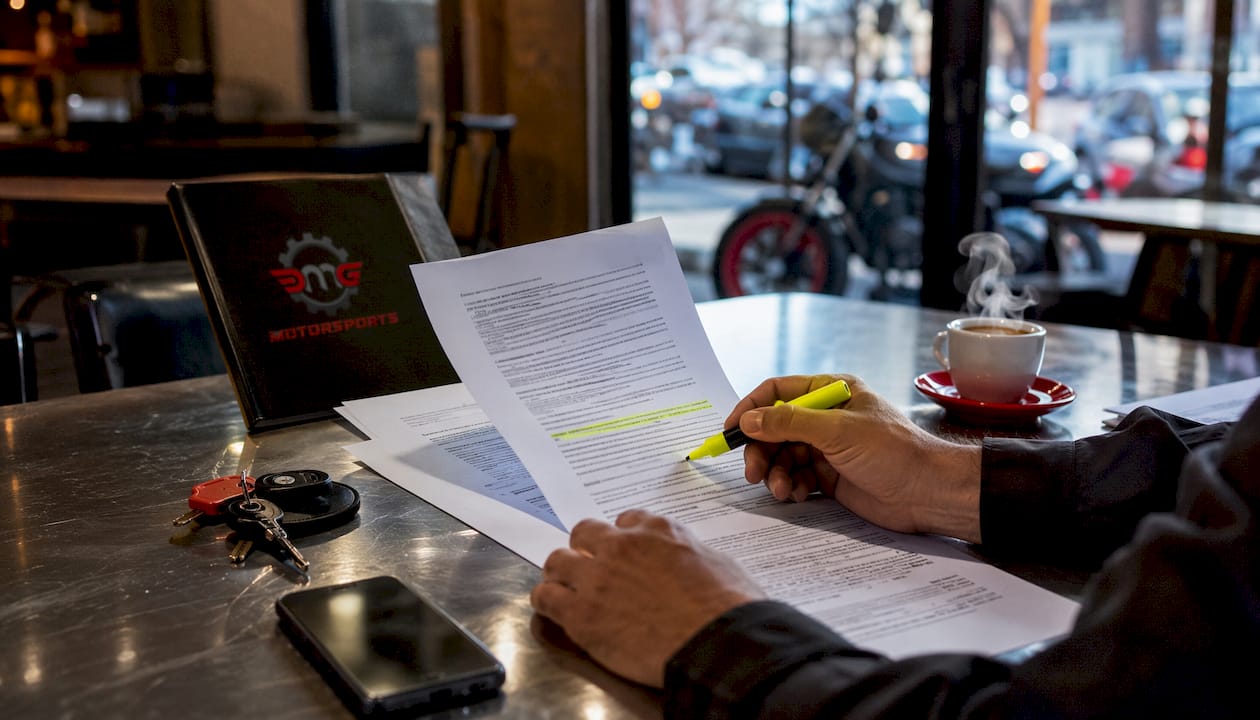
General liability is your foundation. It covers bodily injury and property damage claims tied to club-sponsored activities, from a spectator tripping at your bike show to a third party’s fence getting clipped during a group ride.
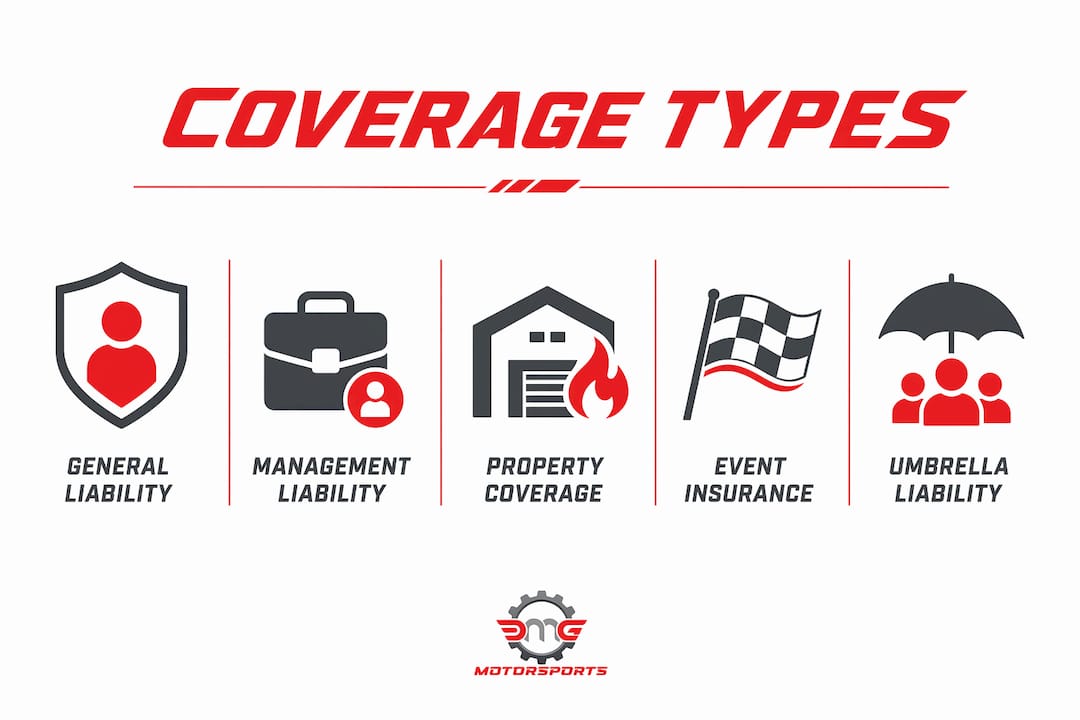
Management liability (Directors & Officers insurance) is the one most clubs skip until it’s too late. Officers and board members can be personally sued for decisions they make on behalf of the club. D&O coverage steps in to cover defense costs and settlements, with limits often set at $500,000 per claim.
Property coverage protects the physical stuff your club has accumulated: the cargo trailer, the PA system for your annual rally, the merchandise tent. Without it, replacing those assets comes out of club funds.
Event-specific insurance matters most when your club goes big. Rallies and bike shows draw crowds, vendors, and elevated risk profiles. Some insurers offer event riders that attach to your base policy; others require a standalone event policy for gatherings over a certain size.
Legal Liability to Participants (LLP) is the coverage most riders don’t know exists until they need it. Standard general liability typically excludes injuries to participants in motorized activities. LLP fills that gap directly, making it a must-have for any club that runs organized rides.
Umbrella liability sits on top of everything and extends your limits when a catastrophic claim exceeds your base policy. For larger clubs with frequent events, umbrella coverage is less of an option and more of a necessity.
How clubs qualify for group insurance programs
Group motorcycle insurance programs offer real premium savings through bulk purchasing power, but you have to qualify first. Here’s how the process generally works and what clubs gain from it.
Eligibility basics:
- Membership in a recognized organization like the American Motorcyclist Association (AMA) or Harley Owners Group (H.O.G.) often unlock access to group programs
- Insurers verify active membership rosters and club standing before extending group rates
- Clubs must demonstrate organized structure, including named officers and documented bylaws
What you actually get:
- Premium discounts from group underwriting that individual riders can’t access on their own
- Safety training benefits, since insurers view clubs that require safety training as lower-risk groups
- Streamlined certificate issuance for events and venues
The insurer’s logic is straightforward: a vetted club with documented membership and safety protocols is a more predictable risk than a random collection of individual riders. That predictability translates directly into better rates.
What actually drives your club’s premium costs
Premiums for motorcycle club insurance aren’t pulled from thin air. Insurers use a structured risk assessment that weighs several factors simultaneously.
| Cost Factor | Impact on Premium |
|---|---|
| Active member count | More members = broader exposure = higher base premium |
| Event frequency and size | Events over 250 attendees trigger elevated risk tiers |
| Club revenue | Higher revenue signals larger operations and greater liability exposure |
| Claims history | Prior claims raise rates; clean records earn discounts |
| Geographic scope | Multi-state rides add regulatory complexity and cost |
| Member experience levels | Newer riders in the club pool increase assessed risk |
Annual premiums for small to medium clubs typically run $800 to $2,500 for $1 million in general liability coverage. Larger clubs with frequent events and higher revenues pay more, scaled to their risk profile.
Group risk profiles including driving history, safety records, and club size all factor into how an insurer sets your rate. Clubs that invest in documented safety programs often see meaningful discounts at renewal.
Common myths about club insurance that cost clubs money
Let’s bust a few of the big ones, because these misconceptions are where clubs get burned.
“My personal policy covers me during club rides.” It doesn’t. Personal motorcycle insurance covers you as an individual on your own bike. The moment an activity is organized and club-sponsored, the club’s liability is on the line, not your personal carrier’s.
“We’re a small club, so we don’t need it.” Size doesn’t reduce liability exposure. A five-person club hosting a charity ride carries the same legal risk as a 500-member chapter if someone gets hurt and sues.
“Club membership insures individual members.” Club insurance protects the organization, not individual riders’ bikes or personal medical costs. Members still need their own personal policies.
“Alcohol at our events is covered automatically.” Hard no. Some policies explicitly exclude coverage for alcohol sales at events and require clubs to implement controls preventing drinking and riding. Ignoring this exclusion can void your coverage entirely.
“Club insurance is too expensive for what we get.” When you stack a $1,500 annual premium against the reality of a $500,000 lawsuit, the math stops being scary and starts being obvious.
How to manage your club’s insurance and reduce risk
Getting covered is step one. Keeping coverage optimized and your risk profile clean is the ongoing work.
Application and documentation:
- Maintain an accurate, up-to-date membership roster for underwriting purposes
- Document all club events in advance and submit event approval requests to your insurer when required
- Keep signed waivers from participants at every organized ride or event
At events:
- Use blanket additional insured endorsements to add venues and sponsors to your policy temporarily, which simplifies certificate management and satisfies venue requirements
- Always include LLP coverage for any motorized event, since standard liability won’t protect you if a participant is injured during the ride itself
Claims process:
- Report incidents to your insurer immediately, even if you’re unsure a claim will follow
- Preserve all documentation: photos, witness statements, event records, and waivers
- Designate a club officer as the primary insurance contact to keep communications consistent
Pro Tip: When shopping for a carrier, prioritize insurers with dedicated motorcycle club programs rather than generic commercial liability providers. Specialists understand the difference between a charity poker run and a commercial event, and that distinction affects both your coverage terms and your premium.
How state regulations shape your club’s coverage requirements
Insurance requirements for motorcycle clubs vary meaningfully across U.S. states, and what’s optional in one state may be functionally mandatory in another.
Most states require liability coverage for any motorcycle operated on public roads, but club-level organizational liability is a separate layer entirely. States with higher litigation rates, like California and Florida, create environments where clubs face greater lawsuit exposure, making higher liability limits a practical necessity rather than a luxury.
Multi-state clubs face compounded complexity. A club that runs rides across state lines must account for each state’s minimum requirements and legal climate. Some states have specific event permit requirements that trigger insurance certificate demands from local authorities.
Working with an insurer licensed across all states where your club operates is the cleanest way to handle this. A carrier familiar with motorcycle club operations will flag state-specific requirements during the application process rather than leaving you to discover gaps after a claim.
What your club policy probably won’t cover
Every policy has edges, and knowing yours prevents ugly surprises.
Common exclusions in motorcycle club insurance policies include:
- Intentional acts: Coverage won’t respond to deliberate harm caused by club members
- Criminal activity: Any claim arising from illegal conduct is excluded
- Alcohol-related incidents: Events where alcohol is sold without proper controls, or where intoxicated riders are permitted to ride, often trigger exclusions
- Professional services: If your club provides paid mechanical work or instruction, that’s a separate professional liability exposure
- Non-club-owned vehicles: The club policy covers organizational liability, not damage to members’ personal bikes
- Unapproved events: Activities not disclosed to and approved by your insurer during the policy period may fall outside coverage
Reading your policy’s exclusions section before your next event is the least glamorous thing you’ll do all year. Do it anyway.
How rides, rallies, and events change your coverage picture
Club activities aren’t all treated equally by insurers, and the type and scale of what you’re running directly affects both your coverage needs and your costs.
A casual weekend group ride carries lower risk than a public rally with vendors, spectators, and alcohol. Insurers draw a hard line at events exceeding 250 attendees, which typically triggers a higher risk tier and may require event-specific endorsements or standalone event policies.
Charity rides introduce additional complexity because they often involve public road closures, police escorts, and third-party sponsors, each of whom may require their own certificate of insurance naming them as additional insureds. Blanket additional insured endorsements handle this efficiently without requiring individual certificates for every party.
Rallies that include competitions, stunt riding, or off-road elements push into specialty coverage territory. Standard club policies may exclude these activities outright, requiring a separate sports or motorsports liability policy to fill the gap.
The bottom line: tell your insurer everything your club does before you do it. Surprises at claim time are never the fun kind.
Key Takeaways
Motorcycle club insurance protects the organization, its leadership, and its events from liabilities that no personal motorcycle policy will ever cover.
| Point | Details |
|---|---|
| Club vs. personal coverage | Personal policies exclude club-organized activities; a dedicated club policy is mandatory for organizational protection. |
| Core coverage layers | General liability, D&O, property, LLP, and umbrella coverage each address distinct club risks. |
| Premium range | Small to medium clubs usually pay an annual premium that reflects their size and the amount of general liability coverage they choose. |
| D&O limits | Management liability coverage commonly provides $500,000 per claim to protect officers from personal lawsuits. |
| Event risk tiers | Events over 250 attendees trigger elevated risk assessments and may require additional endorsements. |
Ride protected, ride smart, and make sure your club’s got the right gear on and off the bike. At Dmgmotorsports, we’re all about keeping riders equipped for every mile, from the helmet on your head to the coverage protecting your crew.