
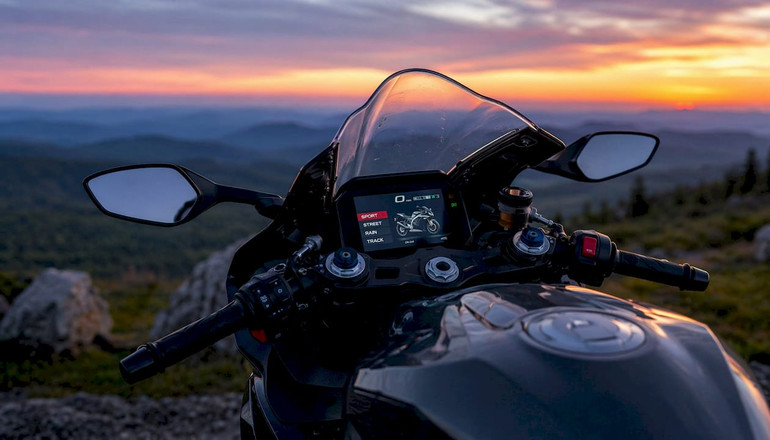
Motorcycle Ride Modes Explained for Every Rider
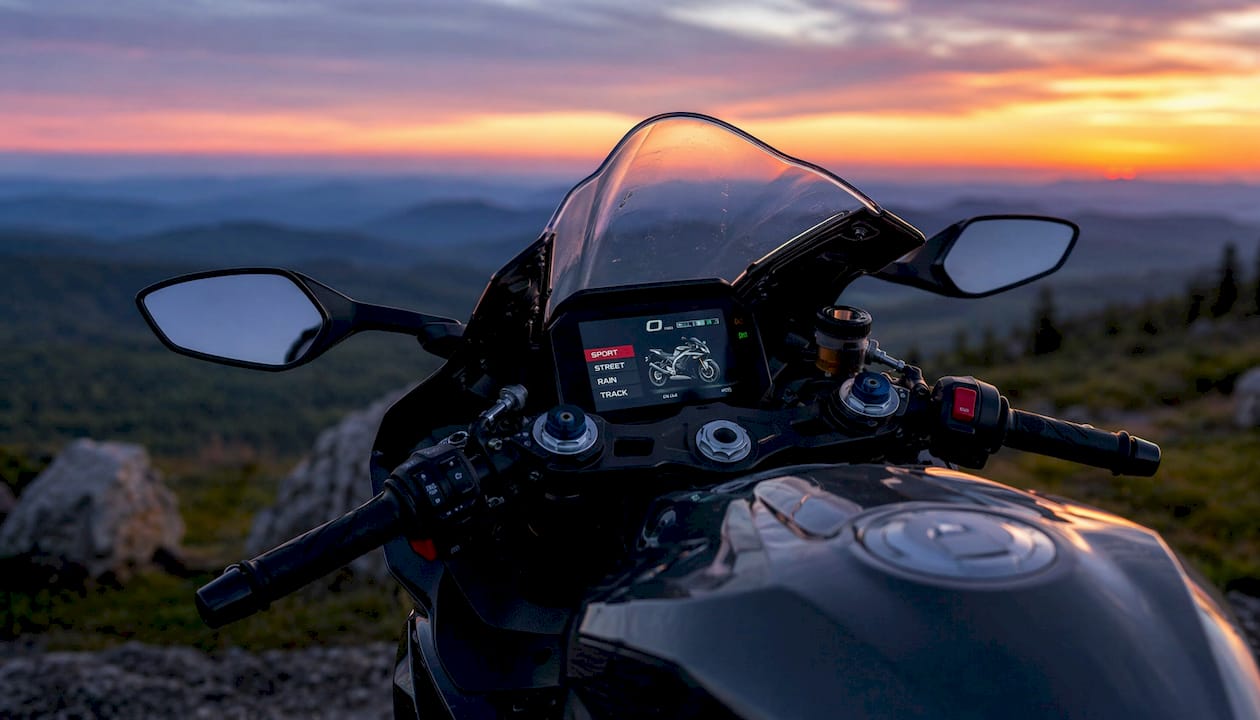
Motorcycle ride modes are electronic settings that adjust your bike’s throttle response, traction control sensitivity, and ABS intervention to match specific riding conditions. Think of them as your bike’s personality dial. Rain, Road, Sport, and Off-Road/Enduro are the four most common mode types found on modern motorcycles, and each one changes how the engine control unit (ECU) delivers power and manages safety systems. Getting a handle on different motorcycle riding settings is one of the fastest ways to ride smarter, safer, and with a whole lot more confidence.
What parameters do ride modes adjust on modern motorcycles?
Ride modes control three core parameters: throttle mapping, traction control sensitivity, and ABS intervention levels. Change the mode, and you change how aggressively the bike responds to your right hand, how quickly it cuts power during wheel slip, and how hard it brakes before the ABS steps in. That is the whole ballgame, right there.
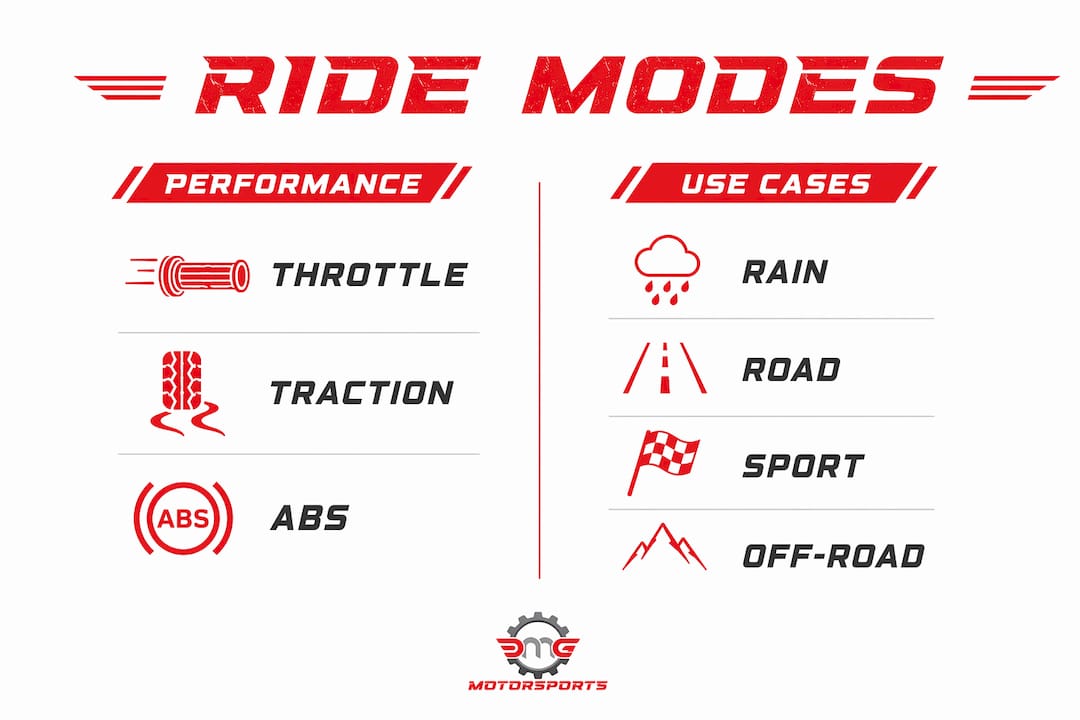
Throttle mapping is the most noticeable change. In Rain mode, the ECU softens the power curve so a full twist of the throttle does not dump all available torque onto a slippery road. In Sport mode, the same twist delivers a sharper, more immediate surge. The engine does not change. The software does.
Traction control sensitivity determines how much rear-wheel slip the bike tolerates before cutting power. Lean-angle sensitive traction control in modern motorcycles means the system adjusts its threshold based on how far the bike is leaned over. That produces a “graceful” intervention rather than a jarring power cut that could unsettle you mid-corner.
ABS intervention also shifts between modes. Cornering ABS systems read lean angle and adjust braking force accordingly. A more conservative mode triggers ABS earlier and more aggressively. A Sport or Track mode may delay intervention to give experienced riders more feel and control.
- Throttle mapping: softened in Rain, sharpened in Sport, balanced in Road
- Traction control: maximum sensitivity in Rain, reduced in Sport, disabled or minimal in Off-Road
- ABS: early intervention in Rain, delayed in Sport, rear ABS sometimes disabled in Off-Road
- Electronic suspension (ESA): Rain mode softens suspension for traction; Sport firms it for feedback
Pro Tip: Ride modes adjust ECU software parameters only. They do not physically modify your engine or suspension hardware. Manage your expectations accordingly, and never assume a mode change alone fixes a mechanical issue.
How do common ride modes differ and when should you use them?
The four main motorcycle mode types each serve a distinct purpose. Knowing when to use each one is the real skill, and it is one most riders pick up faster than they expect.
Rain mode
Rain mode is your wet-weather bodyguard. It softens throttle response so power builds gradually, and it cranks up traction control sensitivity to catch wheel slip before you even feel it. Some systems also proactively limit power before slip happens rather than reacting after the fact. That proactive approach is a big deal on painted road markings or manhole covers. Use Rain mode any time the road is wet, cold, or covered in debris. It is also a solid choice for new riders on dry roads who want a more forgiving throttle.
Road mode
Road mode is the everyday hero. Most riders benefit from Road mode for daily commuting and dry pavement riding because it balances performance with smooth, predictable control. Traction control is active but not hair-trigger sensitive. Throttle response is direct without being aggressive. If you are unsure which mode to pick, Road is almost always the right answer.
Sport mode
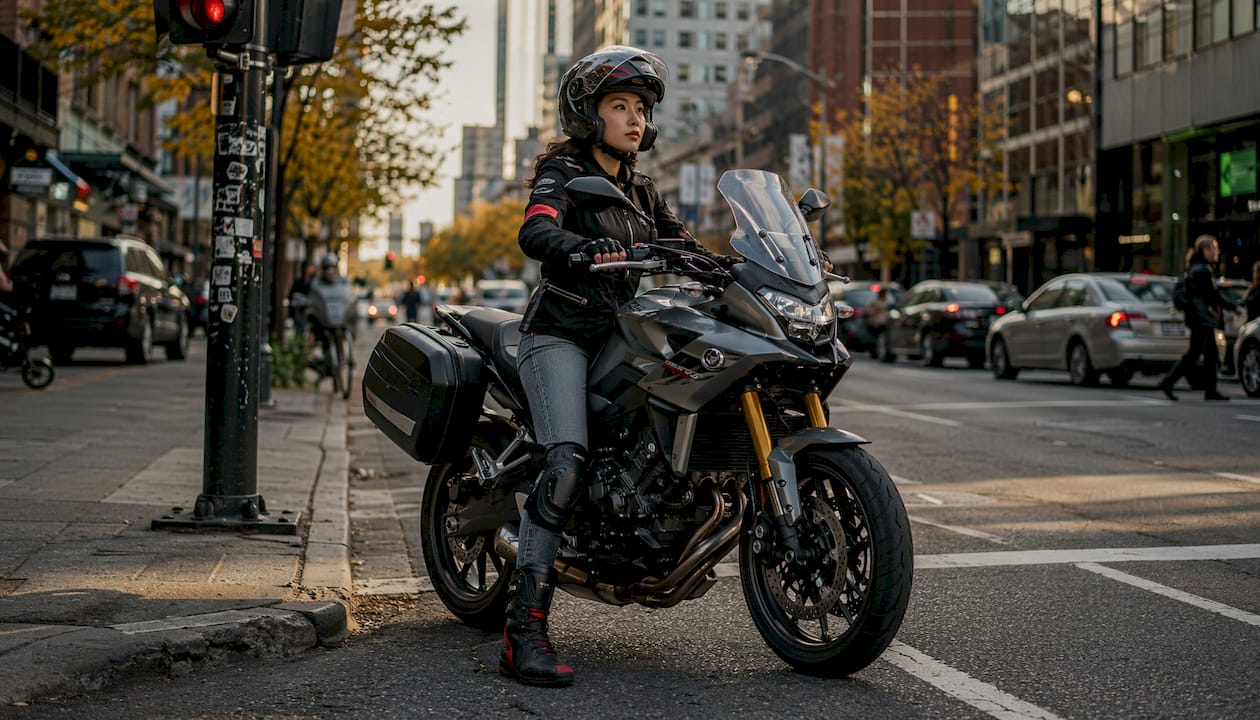
Sport mode is for riders who want the bike to feel alive. Throttle response sharpens up, traction control backs off, and the bike rewards precise, committed inputs. This is the mode for canyon carving on a dry, familiar road. It is absolutely not the mode for a surprise rain shower or a gravel-strewn intersection. Use Sport mode deliberately and with full awareness of your surroundings.
Off-Road and Enduro modes
Off-Road and Enduro modes do something counterintuitive. They enable controlled rear-wheel slip and reduce traction control interference so you can actually steer with the throttle on loose dirt, gravel, or sand. On pavement, traction control is your friend. On a muddy trail, it can be the thing that throws you off the bike by cutting power at exactly the wrong moment.
| Mode | Throttle response | Traction control | Best for |
|---|---|---|---|
| Rain | Soft and gradual | Maximum sensitivity | Wet roads, cold pavement, new riders |
| Road | Balanced | Active, moderate | Daily commuting, dry pavement |
| Sport | Sharp and immediate | Reduced | Dry canyon roads, track days |
| Off-Road/Enduro | Forgiving | Minimal or off | Dirt, gravel, loose terrain |
Pro Tip: Select your mode before you enter the terrain, not after. Switching modes mid-corner or mid-slide is a recipe for a very bad day. Check your weather and road conditions before every ride and set your mode in the parking lot.
What are common misconceptions about ride modes and safety?
The biggest myth about ride modes is that they make riding foolproof. They do not. Ride modes assist but cannot replace rider skill. Smooth throttle control, proper body position, and reading the road ahead remain the foundation of safe riding. Electronics are the backup, not the plan.
“Ride modes should be considered an extension of rider skill, not a substitute, to maximize safety benefits. Technology complements what you bring to the bike. It does not replace it.”
A few critical safety points every rider needs to know:
- Never use Sport mode on wet or low-traction surfaces. The reduced electronic intervention that feels thrilling on a dry road becomes genuinely dangerous on a wet one.
- Changing modes while riding may require closing the throttle completely. Some manufacturers require 0% throttle input before the new mode registers. Skip that step and your bike may stay in the old mode without telling you.
- Sudden throttle behavior changes after a mode switch can catch you off guard. Practice mode transitions at low speeds in a parking lot before you rely on them in traffic.
- Do not use Off-Road mode on pavement. The reduced traction control that helps you on dirt will let the rear wheel spin freely on asphalt.
The riders who get the most out of ride modes are the ones who treat them as dynamic tools, not set-and-forget features. Understand what each mode does, practice with it, and respect what it cannot do.
How do ride modes impact fuel efficiency and tire wear?
Ride modes affect your wallet as much as your riding experience. Eco and Rain modes improve fuel efficiency by limiting power output and smoothing throttle response. Sport mode does the opposite. It enables full power delivery and aggressive throttle mapping, which burns more fuel.
On electric motorcycles, mode selection directly manages range. An Eco or Range mode restricts motor output to extend battery life. A Sport mode on an electric bike can drain the battery noticeably faster on the same route.
| Mode | Fuel/range impact | Tire wear | Maintenance implication |
|---|---|---|---|
| Rain/Eco | Best efficiency | Lowest wear | Lower costs, longer intervals |
| Road | Moderate | Moderate | Standard maintenance schedule |
| Sport | Higher consumption | Accelerated wear | More frequent tire checks |
| Off-Road | Variable | High (on pavement) | Monitor tire condition closely |
More aggressive modes accelerate tire wear and raise fuel consumption. That is not just a performance consideration. It is a maintenance cost consideration. Riders who spend most of their time in Sport mode will replace tires more often and spend more at the pump. Pairing your mode selection with good motorcycle maintenance habits keeps those costs in check.
How can riders integrate ride modes into everyday and adventure riding?
Ride mode selection is a skill, and like all skills, it gets better with practice and intention. Here is a practical framework for riders at every level.
- Beginners: start in Rain or Road mode. These modes give you the most electronic support and the most forgiving throttle. They build confidence without removing the feedback you need to learn bike behavior.
- Intermediate riders: use Road as your default and experiment with Sport on familiar, dry roads. Notice how the throttle feels different and how the bike responds to the same inputs. That awareness is what makes you a better rider.
- Advanced riders: tailor your mode to terrain, traffic, and weather before every ride. A mountain pass in the morning fog calls for Rain. The same pass at noon on a clear day might call for Sport. Read the conditions and choose deliberately.
- Adventure riders: switch to Off-Road or Enduro mode before you leave pavement. Do not wait until you are already sliding on gravel to realize your traction control is fighting you.
- All riders: test mode changes in a safe, low-speed environment first. A parking lot is the right classroom for learning how your bike’s throttle and brake feel shift between modes.
- Pair mode selection with proper gear and terrain reading. Electronics help, but your eyes, your gear, and your technique are still the primary safety systems on any ride.
Pro Tip: Rider confidence improves significantly when you understand exactly what each mode changes. Read your owner’s manual for your specific bike. The mode names are similar across brands, but the exact calibration varies a lot.
Key takeaways
Ride modes are the most underused performance and safety tool on modern motorcycles. Understanding them fully is what separates riders who merely own the technology from riders who actually benefit from it.
| Point | Details |
|---|---|
| Modes adjust three core systems | Throttle mapping, traction control, and ABS all shift when you change modes. |
| Match mode to conditions before riding | Select Rain, Road, Sport, or Off-Road based on terrain and weather before you leave. |
| Modes assist, they do not replace skill | Smooth throttle control and proper body position remain the foundation of safe riding. |
| Sport mode costs more to run | Aggressive modes increase fuel consumption and accelerate tire wear over time. |
| Practice mode changes at low speed | Learn how your bike feels in each mode in a safe area before riding in demanding conditions. |
Bryan’s take: why ride modes matter more than most riders realize
I have watched riders spend thousands on performance upgrades while ignoring the most powerful tool already built into their bike. Ride modes are not a marketing feature. They are a genuine change in how the ECU delivers power and manages safety systems, and most riders never explore them beyond the default setting.
The thing that surprised me most when I started paying attention to mode selection was how much the bike’s personality changed. Rain mode on a sport bike feels almost like a different machine. The throttle is calm, the traction control is attentive, and the whole experience becomes less about managing the bike and more about reading the road. That is a good thing.
My honest opinion is that the future of ride modes is going to get very interesting. Smarter integration with AI safety aids and real-time road condition sensors will make mode selection more automatic and more precise. But here is the thing: the riders who will benefit most from those advances are the ones who already understand what modes do and why. Technology rewards the informed rider.
Do not treat your bike’s electronics as a black box. Learn them, practice with them, and respect what they can and cannot do. The best ride mode in the world does not replace looking ahead, reading the road, and keeping your skills sharp.
— Bryan
Gear up with Dmgmotorsports for your next ride
Ready to get the most out of your motorcycle’s ride modes? Dmgmotorsports carries premium gear, electronics, and accessories that complement every riding setting, from wet-weather commutes to full-send adventure days.
Whether you are gearing up for Rain mode riding with the right waterproof kit or prepping for Sport mode canyon runs with performance tires, Dmgmotorsports has the products and expert knowledge to match your riding style. Our team lives and breathes motorcycles, and we stock everything from helmets and apparel to tires and electronics from the top brands in the industry. Visit us online and find exactly what your next ride needs.
FAQ
What are motorcycle ride modes?
Motorcycle ride modes are electronic settings that adjust throttle response, traction control sensitivity, and ABS intervention to suit specific riding conditions. Common modes include Rain, Road, Sport, and Off-Road/Enduro.
Which ride mode is best for everyday riding?
Road mode is the best choice for most daily and dry pavement riding because it balances performance with smooth, predictable control without being overly restrictive.
Can ride modes replace good riding technique?
No. Ride modes assist riders but cannot substitute for fundamental skills like smooth throttle control and proper body position. They are a complement to technique, not a replacement.
How do ride modes affect fuel economy?
Rain and Eco modes improve fuel efficiency by limiting power output and smoothing throttle response. Sport mode increases fuel consumption by enabling full power delivery and aggressive throttle mapping.
Is it safe to change ride modes while riding?
Some motorcycles require the throttle to be fully closed before a mode change registers. Always check your owner’s manual and practice mode switching at low speeds in a safe area before relying on it in traffic.
Recommended
- Motorcycle Weather Riding Tips for Every Season - DMG Motorsports
- The Types of Motorcycle Helmets for Different Riding Styles - DMG Motorsports
- Motorcycle Service Explained: Boosting Performance and Safety - DMG Motorsports
- Motorcycle Helmet Safety Ratings Explained for U.S. Riders - DMG Motorsports