

Tire Heat Cycles for Sportbikes: What Riders Need to Know
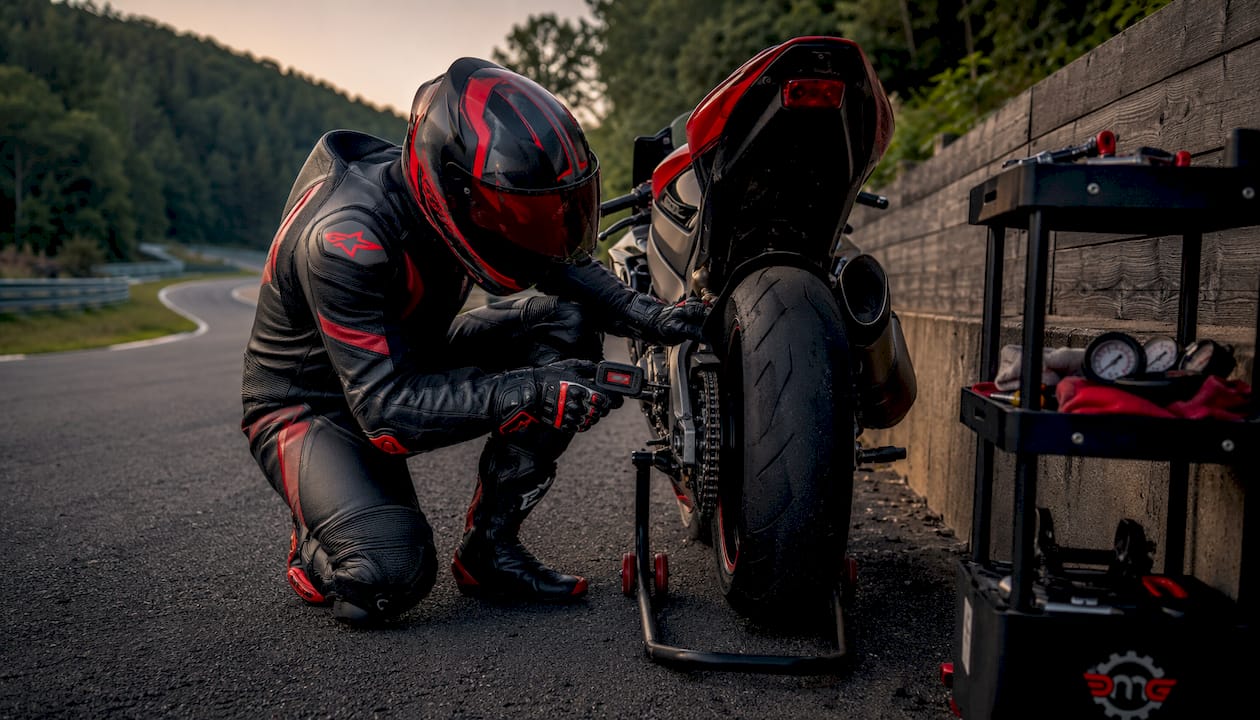
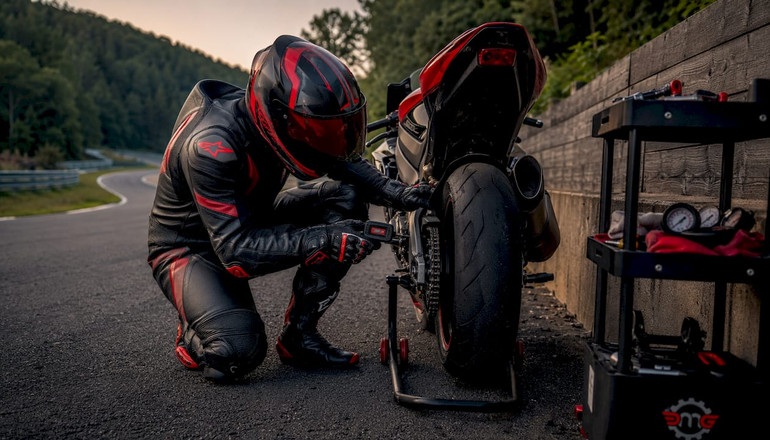
A tire heat cycle is one complete event of bringing a tire up to its operating temperature and letting it cool back to ambient, and that single event changes how the rubber behaves on your sportbike. For track riders and canyon carvers alike, understanding how tire heat cycles work is the difference between confident, predictable grip and a “why is my front washing out?” moment that nobody wants. The short version: heat cycles affect your grip window, compound consistency, and long-term tire life. The most actionable thing you can do right now is start measuring your hot pressures and tread temps every session.
Table of Contents
- What actually happens inside your tire during a heat cycle?
- How heat cycles affect grip and how long your tires last
- Practical thresholds: how many cycles matter and when to retire a tire
- How to warm your sportbike tires safely
- How to spot a tire that has been heat-cycled past its limit
- What to measure and log every session
- Should you intentionally heat-cycle your tires before track use?
- Do different tire brands heat-cycle differently?
- How track conditions and riding style shape heat cycling
- How to store sportbike tires between sessions
- Key Takeaways
- The part most riders skip (and why it costs them)
- Gear up with the right tires and tools at Dmgmotorsports
- Useful sources
What actually happens inside your tire during a heat cycle?
Think of your tire as a layered system, not a single blob of rubber. The surface heats up fast from road friction, but the carcass (the structural inner layers) takes much longer to reach temperature. That gap between surface temp and carcass temp is where most riders get into trouble.
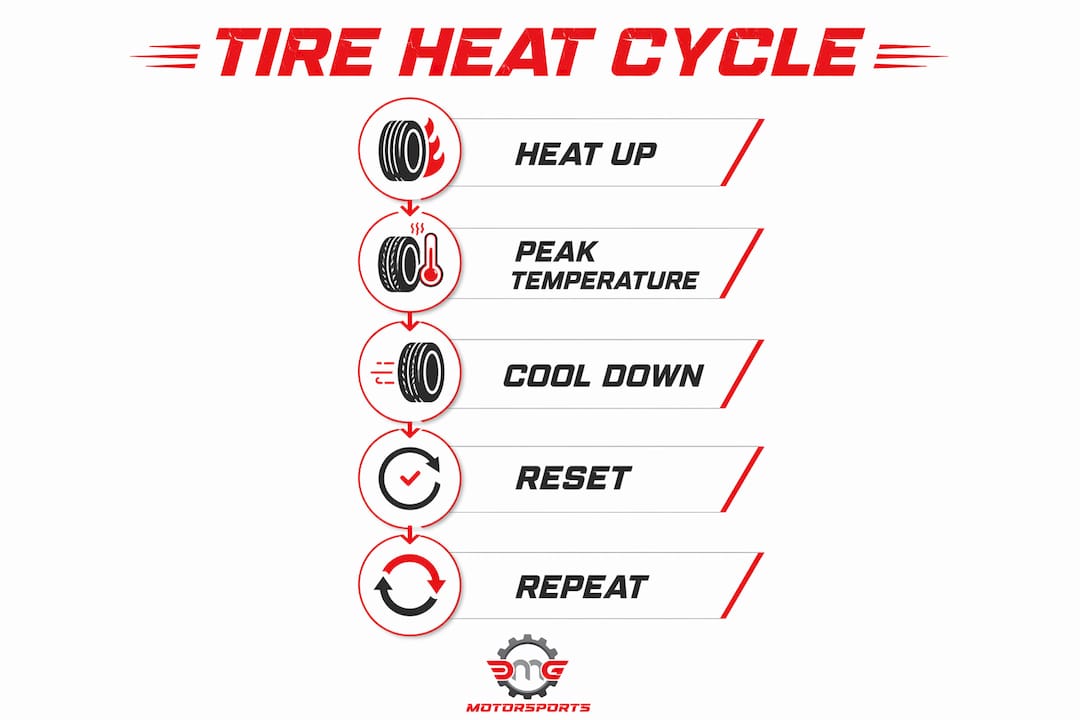
Here is what physically happens, phase by phase:
- Pre-heat: Tire is at ambient temperature; rubber is stiff, oils and resins are unevenly distributed near the surface.
- Activation: Surface friction raises tread temp; surface oils begin migrating outward, creating that initial “greasy” feel on a brand-new tire.
- Heat soak: With sustained riding or warmers, heat penetrates deeper into the carcass; molecular bonds begin stretching and reorganizing.
- Cool-down: Heat dissipates from the outside in; resins and oils settle into a more uniform distribution.
- Stabilization: After a proper rest period, the compound reaches a more consistent molecular structure than it had straight from the factory.
“Heat cycling dynamically stretches and heats the rubber in the tires, further strengthening the molecular bonds in the tread and carcass by reorganizing the granular structure of the material. It’s a process not unlike heat treating metals.” — Grassroots Motorsports
The surface oil migration piece is worth pausing on. A greasy post-session feel on a new tire is not a defect. It is the compound doing its thing. An initial controlled heat cycle followed by 24 or more hours of rest helps stabilize that effect, so your second session feels dramatically more consistent than your first.
Pro Tip: Don’t just check surface temps with your pyrometer. Press your palm against the sidewall after a session. If the carcass still feels cool while the tread is hot, the tire has not fully heat-soaked yet, and your grip window is narrower than you think.
How heat cycles affect grip and how long your tires last
New tires are unpredictable. That is not a flaw in your riding; it is chemistry. Fresh compounds have surface oils sitting near the tread face, and the carcass has never been thermally conditioned. A proper first heat cycle reduces “green tire” surprises by stabilizing breakaway behavior and making the tire’s limit more readable lap to lap.
Long-term, the story gets more nuanced. Repeated extreme heating does thin the tread, and thinner tread means less rubber between you and the carcass. But here is the part most riders get wrong: it is usually the tread thinning, not some abstract cycle count, that kills grip.
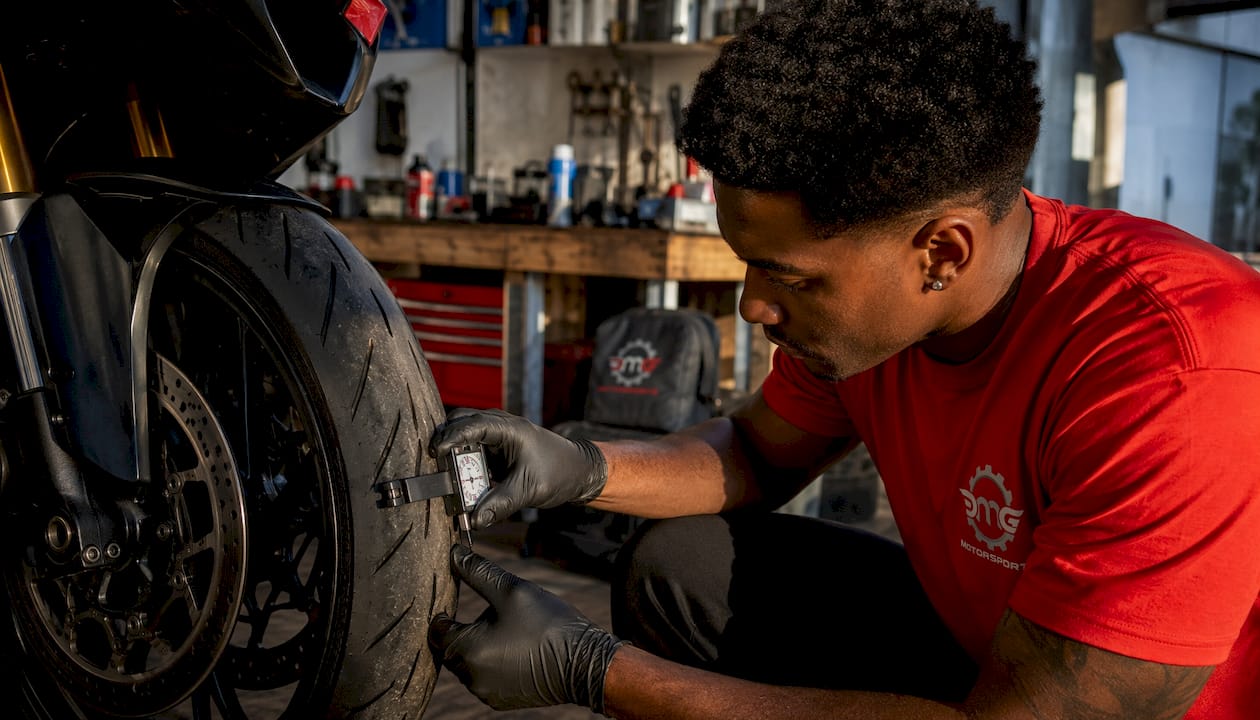
That is a big deal coming from a race tire manufacturer. It means obsessing over “how many heat cycles has this tire had?” is often less useful than simply checking your tread depth and monitoring how the tire feels. For track sessions and aggressive canyon runs, the practical takeaway is this: a tire that has been properly heat-cycled once and ridden consistently will usually outlast one that was hammered cold on its first outing, because the initial overload stresses the carcass unevenly.
Race tires designed to operate between 150–180°F need warmers to reach that range safely. Street-oriented sport tires are engineered for lower operating temps and can actually overheat on track, which accelerates tread wear in a way that has nothing to do with heat cycling and everything to do with compound mismatch.
Practical thresholds: how many cycles matter and when to retire a tire
Here is the honest answer on cycle counts: there is no magic number. “Three heat cycles and it’s done” is a myth that gets repeated in pit lanes everywhere. What actually matters is a combination of tread depth, compound behavior, and how the tire was treated during those cycles.
That said, some useful rules of thumb by tire category:
- Race slicks and R-compounds: These are designed for maximum grip in a narrow temp window. They can show performance drop-off more noticeably after heavy use, but tread depth and visual cues (chunking, graining) are your real retirement signals, not a session count.
- Track-focused hybrid tires (DOT race tires): Generally more forgiving across multiple sessions. Monitor tread depth and hot pressures. Many riders get solid performance until the tread indicators are reached.
- Street sport tires used occasionally on track: These rarely accumulate enough thermal stress to “heat-cycle out.” Tread wear and age (check the DOT date code) are the primary retirement factors.
For temperature bands, a common target for high-performance sportbike compounds is around 165°F (74°C). Below that, you are not in the full grip window. Above 200°F for extended periods, you risk accelerated tread degradation. The “3% rule” you may have heard refers to tire pressure: hot pressure typically runs about 3% higher than cold pressure, which is a useful sanity check when you are dialing in your setup.
Pro Tip: Weather and track surface change everything. A tire that runs perfectly at 165°F on a hot August afternoon at a dark asphalt track may never reach that temp on a cool spring morning at a concrete circuit. Adjust your warm-up routine and pressure targets accordingly.
How to warm your sportbike tires safely
With tire warmers
Warmers are not just a convenience. For race compounds, they are a safety requirement.
- Mount warmers immediately after the previous session while the tire is still warm.
- Allow 45–60 minutes of soak time so heat penetrates the carcass, not just the surface.
- Keep the bike covered or in a sheltered area on cold or windy days to minimize heat loss from the warmer edges.
- Check hot pressures before rolling out. Surface temps can drop rapidly on pit lane even with warmers on.
Without warmers: the on-bike method
- Start with smooth, deliberate inputs. No sudden throttle, no hard braking.
- Ride the first lap or two completely upright where possible, using straight-line acceleration and braking to generate heat evenly across the tread face.
- Progressively increase lean angle over laps 3 and 4, not before.
- Avoid swerving side-to-side to generate heat. It is a myth that this works, and it can actually stress a cold carcass unevenly.
Before your first flying lap, check these:
- Tread temps at three points (left shoulder, center, right shoulder) with a pyrometer
- Hot pressures immediately after the warm-up lap
- Ambient and track surface temps (these set your baseline expectations)
Pro Tip: On cold or windy days, wrap your warmers in an insulating blanket or use a warmer cover. Exposed warmers on a 45°F morning lose heat from the edges fast, and your carcass may never fully soak even after an hour.
How to spot a tire that has been heat-cycled past its limit
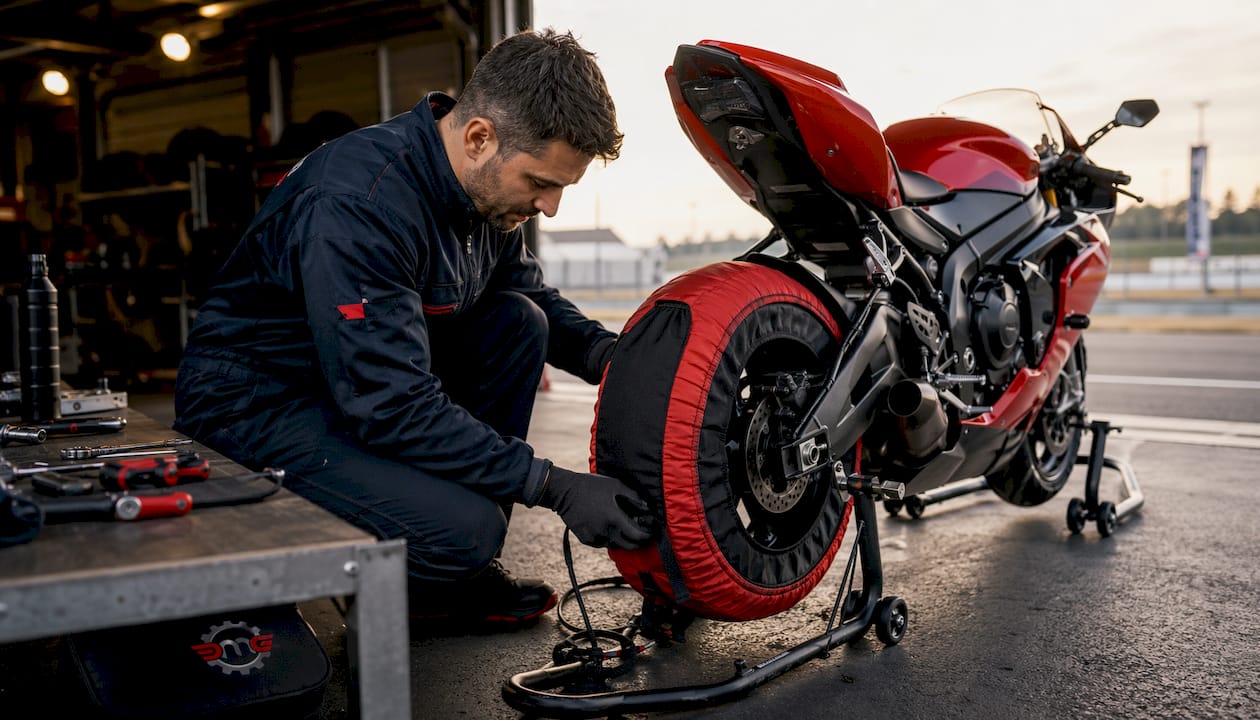
Your tire will tell you when it is done. You just have to know the language.
Visual cues to watch for:
- Chunking: Small pieces of tread tearing away, usually at the shoulder. A sign the compound is past its useful life.
- Cupping or scalloping: Uneven wear patterns that create a wavy tread surface. Often linked to suspension issues but can indicate compound breakdown.
- Flat-spotting: A flattened section from a lock-up or extended straight-line heat. Causes vibration and uneven grip.
- Extreme shoulder thinning: When the shoulder tread is visibly thinner than the center, the tire is close to the end.
On-track behavioral signals:
- Sudden loss of bite at a corner entry where you previously had confidence
- A greasy, slippery mid-corner feel that was not there in earlier sessions
- Unexpected slides at lean angles that felt safe before
The greasy feel question deserves a direct answer: early-session greasiness on a newer tire is surface oil migration and is normal. Greasiness that appears mid-session on a well-used tire is a different animal. That is compound breakdown, and it means the tire is past its useful life.
What to measure and log every session
Consistent measurement is what separates riders who understand their tires from riders who just hope for the best. The minimum kit is a reliable pressure gauge and a pyrometer.
Log this after every run. Over three or four sessions, trends become obvious: pressures creeping up, tread temps running hotter on one shoulder, grip feel changing. That data tells you what is happening before you feel it on track.
Here is the measurement sequence to follow every time you come in:
- Pull into the pits and immediately check hot pressures before the tire cools.
- Run your pyrometer across three tread points (left shoulder, center, right shoulder) within two minutes of stopping.
- Note ambient and track surface temps.
- Record everything, including a short note on how the tire felt.
Tire pressure and tread temperature are the two measurements that tell you whether a tire is inside its grip window. If either is off, what feels like a grip problem may actually be a setup or temperature issue, not a compound failure.
Should you intentionally heat-cycle your tires before track use?
Short answer: it depends on what you are riding on.
For race-specific compounds and aggressive track-focused tires, yes. A controlled initial heat cycle (progressive pace for 20–30 minutes, then a 24–48 hour cool-down) stabilizes the compound and reduces the risk of unpredictable behavior in your first competitive session. Many shops offer off-car cycling services, typically in the $15–$30 per tire range, which use machine-controlled heating for the most uniform result.
For standard street sport tires, intentional heat cycling is generally unnecessary. These compounds are not engineered for the high-temp activation that makes cycling beneficial, and the performance difference is negligible for street use.
One important caveat: some race compounds, including certain Hoosier compounds, deliver their highest grip in the very first heat cycle. Intentionally cycling those tires means you are spending that first-cycle performance in a non-competitive session. Know your compound before you decide.
Pro Tip: If you choose to heat-cycle at home, do it on a highway run (about an hour at highway speeds works the full tread face) rather than in a parking lot. Then leave the tires to rest for at least 24 hours before your next session. Rushing that rest period defeats the purpose.
Do different tire brands heat-cycle differently?
Yes, and the differences are meaningful. Compound chemistry, construction, and intended operating range all influence how a tire responds to heat cycling.
Dunlop, for instance, explicitly states that heat cycling is less of a concern for their racing tires, pointing riders toward tread wear as the primary performance indicator. Michelin’s track-focused compounds tend to have a narrower operating temperature window, which makes proper warm-up and consistent heat management more critical. Pirelli’s Diablo Supercorsa range is engineered for high-temp operation and rewards riders who use warmers and maintain consistent session pacing.
Street-oriented brands like Bridgestone’s Battlax series and Michelin’s Road range are built for a much wider temperature window, which means they are more forgiving of cold starts but also less responsive to intentional heat cycling. The practical upshot: always check your specific tire’s recommended operating range and warm-up guidance. A technique that works perfectly for a Pirelli slick can be counterproductive on a touring-compound tire.
How track conditions and riding style shape heat cycling
Track surface, ambient temperature, and how you ride all change the heat cycling equation significantly.
A dark, abrasive asphalt surface generates more friction heat than a smooth concrete circuit, which means your tires reach operating temperature faster and may overheat sooner if you are on a compound with a narrow window. On a cold morning (below 50°F), even race compounds with warmers may struggle to maintain carcass temperature between sessions.
Riding style matters just as much. Smooth, consistent inputs heat the tire evenly across the tread face. Aggressive, jerky throttle and braking concentrate heat at specific points, which creates uneven tread wear and can cause localized compound breakdown. Riders who trail-brake deep into corners and carry consistent corner speed tend to see more even tread wear than riders who rely on point-and-shoot technique with hard acceleration zones.
Canyon riding presents its own challenge. Stop-and-go sections let tires cool partially between corners, which means you are never fully in the grip window. On a spirited canyon run, treat the first few corners of every new section as a warm-up, not a flying lap.
How to store sportbike tires between sessions
Storage is where a lot of riders accidentally shorten their tire’s useful life without realizing it.
Keep tires away from direct sunlight and ozone sources (electric motors, fluorescent lights, and compressors all generate ozone, which degrades rubber). Store them in a cool, dry place at stable temperature. Extreme temperature swings in a garage, from freezing winter nights to hot summer afternoons, do cause low-level thermal cycling that slowly affects compound chemistry.
For tires still mounted on wheels, store them vertically and rotate them occasionally to prevent flat-spotting. Unmounted tires should be stored flat or in a tire bag to prevent distortion. If you are storing a set between track seasons, a few months in a climate-controlled space is worth the effort.
Check the DOT date code before any session after extended storage. The first two digits are the week of manufacture, the last two are the year. A tire more than five years from its manufacture date deserves a close visual inspection and a conservative first session, regardless of how it looks on the surface.
Key Takeaways
A tire heat cycle is one full event of heating to operating temperature and cooling to ambient, and managing that process correctly is what separates consistent, safe track performance from unpredictable grip loss.
| Point | Details |
|---|---|
| One cycle = one full heat event | A heat cycle counts when the tire reaches operating temp and cools fully to ambient. |
| Tread wear beats cycle count | Focus on tread depth and feel, not an arbitrary session number, per Dunlop’s own guidance. |
| Target ~165°F for most compounds | Race tires operate best at elevated temperatures typical for their design; street tires can overheat above those ranges on track. |
| Measure every session | Log hot pressures and three-point tread temps immediately after each run to spot trends early. |
| Dmgmotorsports for tires and tools | Dmgmotorsports carries tires, warmers, and pyrometers so you have everything you need in one place. |
The part most riders skip (and why it costs them)
Here is something worth saying plainly: the biggest heat cycling mistake riders make is not skipping warmers or miscounting sessions. It is skipping the measurement habit entirely. You can have the best tires on the market, warm them perfectly, and still ride on a tire that is past its grip window because you never logged what “normal” looked like for that compound on your track.
The second mistake is treating heat cycling advice as universal. Dunlop says cycle counts are not their primary concern. Grassroots Motorsports testing shows the Falken RT660 responds dramatically to proper cycling. Both are right, for their respective compounds. The answer is always compound-specific, and the only way to know your compound’s behavior is to measure and log it.
When you come in from a session, do the pressure and temp check before you even take your helmet off. That two-minute habit, done consistently, gives you more useful data than any forum thread.
Gear up with the right tires and tools at Dmgmotorsports
You have the knowledge. Now get the gear to back it up. Dmgmotorsports carries a full range of sportbike tires from the brands that matter, plus tire warmers and pyrometers so you can put everything in this guide into practice from your first session. Whether you are shopping for your first set of track-focused rubber or upgrading to a proper warmer setup, the right gear is at Dmgmotorsports. Check fitment by your specific bike, compare compounds, and get everything shipped to your door so you show up to the track ready, not scrambling.
Useful sources
- Motorcycle Tire Temperature on Track: Track Day Guide (Prisma Electronics) — Covers hot pressure and three-point tread temp measurement, minimum kit recommendations, and session logging methods.
- Tire Warmers: Do You Need Them? (SportBikesInc Magazine) — Explains carcass heat soak timing, operating temp ranges by tire category, and why surface readings can mislead.
- Frequently Asked Questions (Dunlop Motorcycle Race Tires) — Dunlop’s official position on heat cycling vs. tread wear as the primary grip factor for racing compounds.
- Warm Up Your Tires to the Right Temperature (Cycle World) — Target temp guidance (~165°F), progressive warm-up technique, and the myth of side-to-side swerving.
- How to Heat Cycle Tires the Right Way (DrivingSphere) — On-car and off-car cycling procedures, cool-down timing, and when professional services make sense.
- Tire Wear and Compound Behavior (SportBike Suspension Tuning) — Surface oil migration, greasy feel explained, and the benefit of an initial heat cycle plus rest period.
- Heat Cycling: The Secret to Tires That Go Faster and Last Longer? (Grassroots Motorsports) — Real-world testing on track-focused tires, Tire Rack methodology, and the molecular bond reorganization process.
Recommended
- Motorcycle Heated Gear Selection: Your 2026 Riding Guide - DMG Motorsports
- Staying Safe and Stylish on the Track: The Importance of Proper Motorcycle Gear - DMG Motorsports
- Sportbike Racing Boot Explained: Full Rider Guide - DMG Motorsports
- Motorcycle Ride Modes Explained for Every Rider - DMG Motorsports