

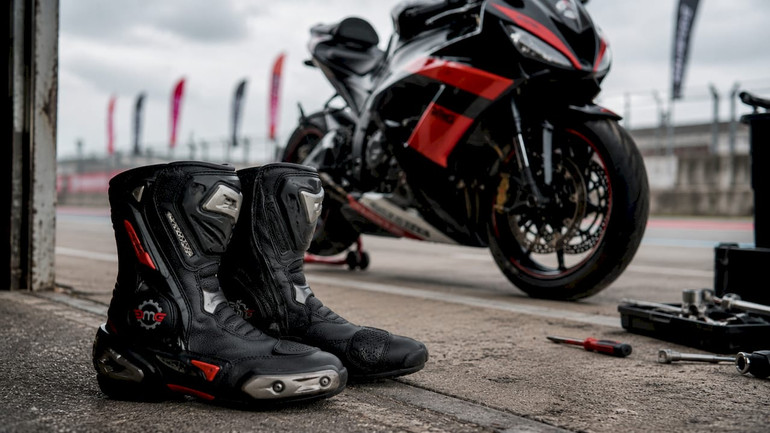
Sportbike Racing Boot Explained: Full Rider Guide
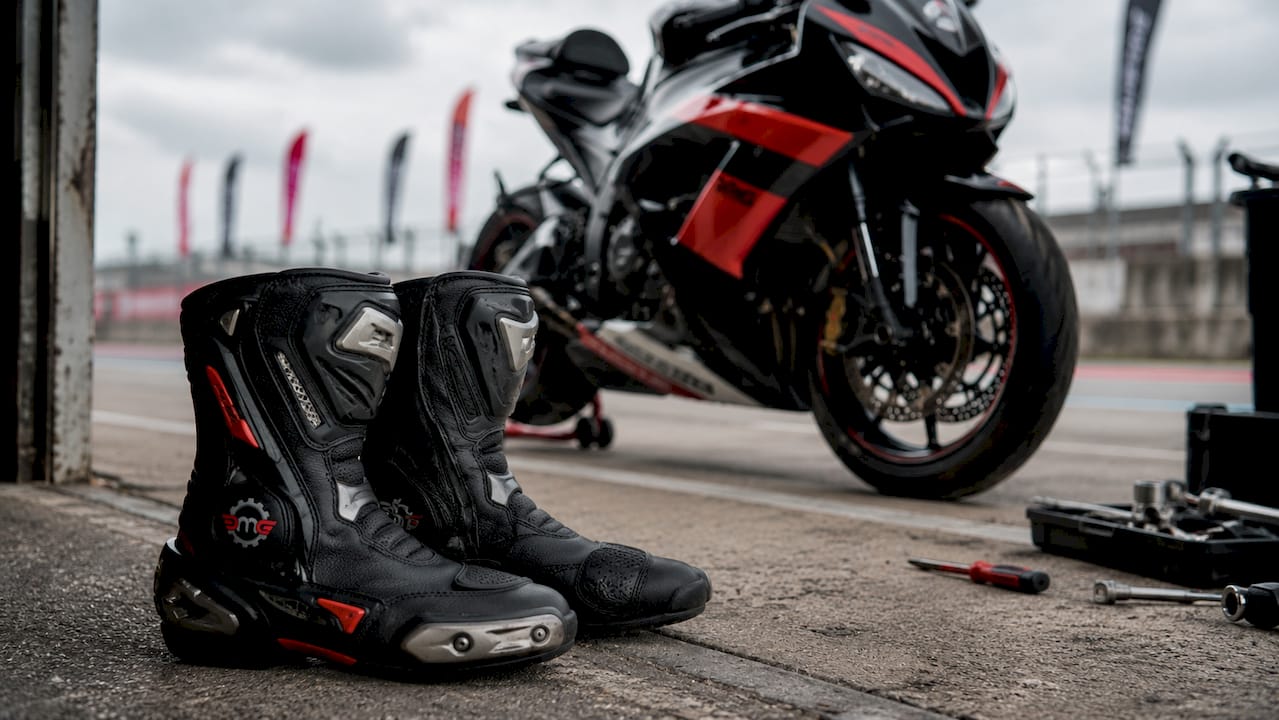
A sportbike racing boot is defined as specialized protective footwear engineered for high-speed crash protection, featuring rigid TPU shin plates, external ankle braces, and abrasion-resistant materials built specifically for track and aggressive street riding. This is not your average motorcycle boot with a tough-guy attitude. Racing boots, formally certified under EN 13634:2017, are purpose-built armor for your feet and lower legs. Think of them as the unsung heroes of your full riding kit. If you have ever wondered why serious riders obsess over their footwear, this sportbike racing boot explained guide will make it crystal clear.
What makes a sportbike racing boot different?
A racing boot’s core purpose is protecting your ankle and lower leg during a high-speed crash, not just keeping your feet dry on a rainy commute. Street boots prioritize comfort and weather resistance. Racing boots prioritize keeping your ankle attached to your leg at 100 mph. That is a fundamentally different design goal, and every material choice reflects it.
Racing boots also replace the mechanical function of your ankle ligaments during a crash. External ankle brace systems provide rigid joint support that prevents dangerous hyper-rotation injuries. Street boots use softer internal armor that simply cannot match this level of structural control.
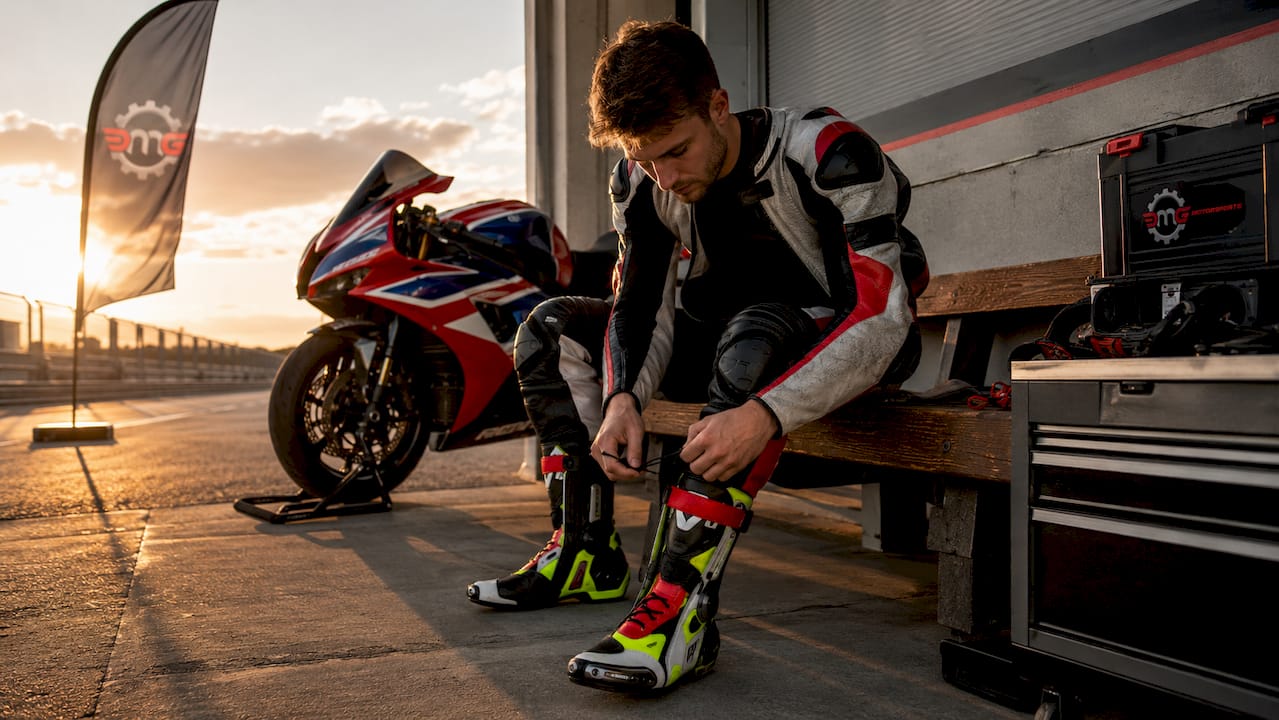
What materials and construction features define racing boots?
The construction of a quality racing boot reads like a short course in materials engineering. Every component earns its place by solving a specific crash scenario.
Here is what you will find inside and outside a proper racing boot:
- Rigid TPU shin plates. Thermoplastic polyurethane plates on the front of the boot absorb and deflect direct impact energy before it reaches your tibia.
- External ankle braces. Hard external bracing wraps the ankle joint and limits dangerous lateral rotation during a slide or tumble.
- Abrasion-resistant outer shell. High-grade microfiber or full-grain leather forms the outer layer, resisting road surface abrasion long enough for you to stop sliding.
- Replaceable toe and heel sliders. These sacrificial pucks take the first hit during a crash and can be swapped out without replacing the entire boot.
- Hinged ankle design. A controlled hinge allows the specific forward and backward movement you need for shifting and braking while blocking the sideways rotation that tears ligaments.
- Internal bootie system. A removable inner bootie stabilizes the ankle, improves pedal feel, and can be pulled out for washing. Internal booties enhance both safety and rider comfort during track sessions.
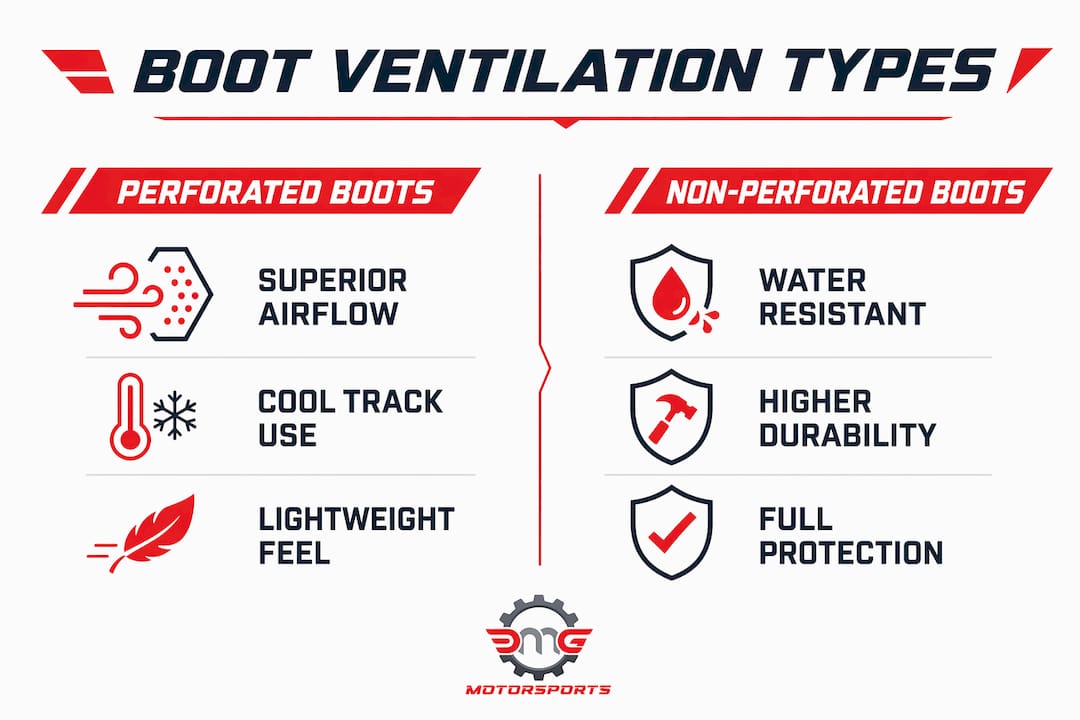
Ventilation is the one area where racing boots split into two camps. Perforated “Air” versions deliver superior airflow for hot track days. Non-perforated models handle variable weather better. Your climate and riding calendar should drive that choice.
Pro Tip: Buy boots with replaceable sliders from day one. Slider wear is normal and expected. Replacing a $15 slider set beats replacing a $400 boot.
What safety standards and certifications protect you?
The EN 13634:2017 standard is the benchmark for motorcycle racing boot certification in 2026. It mandates testing across four key areas: abrasion resistance, impact protection, transverse rigidity, and ankle height. Each category is scored on a scale of 1 or 2, with Level 2 representing the higher protection threshold.
Here is what each test category actually measures:
| Test Category | What It Measures | Why It Matters |
|---|---|---|
| Abrasion resistance | How long the material survives road surface contact | Prevents skin contact during a slide |
| Impact protection | Energy absorption at the ankle and shin | Reduces fracture risk on direct hits |
| Transverse rigidity | Resistance to sideways ankle bending | Prevents ligament hyper-rotation injuries |
| Ankle height | Boot coverage above the ankle joint | Ensures the joint is actually protected |
CE-certified footwear is required by many circuits for track-day participants in 2026. That means showing up with uncertified boots can get you turned away at the gate. Certification is not just a marketing badge. It is your entry ticket and your injury insurance rolled into one.
Pro Tip: Always check the CE label inside the boot before buying. Look for “EN 13634:2017 Level 2” in the ankle and shin categories for the strongest protection available.
How do racing boots compare to touring and street boots?
The honest answer is that racing boots and touring boots are solving completely different problems. Comparing them is like comparing a racing helmet to a baseball cap. Both cover your head, but only one is doing serious work.
| Feature | Racing boots | Touring/street boots |
|---|---|---|
| Armor placement | External, rigid, structural | Internal, softer, comfort-focused |
| Ankle protection | External brace system | Padded internal support |
| Flexibility | Restricted lateral movement | Full walking flexibility |
| Weatherproofing | Minimal (ventilation priority) | Waterproof membranes common |
| Walkability | Poor (sliders, rigid sole) | Good to excellent |
| Best use case | Track days, circuit racing | Commuting, touring, street riding |
Racing boots also carry aerodynamic heel designs that serve a functional protection role, not just a cosmetic one. A streamlined heel reduces the chance of the boot catching on the ground during a slide. Touring boots have no reason to care about that. The design philosophy gap between these two categories is wider than most riders realize.
Many riders mistakenly treat racing boots as simply stiffer street boots. That misunderstanding causes them to skip the biomechanical protection features that actually prevent hyper-rotation injuries. Knowing the difference changes how you shop and how you ride.
How should racing boots fit for maximum protection?
Fit is where most riders get this wrong, and getting it wrong means the armor does not protect you when it counts. Proper race boot fit feels restrictive when you are standing upright. That is normal and expected. The boot reaches its neutral ergonomic state when you lean forward into an aggressive sportbike riding posture.
Here are the non-negotiable fit rules:
- Snug but not circulation-cutting. You need the armor to stay in position during a crash, not float around inside the boot.
- Test it in riding position. Sit on your bike or crouch forward before deciding on a size. A boot that feels too tight standing often fits perfectly in the tuck.
- Check ankle coverage. The boot must fully cover and support the ankle joint. A gap between boot top and riding pants is a gap in your protection.
- No heel lift. Your heel should not rise inside the boot when you flex your foot forward. Heel lift means the boot is too big.
The internal bootie system plays a big role in fit quality. It wraps the ankle snugly inside the rigid outer shell, giving you tactile feedback through the shifter and brake pedal while keeping everything locked in place. Think of it as the boot’s inner skeleton.
Pro Tip: Wear the same socks you plan to ride in when trying on racing boots. Thick socks change the fit significantly, and a half-size difference can compromise armor alignment.
What practical realities come with wearing racing boots?
Racing boots are phenomenal on the bike and genuinely awkward everywhere else. Their rigid construction and external sliders reduce walking comfort and increase tripping risk on uneven surfaces. This is not a design flaw. It is a deliberate trade-off that prioritizes crash protection over strolling through the paddock.
Here is how experienced riders handle the practical realities:
- Pack casual shoes. Experienced track riders swap boots immediately after riding. Carry a lightweight pair of sneakers in your bag for post-session walking.
- Choose ventilation based on your climate. Hot and humid track days call for perforated Air versions. Ventilated versus non-ventilated choice significantly impacts comfort across different temperature ranges.
- Inspect sliders before every session. Worn-through sliders expose the boot shell to direct abrasion. Replace them when you see the wear indicator or when they look thin.
- Wash the bootie regularly. The internal bootie absorbs sweat during every session. Pull it out after each track day and wash it according to the manufacturer’s instructions.
- Clean the outer shell with a damp cloth. Avoid harsh solvents on microfiber or leather shells. A gentle wipe-down after each session keeps the materials in good condition.
- Store boots away from direct sunlight. UV exposure degrades both leather and microfiber over time. A boot bag or shaded shelf extends their lifespan significantly.
The gear breathability question matters here too. Perforated boots feel dramatically different on a 95-degree track day compared to a cool morning session. Matching your boot choice to your typical riding conditions is a practical decision that pays off in comfort and focus.
Key Takeaways
A racing boot’s rigid external armor and EN 13634:2017 certification are the two features that separate genuine crash protection from footwear that merely looks the part.
| Point | Details |
|---|---|
| EN 13634:2017 certification | Look for Level 2 ratings in abrasion, impact, and transverse rigidity categories before buying. |
| External ankle bracing | Rigid external braces prevent hyper-rotation injuries that softer street boots cannot stop. |
| Fit in riding position | Boots that feel tight standing often fit correctly in an aggressive sportbike tuck posture. |
| Internal bootie function | The removable bootie stabilizes the ankle, improves pedal feel, and can be washed after sessions. |
| Ventilation trade-off | Perforated boots suit hot track days; non-perforated models handle variable weather better. |
Bryan’s take: stop treating boots as an afterthought
Here is something I have noticed after years of watching riders gear up for track days. Helmets get obsessed over. Leather suits get admired. Boots get grabbed last, often based on color matching. That ordering is backwards.
Your feet and ankles hit the ground first in most crashes. They take the initial impact, the slide, and the torsional forces all at once. The statistical case for full gear is compelling across every body part, but the ankle and lower leg are uniquely vulnerable to the kind of rotational injuries that change your life permanently.
The biomechanical design of a proper racing boot is genuinely impressive when you understand what it is doing. It is not just stiff leather. It is an engineered system replacing the mechanical function of ligaments that cannot survive a 60 mph slide. Riders who understand that invest accordingly.
My honest advice: spend as much on your boots as you spend on your gloves, and then spend a little more. Fit them in your riding position, not in the store aisle. And pack those casual shoes, because no one looks cool limping through the paddock in race boots.
— Bryan
Gear up at Dmgmotorsports
Ready to put certified protection on your feet before your next track day? Dmgmotorsports carries a curated selection of racing boots built to EN 13634:2017 standards, covering everything from ventilated track-day options to full-season race boots.
Beyond boots, you will find the complete sportbike riding gear lineup at Dmgmotorsports, including leather suits, helmets, gloves, and back protectors from top industry brands. Our team knows the gear and knows the riding. Whether you are suiting up for your first track day or upgrading a worn-out kit, Dmgmotorsports has the selection and the expertise to get you sorted right.
FAQ
What is a sportbike racing boot?
A sportbike racing boot is specialized protective footwear engineered for high-speed crash protection, featuring rigid TPU shin plates, external ankle braces, and abrasion-resistant materials certified under EN 13634:2017.
Are racing boots required for track days?
CE-certified footwear is required by many circuits for track-day participants in 2026. Showing up without certified boots can result in being turned away from the session.
Why do racing boots feel stiff when standing?
Proper race boot fit feels restrictive when standing upright and reaches a neutral ergonomic state in an aggressive sportbike riding posture. Boots that feel comfortable standing are often too large to keep armor correctly positioned during a crash.
Can I wear racing boots on the street?
Racing boots can be worn on the street, but their rigid construction and external sliders make walking uncomfortable and increase tripping risk. Most experienced riders carry casual shoes for off-bike use.
What is the difference between perforated and non-perforated racing boots?
Perforated racing boots provide superior airflow for hot track days, while non-perforated CE-certified models handle variable weather and broader temperature ranges more effectively. Your climate and riding calendar should drive the choice.
Recommended
- Motorcycle Boot Ankle Protection Explained for Riders - DMG Motorsports
- Staying Safe and Stylish on the Track: The Importance of Proper Motorcycle Gear - DMG Motorsports
- Motorcycle Chest Protector Explained: Your Safety Guide - DMG Motorsports
- Best Motorcycle Helmets of 2025 (Beginner to Pro Riders) - DMG Motorsports