


Motorcycle Quickshifter Explained for Every Rider

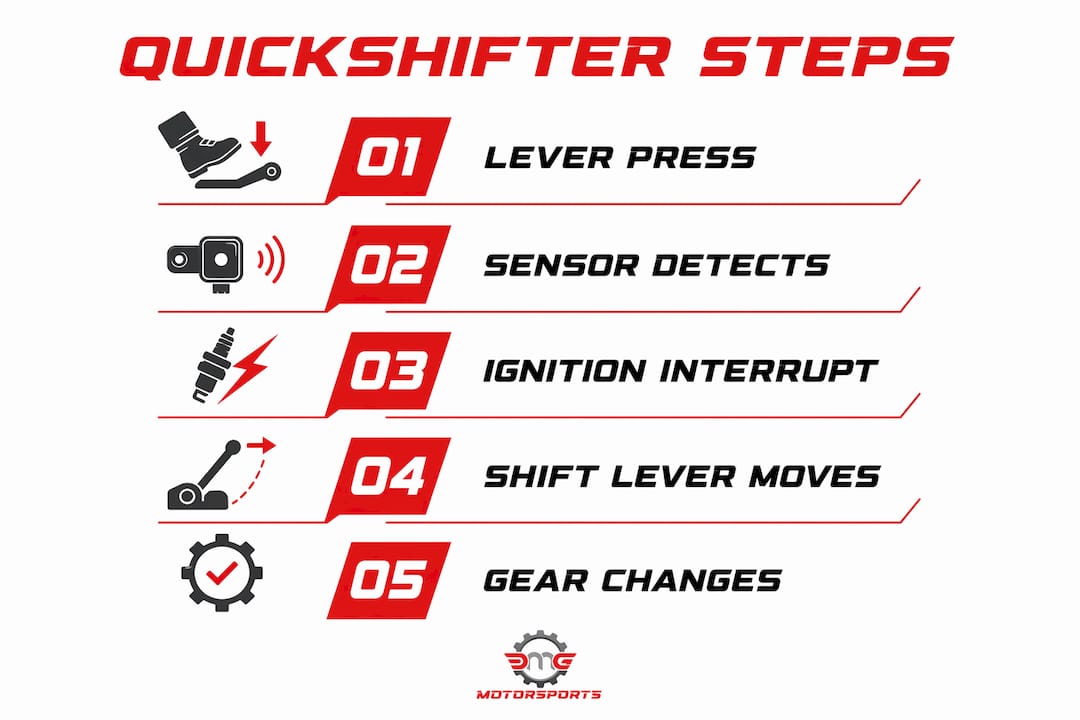
A motorcycle quickshifter is a device that lets you change gears without the clutch or rolling off the throttle, by briefly cutting the ignition or fuel to unload the transmission electronically. Think of it as your bike’s way of saying, “Don’t worry, I got this” while you stay pinned and focused on the road ahead. The system detects lever pressure, signals the ECU, interrupts drive torque for a split second, and lets the gear engage cleanly before restoring power.
Quick facts before we go deeper:
- Upshift-only (mono-directional) units handle clutchless upshifts; bi-directional units (auto-blippers) add clutchless downshifts too.
- Interrupt windows typically run for a very short time, just enough for a smooth, seamless engagement.
- Most useful at high RPM under load; track riders, sportbike enthusiasts, and aggressive street riders benefit most.
Table of Contents
- How does a motorcycle quickshifter actually work?
- What types of quickshifters are out there?
- What real benefits does a quickshifter deliver?
- Do quickshifters damage your gearbox or clutch?
- How much does a quickshifter cost, and what does installation involve?
- Is your bike compatible, and what does retrofitting require?
- How do you choose the right quickshifter for your bike?
- What do racing experts say about quickshifters vs. traditional technique?
- Key Takeaways
- Why Dmgmotorsports cares about getting this right
- Ready to add a quickshifter to your ride?
- Useful sources
- Perspective
How does a motorcycle quickshifter actually work?
The magic happens fast. The moment your left foot nudges the shift lever, a sensor on the shift linkage detects that pressure and sends a signal to the quickshifter module or ECU. The ECU responds by momentarily cutting ignition, fuel, or both, which unloads the gearbox dogs just long enough for the next gear to slide in cleanly. Drive power snaps back on, and you’re already accelerating.
Different bikes handle the interrupt differently. Ignition-cut systems kill spark to one or more cylinders for that brief window. Fuel-cut systems stop injector pulses instead. Modern OEM setups often use a cylinder-cut approach managed entirely by the ECU, which is smoother and more precise. A side effect of ignition-cut systems worth knowing: you may hear a small exhaust pop or
, which is completely normal.
Timing is everything here. The interrupt window needs to be short enough that you don’t feel a lurch, but long enough for the gearbox to actually unload. Too short and the shift is harsh; too long and you get a noticeable power hiccup.
| Step | Component | What it does |
|---|---|---|
| 1. Lever press | Shift sensor | Detects pressure or strain on the shift rod |
| 2. Signal sent | Quickshifter module | Processes signal and triggers the interrupt |
| 3. Interrupt fires | ECU / ignition or fuel circuit | Cuts spark or fuel momentarily for a brief period |
| 4. Gearbox unloads | Transmission dogs | Load drops, gear engages cleanly |
| 5. Power restored | ECU | Drive torque returns, acceleration continues |
What types of quickshifters are out there?
Not all quickshifters are built the same, and picking the wrong type for your riding style is a real mistake. Here’s how the main categories break down.
Upshift-only (mono-directional) units are the most common and affordable. They handle clutchless upshifts only. If your bike has a mechanical throttle cable (no ride-by-wire), this is your only option, since clutchless downshifts require electronic throttle control to blip the engine speed automatically.

Bi-directional units (auto-blippers) add clutchless downshifts to the equation. Auto-blippers raise engine speed to match wheel speed during downshifts, which requires throttle intervention from the electronics. That makes them more complex, more expensive, and typically limited to ride-by-wire bikes.
Sensor types matter more than most buyers realize:
- Mechanical switch: Simple, durable, and common on factory-fit systems. Triggers when the lever reaches a set position. Less sensitive to RPM or load conditions.
- Pressure sensor: Detects force applied to the lever rather than position. Better at reading rider intent, but needs correct preload adjustment.
- Strain gauge: The most sensitive option. Reads the actual flex in the shift rod and requires different setup than mechanical switches. Excellent when dialed in, frustrating when not.
OEM vs. aftermarket is the final split. Factory-installed systems are fully integrated with the ECU and ride modes (check out how ride modes interact with these systems). Aftermarket modules wire in independently and often need manual cut-time tuning. OEM wins on integration; aftermarket wins on flexibility and retrofit potential.
What real benefits does a quickshifter deliver?
Here’s the honest pitch: a quickshifter doesn’t make you a faster rider by itself. What it does is remove the mechanical interruption between you and the road, and that matters a lot at speed.
Clutchless upshifts preserve forward momentum because there’s no throttle roll-off and no clutch slip. On a sportbike at high RPM, that’s the difference between a smooth, continuous surge and a brief stutter that costs you drive. Lap times improve not because the shift is faster in isolation, but because the bike never loses its composure mid-corner or mid-straight.

The ergonomic benefit is genuinely underrated. Traditional shifting coordinates three limbs simultaneously: left hand on the clutch, right hand managing throttle, left foot on the lever. A quickshifter reduces that to one input. Over a long aggressive ride or a full track session, that reduction in hand workload adds up to noticeably less fatigue.
The benefits are most pronounced at high engine speeds under load, where gearbox and crank inertia naturally reduce shock during the unloading window. At lower engine speeds, that window shrinks and the electronics have less room to work cleanly.
Do quickshifters damage your gearbox or clutch?
This is the question every rider asks before buying, and the answer is: not when set up correctly. A properly calibrated quickshifter actually reduces clutch wear because you’re using it far less. The gearbox sees a clean, momentary unload rather than the variable clutch slip of a rushed manual shift.
The problems start when setup goes wrong. Misadjusted sensors are the most common culprit behind missed shifts and excess gearbox wear. If the sensor triggers too early or too late, the gearbox dogs try to engage under load, and that’s hard on the transmission over time. Electronic failures, false triggers, and incorrect cut-time settings all create the same problem.
Low-speed use is where quickshifters genuinely struggle. At low engine speeds, the gearbox float window is smaller, and the electronics produce jerky, unsatisfying results. Tight technical maneuvers, slow urban traffic, and launch situations are all better handled with the clutch the old-fashioned way.
Pro Tip: Inspect your shift linkage and sensor preload every few thousand miles, especially after any hard riding. A loose linkage or drifted preload setting is the number-one cause of mysterious missed shifts and harsh engagements.
Safety-wise, the rule is simple: use the clutch at low speeds, during launches, and in any situation where a missed shift would put you in a bad spot. A quickshifter is a performance tool, not a replacement for judgment.
How much does a quickshifter cost, and what does installation involve?
Budget reality check: aftermarket quickshifter hardware typically runs $100–$500 depending on the unit and sensor type. That’s just the hardware. Professional installation or ECU tuning can add meaningful cost on top, especially for modern fuel-injected bikes that need cut-time calibration or a map change.
| Cost item | Typical range | Notes |
|---|---|---|
| Aftermarket hardware | $100–$500 | Sensor type and brand affect price |
| Professional installation | Varies | Wiring, mounting, and initial setup |
| ECU tuning / cut-time calibration | Varies | Often needed for fuel-injected bikes |
| DIY install (time cost) | Several hours | Requires wiring confidence and a service manual |
DIY vs. professional install:
- DIY pros: Lower cost, full control over setup, good learning experience.
- DIY cons: Wiring into ignition circuits requires confidence; incorrect cut-time can cause harsh shifts or gearbox stress.
- Pro install pros: Correct calibration from the start, warranty on labor, faster turnaround.
- Pro install cons: Added cost, scheduling, and you’re trusting someone else’s cut-time settings.
For older carbureted bikes, standalone modules are simpler to wire in. Modern fuel-injected bikes often need ECU integration or a piggyback module, and getting the cut-time dialed in correctly is where most DIY installs go sideways. If you’re not comfortable hardwiring electronics, professional fitment is worth every dollar.
Is your bike compatible, and what does retrofitting require?
Almost any modern motorcycle with electronic fuel injection can be retrofitted with a quickshifter, even without factory fitment. The checklist before you buy is short but non-negotiable.
Before you purchase, confirm:
- ECU compatibility with your intended module (standalone vs. integrated)
- Wiring harness access near the shift linkage
- Shift rod geometry and available mounting points for the sensor
- Whether your bike has ride-by-wire (required for bi-directional/auto-blipper function)
Carbureted bikes can run upshift-only systems with a standalone module that interrupts the ignition coil directly. No ECU integration needed, which keeps the install simpler. Fuel-injected bikes give you more options but require more careful integration.
On the troubleshooting side, the most common retrofit headaches are sensor adjustment (too much or too little preload), false triggers from vibration, and failed interrupts caused by wiring issues. Start with the sensor preload, confirm the wiring connections are solid, and test at low speed before committing to a full ride.
Pro Tip: When retrofitting, always test the system at low RPM in a safe, open area first. A false trigger or missed shift at 10 mph is annoying; the same issue at 80 mph is a different conversation entirely.
How do you choose the right quickshifter for your bike?
The market has a lot of options, and “best quickshifter” depends entirely on your setup and riding style. Work through this checklist before you buy.
- Define your use case. Track-only riding justifies a bi-directional unit with fine-grained adjustability. Street riding on a mechanical-throttle bike means upshift-only is your ceiling anyway.
- Check ride-by-wire. No ride-by-wire means no auto-blipper. Confirm this before you fall in love with a bi-directional unit.
- Match the sensor type to your setup. Strain gauges are excellent but need careful setup. Mechanical switches are more forgiving for a first install.
- Prioritize adjustable cut time. A unit with adjustable interrupt duration lets you dial in smooth shifts for your specific engine and RPM range. Fixed cut-time units are a gamble.
- Verify ECU integration requirements. Some aftermarket units need a specific ECU flash or piggyback module. Confirm compatibility with your bike’s year, make, and model before ordering.
- Factor in total cost. Hardware price is just the start. Add installation, possible ECU tuning, and any mounting hardware to get the real number.
- Check dealer and manufacturer support. Clear installation documentation and responsive support matter when you’re debugging a false trigger at 11 PM.
For track riders, also consider whether the unit coordinates with your bike’s ride modes and traction control, since some OEM-style aftermarket modules integrate at that level.
What do racing experts say about quickshifters vs. traditional technique?
MotoAmerica and industry experts are consistent on this: quickshifters are transformative for performance riding because they preserve momentum, but they should complement your clutch skills, not replace them.
That’s the real tension. Electronics fail. Sensors drift. Cut-time settings that worked perfectly last season can feel off after a firmware update or a temperature swing. The rider who has only ever used a quickshifter is genuinely less equipped when the system misbehaves.
Experienced instructors point to the “mini-clutch” technique as the gold standard for low-speed clutchless shifting. A brief, partial clutch pull combined with a momentary throttle lift produces smoother, more reliable shifts in urban traffic and technical sections than any electronic system. The electronics shine at high RPM under load; human technique wins everywhere else.
Pro Tip: Practice manual clutchless upshifts at highway speed before relying on a quickshifter in anger. Understanding what the electronics are replicating makes you a better rider and a better troubleshooter.
The practical blend looks like this: use the quickshifter for aggressive upshifts at high engine speeds, use the clutch for launches, low-speed maneuvers, and any time you’re in a technical or unfamiliar situation. That combination gets you the performance benefit without the vulnerability.
Key Takeaways
A motorcycle quickshifter cuts ignition or fuel for a very brief moment to enable clutchless upshifts, with bi-directional units adding auto-blipper downshifts for ride-by-wire bikes.
| Point | Details |
|---|---|
| Core function | Briefly cuts ignition or fuel to unload the gearbox, enabling clutchless shifts. |
| Interrupt timing | Interrupt window typically lasts 15–50 milliseconds, keeping power delivery feeling continuous. |
| Best use case | High-RPM, aggressive riding; low-speed and technical maneuvers still need the clutch. |
| Typical hardware cost | Aftermarket units have a range of prices depending on sensor type and brand; installation and ECU tuning can add to the total. |
| Dmgmotorsports | Carries quickshifter parts and accessories with expert support for U.S. riders ready to upgrade. |
Why Dmgmotorsports cares about getting this right
At Dmgmotorsports, we believe a well-informed rider is a better rider, full stop. Quickshifters sit at the intersection of performance electronics and everyday riding decisions, and we’ve seen too many riders buy the wrong unit, skip calibration, and then blame the technology. Our blog and education resources exist specifically to close that gap. We stock performance electronics, parts, and accessories from trusted brands, and our team is here to help you match the right hardware to your bike before you spend a dollar.
Ready to add a quickshifter to your ride?
Dmgmotorsports is the go-to destination for U.S. riders who want performance electronics without the guesswork of sourcing parts from three different places. We carry quickshifter kits, sensors, and mounting hardware for a wide range of bikes, and our team can point you toward the right unit for your specific year, make, and model.
Whether you’re prepping for track day or just want smoother street shifts, we’ve got the parts and the know-how to back you up. Before you wrench anything in, make sure your motorcycle service is current so you’re starting from a solid baseline. Then head to Dmgmotorsports to browse quickshifter options, check fitment compatibility, and get in touch with our team for installation guidance.
Useful sources
Here are the primary references used throughout this article, worth bookmarking if you want to go deeper.
- Quickshifter overview — Wikipedia: Clean, sourced definition of how quickshifters function and their history in motorsport.
- Tech talk: shifting gears and blipping throttles — MotoAmerica: Industry and racing perspective on performance benefits and the limits of electronics vs. manual skill.
- Motorcycle quickshifters: Are they safe, how do they work? — Bennetts BikeSocial: Detailed breakdown of sensor types, adjustment needs, and safety considerations.
- Quickshifter: How does it work? — BikesRepublic: Technical explainer covering interrupt timing, auto-blipper mechanics, and signal flow.
- Motorcycle Quick Shifter Pros & Cons — Motoxtasy: Buyer-focused guide covering cost ranges, installation considerations, and real-world trade-offs.
- How to shift without the clutch — CanyonChasers: Instructor perspective on manual clutchless techniques and when electronics fall short.
- No Clutch, No Problem! How Motorcycle Quick Shifters Work — YouTube: Visual demo of ignition-cut behavior, including the exhaust pop that’s normal on some systems.
- Motorcycle Quickshifter: What It Is, How to Use It — CryptoMoto: Practical rider-focused explainer covering retrofit options, ride-by-wire requirements, and ergonomic benefits.
Perspective
The part nobody tells you about quickshifters
Here’s a take you won’t find in most buying guides: the quickshifter has quietly become a crutch for riders who never learned to shift well in the first place, and that’s a problem worth naming.
The technology is genuinely excellent. A 15–50 millisecond interrupt that keeps you pinned through a gear change is a real performance tool, and the ergonomic relief over a long aggressive ride is not trivial. But the way quickshifters get marketed, you’d think they’re a substitute for technique. They’re not. They’re an amplifier of technique. A rider who already shifts cleanly and confidently gets a measurable performance edge. A rider who relies on electronics to paper over sloppy inputs just gets sloppy inputs at higher speed.
The instructors who recommend learning the mini-clutch technique first are right, even if that advice is less exciting than “just buy the gadget.” Understanding what the electronics are replicating, the momentary load reduction, the RPM matching, makes you a better troubleshooter and a more adaptable rider. When the sensor drifts or the cut-time goes stale after a firmware update, you’ll be glad you can fall back on your hands and feet.
Buy the quickshifter. Dial it in properly. And then go practice shifting without it for a few sessions, just so you remember who’s actually in charge out there.
Recommended
- Motorcycle Ride Modes Explained for Every Rider - DMG Motorsports
- Motorcycle Service Explained: Boosting Performance and Safety - DMG Motorsports
- Motorcycle Poker Run Explained: Your 2026 Rider’s Guide - DMG Motorsports
- Staying Safe and Stylish on the Track: The Importance of Proper Motorcycle Gear - DMG Motorsports