

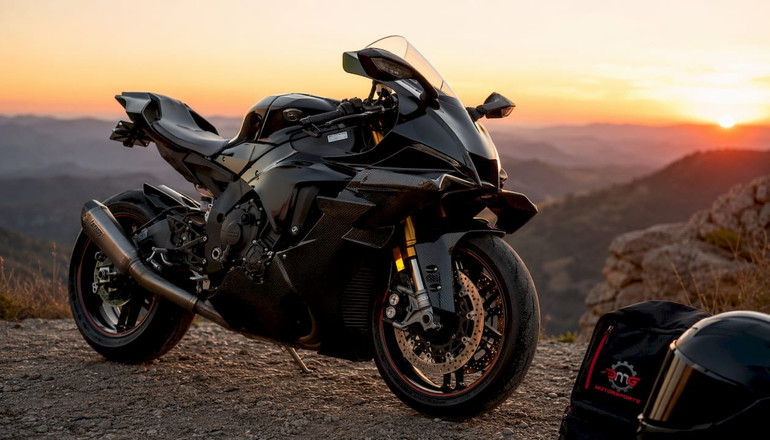
Sportbike Aerodynamic Accessories: Examples and 2026 Guide
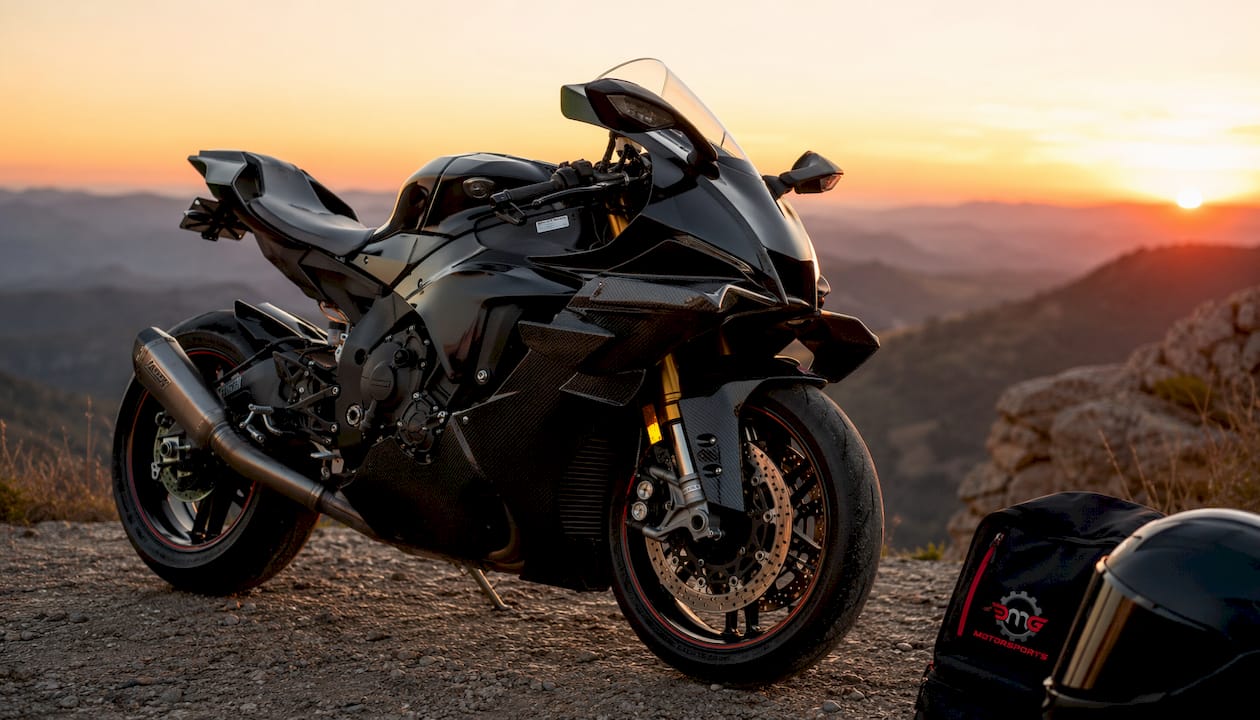
What aerodynamic accessories do sportbikes actually use?
Ready to turn your sportbike into a wind-slicing machine? The most common examples of sportbike aerodynamic accessories riders are adding in 2026 include winglets, spoiler-mirrors, front-wheel deflectors, and aftermarket fairing kits. Each one targets a specific airflow problem, and knowing which does what is the difference between a purposeful upgrade and a glorified sticker.
Here is a quick rundown of the main categories:
- Winglets: Small fins mounted to the fairing sides that generate downforce at speed, improving front-end stability during hard acceleration and cornering.
- Spoiler-mirrors: Dual-function mirrors that fold into aerodynamic wings, adding downforce while keeping your rear view intact.
- Front-wheel deflectors: Accessories that redirect turbulent air kicked up by the spinning front wheel, improving braking feel and front-end stability.
- Aftermarket fairing kits: Full or partial body kits molded to OEM dimensions that reduce drag compared to bulky stock add-ons.
- Chin spoilers and windshield deflectors: Lower-fairing or windscreen-mounted pieces that redirect airflow away from the rider’s chest and legs.
Materials split between carbon fiber (lighter, stiffer, used on performance-focused parts) and high-grade ABS plastic (more affordable, UV-resistant, and easier to shape for model-specific fitment).
Table of Contents
- Specific aerodynamic parts for sportbikes worth knowing about
- How to choose the right aerodynamic accessories for your sportbike
- What the experts say about modern sportbike aerodynamics in 2026
- Performance data and real-world results from aero accessories
- Dmgmotorsports has the aerodynamic parts your sportbike deserves
- Key Takeaways
Specific aerodynamic parts for sportbikes worth knowing about
Not all aero parts are created equal. Here are real-world examples that actually deliver on their promises, not just look the part.
- Rizoma Stealth Sport mirrors: Engineered for supersport bikes, these fold from functional mirrors into aerodynamic wings with a single motion. When closed, they generate up to 4 kg of downforce at 300 km/h, milled from a single aluminum block with a convex HD blue-tinted lens. The 25-degree angle relative to the ground is what produces the downforce effect, not just the folded shape.
- Puig Aero Wheel Deflector: Built from a direct collaboration between Puig and the Honda HRC MotoGP factory team, this front-wheel turbulence management accessory ships as a pair (220mm x 53mm each) in high-quality ABS with metal steel supports. It clears the chaotic air a spinning front wheel generates before it compounds into the brake caliper and axle area.
- Carbon fiber MotoGP-style winglets for Honda CBR1000RR-R: Constructed from 3K prepreg carbon fiber with a UV-resistant clear coat, these mount directly to the fairing sides and enhance stability during hard acceleration and high-speed cornering.
- Front chin spoilers: Mounted beneath the front fairing, these redirect airflow away from the rider’s torso and legs, reducing buffeting on longer runs.
- Model-specific side winglets: Fairing-mounted fins near the radiator or fork area that stabilize airflow around the rider’s shoulders. The key word is “model-specific.” Universal kits with vague installation instructions tend to shift under vibration and create more turbulence than they solve.
- Rear deck spoilers: Mounted on the tail section or passenger cowl, these improve visual balance and offer minor airflow management at the bike’s trailing edge.
Pro Tip: Always prioritize model-specific fitment over universal kits. A winglet designed for your exact bike has been shaped around its actual airflow patterns. A generic kit is essentially guesswork bolted to your fairing.
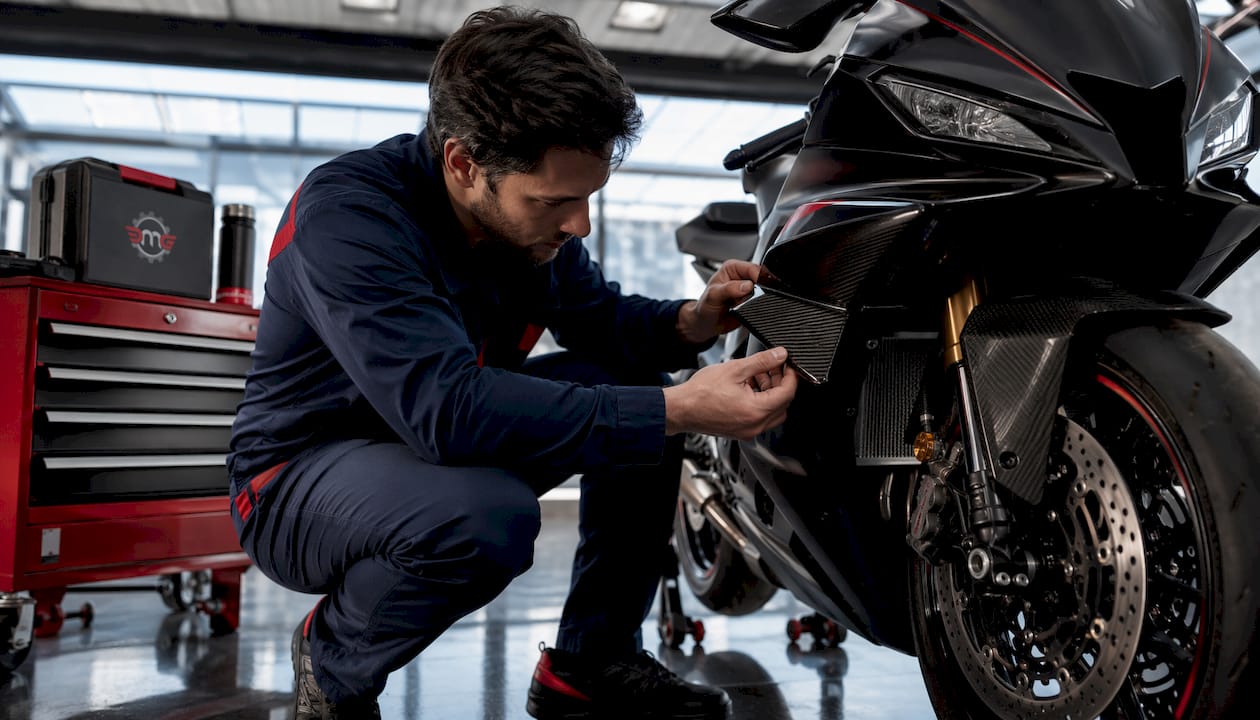
How to choose the right aerodynamic accessories for your sportbike
Picking aero parts is not just about what looks aggressive in photos. Here are what actually matter when you are shopping for aerodynamic accessories for motorcycles.
- Model-specific compatibility: The single most important factor. Parts designed for your exact bike integrate with its existing airflow patterns. Poorly fitted accessories can introduce turbulence rather than reduce it.
- Material durability: Carbon fiber offers the best strength-to-weight ratio and is the go-to for performance-focused riders. High-grade ABS plastic is a solid choice for street use, offering UV resistance and easier replacement if damaged.
- Road-use certification: Some aerodynamic parts require legal certification for street riding. The Rizoma Stealth mirror, for example, carries a compliance note that it is not certified compliant in certain markets, which can affect insurance and roadworthiness inspections. Always check before you buy.
- Track design vs. street use: Aggressive, track-only aero designs generate downforce at racing speeds but can feel twitchy and impractical on public roads. For everyday riding, clean and integrated designs work better.
- Fuel efficiency and practicality: Adding surface area to your bike increases wind resistance. Accessories that are poorly integrated can actually hurt your fuel economy rather than help it.
- Aesthetics vs. function balance: Not every aero part needs to be a performance tool. For most street riders, the goal is a clean, cohesive look with modest aerodynamic benefit, not MotoGP-level downforce.
What the experts say about modern sportbike aerodynamics in 2026
The biggest shift in sportbike aerodynamics over the last few years is not about more wings. It is smarter turbulence management. Factory MotoGP teams have moved beyond simple winglets toward accessories that address airflow problems at the source, and that thinking is now trickling down to street-legal hardware.
- Front-wheel deflectors are the new frontier: MotoGP teams have been running front-wheel aero management for several seasons. The Puig Aero Wheel Deflector is the first time that specific technology has been productized for consumer bikes at this level, backed by real wind-tunnel data from the HRC collaboration.
- Speed dependency is real: Winglet downforce is negligible below 75–100 mph, which covers most street riding. At track speeds, the physics change meaningfully. Knowing this helps you set realistic expectations for what an aero upgrade will actually feel like on your commute versus a track day.
- Rider posture matters as much as hardware: Technical experts from SoCal Honda Powersports point out that increased surface area from accessories can work against aerodynamics. Leaning forward, wearing tighter gear, and packing symmetrical luggage often deliver more measurable airflow improvement than a bolt-on wing.
- Factory collaboration is the credibility signal: Effective aero accessories today come from factory team partnerships using real wind-tunnel data, not visual styling tricks. Puig’s Streetfighter V2 Downforce Spoilers brought quantified front-end load to the street with CFD data to back it up.
- Industry analyst Andre Silva notes the key distinction for riders is between track-level downforce needs and street riding, where clean, model-specific fitment outweighs aggressive aero every time.
Performance data and real-world results from aero accessories
The Puig Aero Wheel Deflector’s HRC collaboration data points to improved braking performance, better front axle stability, and more precise handling, particularly in high-speed corners where front-wheel aero behavior most influences the bike’s planted feel. Puig is measured about the claim, which is the right call. This is an aero stability part, not a horsepower part. The gains show up in feel and consistency, not on a timing board.
The Rizoma Stealth Sport mirrors deliver a concrete, measurable result: 4 kg of downforce at 300 km/h when closed. That translates to improved grip and handling in high-speed corners and directional changes. The ergonomic design also aligns the mirrors with the rider’s eye level in a sporty position, so you keep your head tucked behind the fairing rather than raising it into the wind.
Carbon fiber winglets for the Honda CBR1000RR-R platform demonstrate how material choice affects real-world performance. The 3K prepreg construction keeps weight down while maintaining structural stiffness under the aerodynamic loads generated at speed. Riders report sharper front-end feel during hard acceleration, which aligns with what downforce-generating winglets are designed to do.
The broader lesson from these examples? Accessories backed by engineering data and model-specific design consistently outperform generic bolt-ons. A well-fitted, purpose-built aero part from a credible manufacturer delivers measurable stability gains. A cheap universal kit mostly delivers vibration and a slightly sportier photo.
Dmgmotorsports has the aerodynamic parts your sportbike deserves
You have done the research. You know the difference between a winglet that works and one that just looks cool. Now you need a place that stocks the real stuff, with people who actually ride and can help you pick the right part for your specific bike.
Dmgmotorsports is a leading US retailer for premium sportbike aerodynamic accessories, performance parts, and rider gear, all in one place. Whether you are hunting for carbon fiber fairing upgrades, model-specific winglets, or the full aerodynamic accessories guide treatment for your build, the catalog covers it. Competitive pricing, expert support, and a rider-first approach mean you are not just buying parts. You are getting the right parts.
Head to Dmgmotorsports and find the aerodynamic upgrade your sportbike has been waiting for.
Key Takeaways
Winglets, spoiler-mirrors, and front-wheel deflectors deliver real aerodynamic gains on sportbikes, but only when they are model-specific, properly fitted, and matched to your actual riding speeds and conditions.
| Point | Details |
|---|---|
| Winglets generate speed-dependent downforce | Downforce benefit is negligible below 75–100 mph; gains are most meaningful at track speeds. |
| Spoiler-mirrors serve dual roles | Rizoma Stealth Sport mirrors produce 4 kg of downforce at 300 km/h when folded into wing position. |
| Road-use certification matters | Some aero parts are not street-legal in all markets; always verify compliance before installing. |
| Model-specific fitment beats universal kits | Generic kits often introduce turbulence and vibration; purpose-built parts integrate with existing airflow patterns. |
| Dmgmotorsports stocks premium aero parts | Riders can find model-specific aerodynamic accessories and expert support at Dmgmotorsports for their sportbike builds. |
Recommended
- Best Motorcycle Helmets of 2025 (Beginner to Pro Riders) - DMG Motorsports
- Staying Safe and Stylish on the Track: The Importance of Proper Motorcycle Gear - DMG Motorsports
- 6 Top Beginner Motorcycle Accessories for New Riders - DMG Motorsports
- Motorcycle Helmet Visor Types Explained for 2026 - DMG Motorsports