

Motorcycle Helmet Weight Impact: What Riders Must Know
Motorcycle helmet weight impact is defined as the measurable effect a helmet’s mass has on neck fatigue, cognitive performance, and rotational brain injury risk during a ride. This is not just a comfort conversation. Every extra ounce your helmet adds to your head translates directly into physical strain, mental fog, and, in a crash, greater rotational force on your brain. The good news? In 2026, materials like carbon fiber and carbon-aramid composites have made it possible to get certified, high-protection helmets that weigh significantly less than traditional polycarbonate shells. Choosing the right weight is one of the most underrated safety decisions you will make as a rider.
What is motorcycle helmet weight impact on neck fatigue?
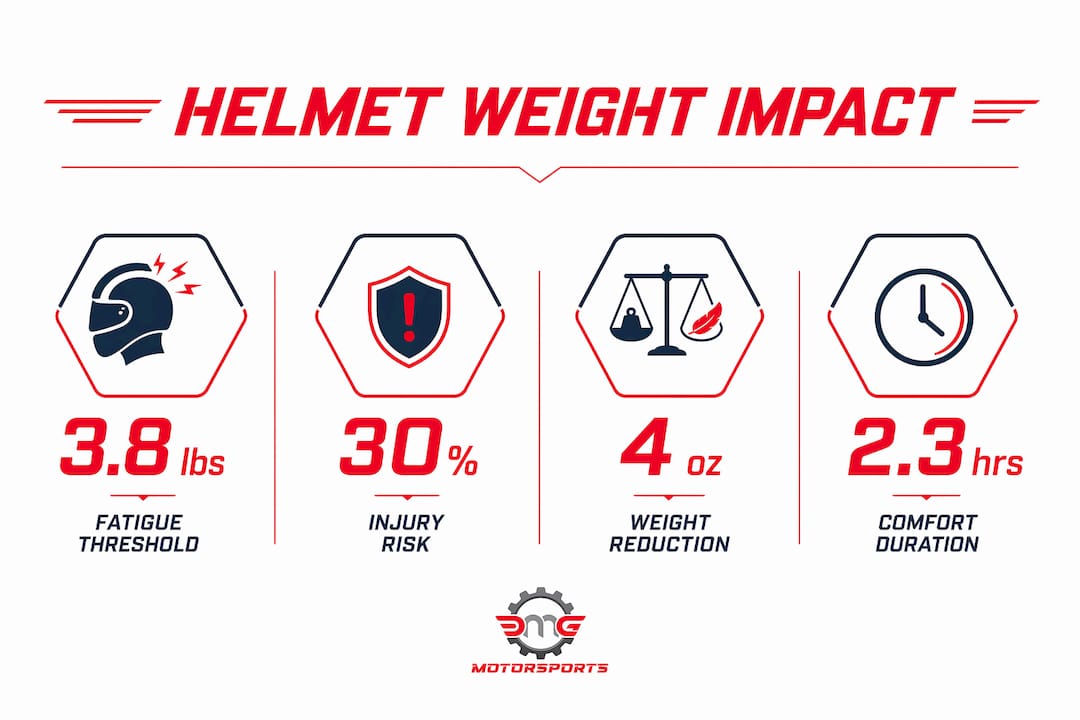
Helmet weight’s impact on neck fatigue is quantifiable, and the numbers are genuinely eye-opening. Riders wearing helmets above 3.8 lbs report fatigue after roughly 2.3 hours, while riders in helmets under 3 lbs comfortably log 5-plus hours with minimal discomfort. That is more than double the comfortable riding window just by going lighter.
Here is the part most riders miss: the weight you feel at a standstill is not the weight your neck fights at speed. Wind resistance at highway speeds can multiply the effective load on your cervical spine up to 7–10 lbs. That aerodynamic force causes more fatigue than the static weight alone. So that “not-that-heavy” 4 lb modular helmet you tried on in the store? It feels like a bowling ball at 70 mph.
The math gets more motivating when you look at incremental improvements. Every 4 oz reduction in helmet weight extends comfortable riding time by approximately 45 minutes. That is not a rounding error. That is the difference between arriving at your destination sharp and alert versus arriving stiff, irritable, and already mentally checked out.
Weight distribution matters as much as total weight. A helmet with a well-centered shell and balanced padding spreads load evenly across your neck muscles. A poorly designed heavy helmet shifts strain to specific muscle groups, accelerating fatigue even if the total weight is similar to a better-designed lighter model.
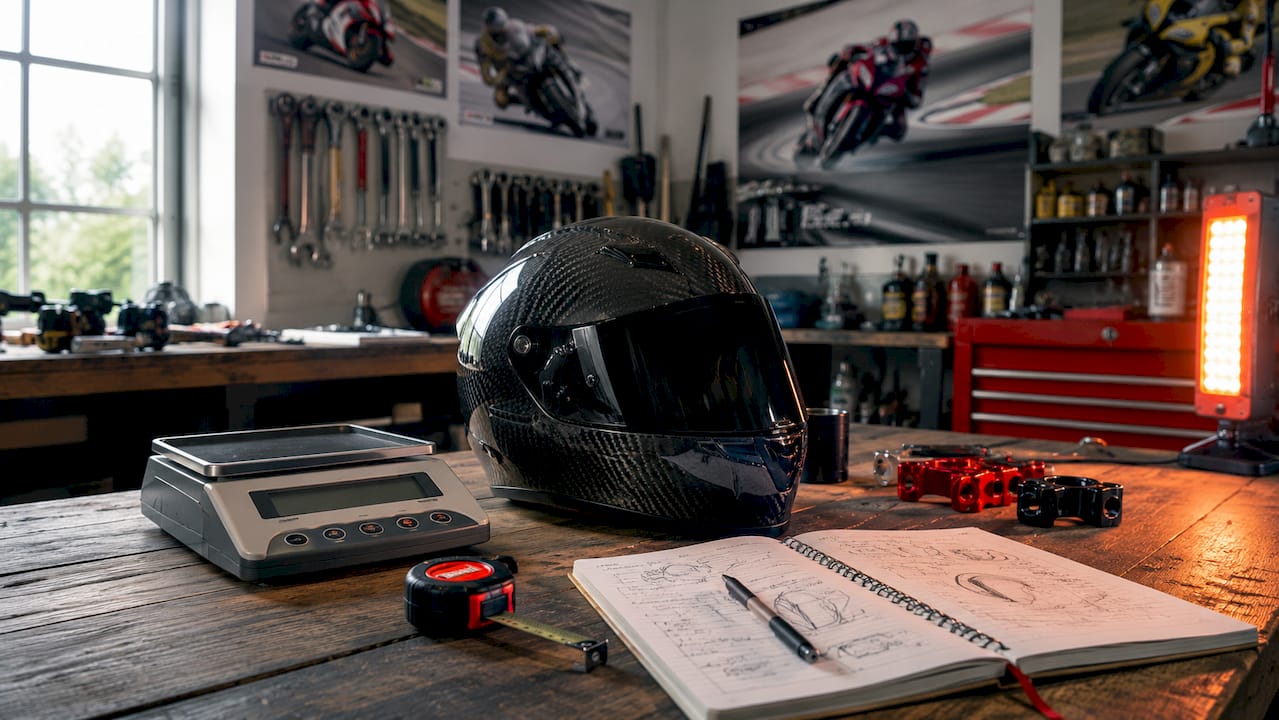
Pro Tip: When test-fitting helmets, tilt your head forward and hold it there for 30 seconds. If you feel immediate strain, the helmet is too heavy or too front-heavy for your neck strength and riding style.
| Helmet weight class | Comfortable ride duration |
|---|---|
| Above 3.8 lbs | ~2.3 hours before fatigue |
| 3.0–3.8 lbs | ~3.5–4 hours |
| Under 3.0 lbs | 5+ hours with minimal discomfort |
How does helmet weight affect rider cognitive performance and safety?
Physical fatigue and mental fatigue are not separate problems. Physical fatigue directly translates into mental fatigue, impairing hazard detection and slowing response time. When your neck muscles are burning from holding up a heavy helmet for two hours, your brain is spending processing power managing that discomfort instead of scanning the road ahead.
Shark Helmets’ research describes helmet weight as an “anti-fatigue weapon” when managed correctly. The logic is simple: a lighter helmet reduces the physical load, which preserves mental alertness, which keeps your hazard awareness sharp. Neck muscle fatigue leads directly to degraded focus, reduced reflexes, and increased accident risk. That chain reaction is entirely preventable with the right gear choice.
“Neck fatigue caused by heavy helmets is not just uncomfortable. It is a genuine safety risk that degrades the rider’s ability to detect and respond to road hazards in real time.” — Shark Helmets research
The crash dynamics angle is even more sobering. Heavier helmets increase rotational inertia in a crash, raising the risk of rotational brain injury by 30% compared to lighter alternatives. Rotational brain injury occurs when the brain twists inside the skull during impact. More helmet mass means more momentum, which means more rotational force transferred to your brain. Weight reduction is a technical safety advantage, not just a comfort upgrade.
This reframes the entire helmet weight conversation. You are not choosing between heavy-and-safe versus light-and-risky. You are choosing between heavy-and-fatigued-with-higher-crash-brain-injury-risk versus light-and-alert-with-lower-rotational-injury-risk. That is a very different decision.
Helmet types and materials compared by weight and safety
Understanding the weight ranges across helmet types is the starting point for any smart motorcycle helmet weight comparison. Here is how the major categories stack up in 2026:
| Helmet type | Typical weight range | Shell material |
|---|---|---|
| Jet (open-face) | 1,100–1,300g (2.4–2.9 lbs) | Polycarbonate or fiberglass |
| Full-face | 1,350–1,600g (3.0–3.5 lbs) | Polycarbonate, fiberglass, or composite |
| Modular (flip-up) | 1,500–1,700g (3.3–3.7 lbs) | Polycarbonate or fiberglass |
| Carbon fiber full-face | Under 1,300g (under 2.9 lbs) | Carbon fiber or carbon-aramid |
The material story is where things get genuinely exciting. Carbon-aramid helmets are 30–35% lighter than traditional fiberglass or polycarbonate models. Brands like AGV, Shoei, and Arai have built full-face helmets using these composites that weigh under 1,300g while meeting or exceeding ECE 22.06 certification standards.
Here is what that material shift means practically:
- Polycarbonate shells are affordable and impact-resistant but heavier. They are the most common entry-level material.
- Fiberglass composite shells offer a middle ground, lighter than polycarbonate with better energy management.
- Carbon fiber and carbon-aramid shells deliver the best strength-to-weight ratio available. Stronger materials allow thinner shells, reducing both static and dynamic weight without sacrificing crash protection.
The aerodynamic profile of the shell also matters. A smaller, more aerodynamic shell reduces wind-load strain at highway speeds, which directly reduces the effective weight your neck carries. Shell-size efficiency is something riders frequently overlook when comparing helmets by weight alone.
How to choose the right helmet weight for your riding style
Choosing the right helmet weight is not about finding the absolute lightest option on the market. It is about matching weight, fit, certification, and riding purpose into one smart decision.
-
Match shell size to your head size. Smaller head sizes fitted with larger shells require extra padding to compensate, adding unnecessary weight. Look for brands that offer multiple shell sizes across their size range. AGV and Shoei both do this well.
-
Prioritize fit over raw weight numbers. Experts agree that helmet fit and fatigue-free operation are more critical for safety than raw weight. A perfectly fitted 3.3 lb helmet will outperform a loose 2.8 lb helmet every single time.
-
Match helmet type to your riding purpose. Touring riders logging 6-plus hour days should prioritize lightweight full-face or carbon fiber options. Commuters on shorter urban rides have more flexibility. Sport riders need aerodynamic shells that minimize wind load at speed.
-
Check certifications, not just weight. Modern lightweight helmets with ECE 22.06 certification achieve equal or better safety than heavier traditional models. A light helmet without certification is not a safe helmet. Check out the full breakdown of helmet safety ratings to understand what DOT, ECE, Snell, and FIM actually mean for your protection.
-
Consider advanced safety features. MIPS (Multi-directional Impact Protection System) and similar rotational energy management technologies add minimal weight while directly addressing the rotational brain injury risk tied to heavier helmets.
Pro Tip: If you ride more than 3 hours at a stretch, treat a carbon fiber or carbon-aramid helmet as a safety investment, not a luxury purchase. The fatigue reduction alone pays back in sharper riding and lower crash risk.
Key takeaways
Motorcycle helmet weight directly affects neck fatigue, cognitive alertness, and rotational brain injury risk, making it a critical safety factor, not just a comfort preference.
| Point | Details |
|---|---|
| Weight drives fatigue fast | Helmets above 3.8 lbs cause fatigue in roughly 2.3 hours; under 3 lbs extends comfort to 5-plus hours. |
| Speed multiplies the load | Wind resistance at highway speeds can push effective neck load to 7–10 lbs, far beyond static weight. |
| Heavier helmets raise crash risk | Increased rotational inertia from heavier helmets raises rotational brain injury risk by 30% in crashes. |
| Lighter materials are safer now | Carbon-aramid helmets are 30–35% lighter than polycarbonate and meet or exceed ECE 22.06 standards. |
| Fit matters as much as weight | A properly fitted lighter helmet outperforms a loose heavier one in both comfort and crash protection. |
Why I think riders are sleeping on helmet weight as a safety issue
Here is my honest frustration with how the motorcycle community talks about helmets. The conversation almost always defaults to impact ratings, visor quality, and ventilation. Weight gets treated like a vanity metric, something only ultralight sport riders care about. That framing is wrong, and it costs riders.
I have watched riders spend thousands on a premium touring setup and then grab a 1,700g modular helmet because it had the most features. By hour three of a long ride, they are rolling their neck, losing focus, and making sloppy lane decisions. The helmet did not fail a safety test. It failed them in real-world conditions.
The rotational brain injury data changed how I think about this completely. A heavier helmet is not just uncomfortable. It is physically more dangerous in the crash scenario you are most likely to face on American roads, which is a low-speed rotational impact, not a straight-line wall hit. The proper motorcycle gear conversation needs to include weight as a first-class safety variable, not an afterthought.
My recommendation is simple. If your current helmet weighs more than 3.5 lbs and you ride more than two hours at a time, try a carbon fiber or carbon-aramid alternative with ECE 22.06 certification. The difference in how you feel at the end of a long ride is not subtle. It is dramatic. And feeling sharp at the end of a ride is not a luxury. It is how you get home safely.
— Bryan
Find your perfect lightweight helmet at Dmgmotorsports
Dmgmotorsports carries a curated selection of premium helmets from top brands, including carbon fiber and composite options that balance certified protection with genuine lightweight construction. Whether you are a daily commuter, a weekend sport rider, or a long-haul touring enthusiast, the right helmet weight makes every mile safer and more enjoyable. Browse the full helmet collection at Dmgmotorsports and filter by material, certification, and weight to find the exact fit for your riding style. Your neck will thank you. Your brain definitely will.
FAQ
What is a good weight for a motorcycle helmet?
A helmet under 3 lbs (approximately 1,350g) is considered lightweight and ideal for long-distance comfort. Full-face helmets typically range from 1,350–1,600g, with carbon fiber models coming in under 1,300g.
Does helmet weight affect safety in a crash?
Yes. Heavier helmets increase rotational inertia, raising rotational brain injury risk by 30% compared to lighter alternatives. Modern lightweight helmets with ECE 22.06 certification provide equal or better impact protection at lower weight.
How heavy should a motorcycle helmet be for touring?
Touring riders should target helmets under 3.3 lbs (1,500g) to maintain comfort over long rides. Helmets above 3.8 lbs cause measurable fatigue after roughly 2.3 hours, which directly impairs focus and hazard response.
Are lightweight motorcycle helmets less safe?
No. Carbon fiber and carbon-aramid helmets are 30–35% lighter than polycarbonate models and meet or exceed the same safety certifications. Lighter materials allow thinner, stronger shells without reducing crash protection.
Why does my helmet feel heavier at highway speeds?
Wind resistance at highway speeds creates aerodynamic drag that can multiply the effective load on your neck to 7–10 lbs, well beyond the helmet’s actual static weight. This dynamic load is often the primary cause of neck fatigue on longer rides.
Recommended
- Motorcycle Helmet Safety Ratings Explained — DOT vs ECE vs Snell vs FIM (2026 Guide) - DMG Motorsports
- How to Fit a Motorcycle Helmet for Performance and Comfort - DMG Motorsports
- Best Motorcycle Helmets of 2025 (Beginner to Pro Riders) - DMG Motorsports
- Staying Safe and Stylish on the Track: The Importance of Proper Motorcycle Gear - DMG Motorsports